Hold-Down — Shear Wall Anchor Connector Guide Basics
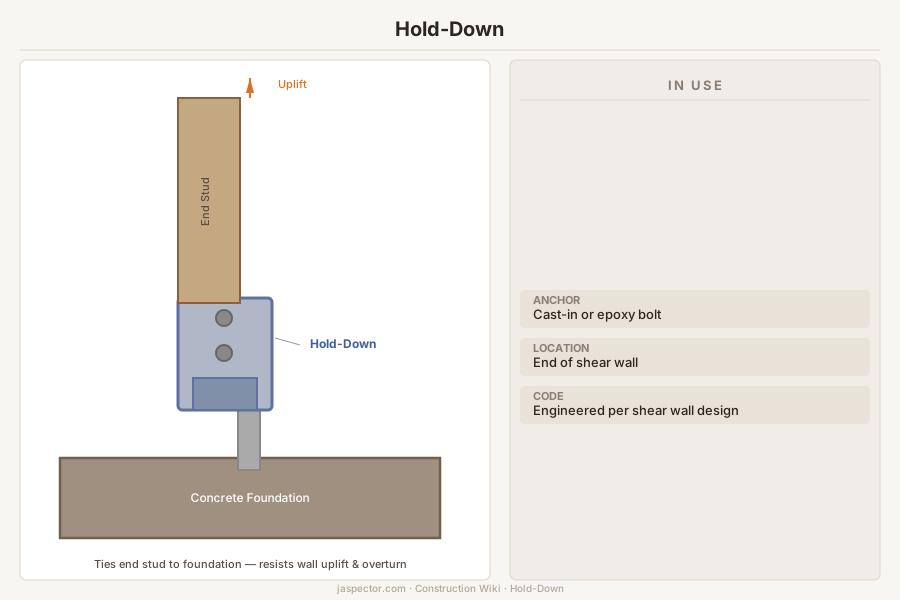
A hold-down is a structural metal connector that anchors a stud wall to the foundation or floor to resist uplift and overturning forces.
What It Is
Hold-downs are part of shear wall construction. When wind or seismic forces push on a wall, one end of the wall wants to lift while the other end is compressed. The hold-down keeps that end from pulling up and helps the wall transfer force into the structure below. These connectors are usually heavy-gauge steel devices attached to end studs with bolts, screws, or nails and anchored into concrete or framing with threaded rods or anchor bolts.
Types
Common types include cast-in-place hold-downs, retrofit hold-downs, and proprietary engineered connectors sized for different uplift loads.
Where It Is Used
Hold-downs are used in shear walls, narrow braced wall panels, garage portal frames, and other high-load wall assemblies. They are especially important in seismic regions and high-wind construction.
How to Identify One
You may see a hold-down in a garage, crawl space, basement, or unfinished wall where the end of a shear wall is exposed. It typically appears as a heavy steel bracket with multiple fasteners and an anchor rod tied into the structure below.
Replacement
Replacement or retrofit is needed when a connector is missing, corroded, bent, improperly fastened, or undersized for the required load. Because hold-downs are engineered structural hardware, repairs should match the specified model and fastening schedule.
Frequently Asked Questions
Hold-Down — FAQ
- What does a hold-down do in a wall?
- It keeps the end of a shear wall from lifting when wind or earthquake forces try to overturn the wall. That anchorage helps the wall do its job instead of peeling up from the floor or foundation.
- Is a hold-down the same as an anchor bolt?
- No. An anchor bolt fastens framing to concrete, while a hold-down is the connector assembly that transfers uplift force into that anchorage. The two parts often work together, but they are not the same thing.
- Where would I see a hold-down in my house?
- Usually in unfinished areas such as a garage, basement, or crawl space where structural framing is visible. In finished walls, it is often hidden behind drywall or other finishes.
- Can rust on a hold-down be a problem?
- Surface rust may be minor, but heavy corrosion can reduce strength and damage fasteners or anchor rods. If a connector looks badly deteriorated, a contractor or engineer should evaluate it.
- Can I add a missing hold-down myself?
- That is usually not a simple DIY task because the connector must match the load path and fastening schedule. Structural retrofit work often needs engineering, permits, and special anchors.
Have a question about your project? Get personalized answers from our team — $9/mo.
MembershipAlso in Structural
- Access Panel Access & Openings
- Attic Hatch Access & Openings
- Construction Adhesive Adhesives & Sealants
- J-Bolt Anchorage
- Expansion Anchor Anchors & Fasteners
- Molly Bolt Anchors & Fasteners
- Baffle (Attic Rafter Vent) Attic & Roof
- Attic Hatch Cover Attic Access