Heat Recovery Ventilator - HRV Home Ventilation Guide
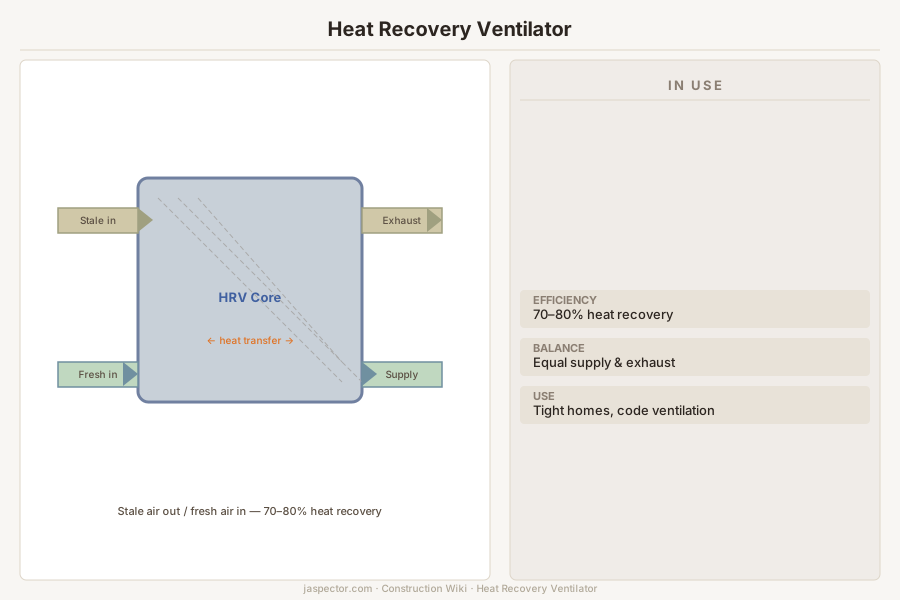
A heat recovery ventilator is a balanced ventilation unit that exchanges stale indoor air with fresh outdoor air while transferring heat between the two air streams.
What It Is
A heat recovery ventilator, or HRV, improves ventilation without throwing away all of the heat already paid for inside the house. It uses separate fans and a heat-exchange core so outgoing warm air preheats incoming cold air in winter, or outgoing cooler air tempers incoming warmer air in milder conditions.
Unlike a simple bath fan or exhaust-only strategy, an HRV is meant to manage whole-house ventilation in tighter homes. It transfers heat but not much moisture, which is why it is often chosen in colder climates where homeowners do not want to bring extra humidity back indoors during winter.
Types
Common residential versions include ducted whole-house HRVs, compact units tied into forced-air systems, and dedicated duct systems serving bathrooms, bedrooms, and living areas. Performance varies by airflow rate, core type, defrost strategy, and controls.
Where It Is Used
Heat recovery ventilators are used in newer airtight homes, deep energy retrofits, and houses with indoor air quality problems caused by under-ventilation. They are usually installed in basements, utility rooms, or mechanical spaces with dedicated fresh-air and exhaust ducting.
How to Identify One
An HRV is typically a box-shaped appliance near the mechanical area with four duct connections, filters, and condensate handling or frost-control features. Wall controls may mention ventilation speed, intermittent cycles, or HRV operation.
Replacement
Replacement is needed when the fans fail, the core cracks, controls become unreliable, or the cabinet and duct connections are too deteriorated to service well. Replacement work should include airflow balancing, duct inspection, and control setup so the new unit actually ventilates as designed.
Frequently Asked Questions
Heat Recovery Ventilator — FAQ
- What is the difference between an HRV and an ERV?
- An HRV transfers heat between exhaust and incoming air, while an ERV transfers heat and a meaningful amount of moisture. In cold climates, an HRV is often preferred when the goal is fresh air without adding indoor humidity in winter.
- Do I need a heat recovery ventilator if I already have bath fans?
- Bath fans handle spot exhaust, not balanced whole-house ventilation. In a tight house, an HRV provides more controlled fresh-air exchange and does a better job supporting overall indoor air quality.
- How do I know if my HRV is not working properly?
- Condensation problems, stale indoor air, noisy fans, frost issues, or dirty filters that keep recurring can all point to poor HRV performance. Low airflow and bad balancing are common hidden problems.
- Does an HRV need regular maintenance?
- Yes. Filters, exterior hoods, drains, and the heat-exchange core need periodic cleaning and inspection. A neglected HRV loses airflow and can stop delivering the indoor-air benefits it was installed to provide.
Have a question about your project? Get personalized answers from our team — $9/mo.
MembershipAlso in HVAC
- Air Handler Air Distribution
- Register Air Distribution
- Return Air Grille Air Distribution
- HVAC Filter Air Filtration
- Heat Strip Air Handler Components
- Heating Coil Air Handler Components
- Furnace Blower Air Movement
- Air Filter (HVAC) Air Quality & Filtration