Heat Pump — Home Heating and Cooling Systems Guide
A heat pump is an HVAC system that moves heat between indoors and outdoors to provide heating and cooling.
What It Is
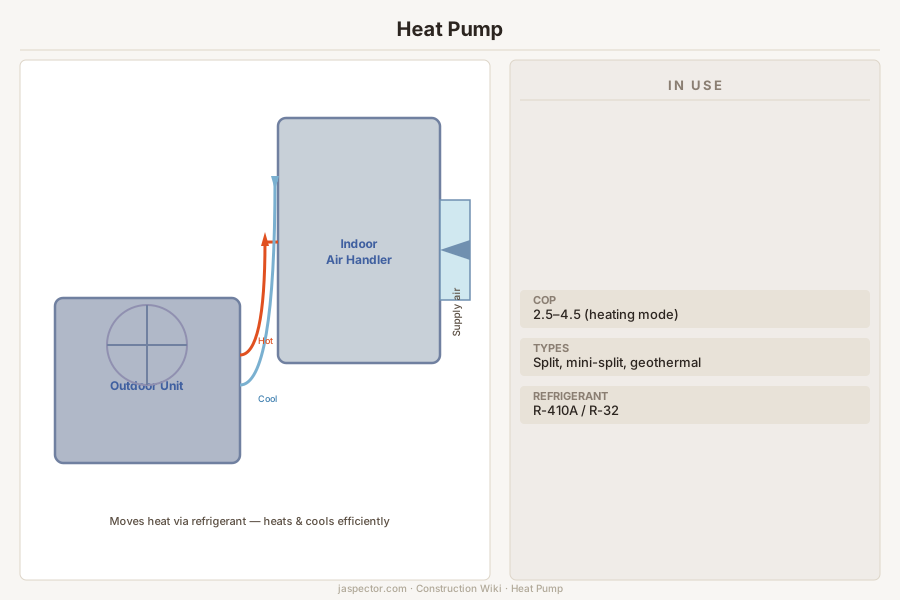
Unlike a furnace that creates heat by combustion, a heat pump uses refrigeration to move heat from one place to another. In cooling mode it removes heat from the house, and in heating mode it pulls heat from outdoor air or the ground and moves it indoors. Because it transfers heat instead of making it directly, a heat pump can be very efficient. Modern systems may be ducted, ductless, air-source, or ground-source.
Types
Common types include air-source heat pumps, ductless mini-split heat pumps, packaged heat pumps, dual-fuel systems, and geothermal heat pumps.
Where It Is Used
Heat pumps are used in homes for whole-house space conditioning, additions, converted garages, and rooms that need zoned comfort control. They are increasingly common in all-electric homes and retrofits replacing older HVAC equipment.
How to Identify One
A central heat pump looks similar to a standard air conditioner outside, but it can run in both heating and cooling modes. Indoor clues include an air handler, thermostat settings for heat pump operation, or auxiliary heat labels.
Replacement
Replacement is needed when the compressor fails, refrigerant system repairs become uneconomical, or the unit is undersized, noisy, or near the end of its service life. Proper sizing and cold-weather performance matter more than choosing by brand name alone.
Frequently Asked Questions
Heat Pump — FAQ
- Is a heat pump the same as an air conditioner?
- They use similar refrigeration technology, but a heat pump can reverse operation and provide heat too. A standard air conditioner only cools and needs a separate heating system.
- Do heat pumps work in cold weather?
- Yes, especially modern cold-climate models. Efficiency and capacity drop as outdoor temperatures fall, so some systems use backup electric heat or a furnace in very cold conditions.
- Will a heat pump lower energy bills?
- Often yes, especially if it replaces electric resistance heat, propane, or old HVAC equipment. Actual savings depend on your climate, utility rates, insulation, and how well the system is sized and installed.
- What is auxiliary heat on a thermostat?
- Auxiliary heat is the backup heat source that helps when the heat pump cannot keep up alone. It is often electric strip heat, though some dual-fuel systems switch to a furnace instead.
- How long does a heat pump last?
- Many last around 10 to 15 years, with some going longer if well maintained. Heavy use, poor airflow, refrigerant issues, and coastal conditions can shorten service life.
Have a question about your project? Get personalized answers from our team — $9/mo.
MembershipAlso in HVAC
- Air Handler Air Distribution
- Register Air Distribution
- Return Air Grille Air Distribution
- HVAC Filter Air Filtration
- Heat Strip Air Handler Components
- Heating Coil Air Handler Components
- Furnace Blower Air Movement
- Air Filter (HVAC) Air Quality & Filtration