Heat Exchanger — Safe Heat Transfer Component Guide
A heat exchanger is a component that transfers heat from one fluid or air stream to another without mixing them.
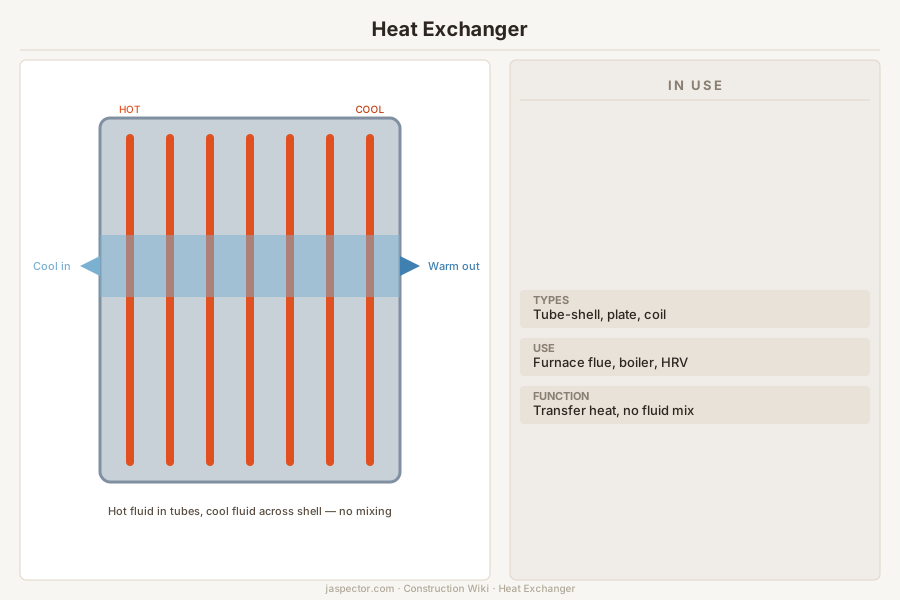
What It Is
In homes, the term often refers to the metal chamber inside a furnace where combustion gases heat the supply air. The flame and exhaust stay inside the exchanger while the blower moves household air around the outside of it. Heat exchangers also appear in boilers, water heaters, ventilation equipment, and some specialty appliances. Their basic purpose is always the same: move heat efficiently while keeping the two mediums separate.
Types
Residential examples include furnace heat exchangers, boiler heat exchangers, plate heat exchangers, and energy recovery ventilator cores.
Where It Is Used
Heat exchangers are used anywhere a house needs to transfer heat safely and efficiently. The most familiar location is inside a gas or oil furnace, but they are also found in hydronic systems and some ventilation units.
How to Identify One
Most heat exchangers are hidden inside equipment cabinets, so homeowners identify them by the appliance they serve rather than by direct view. Problems may show up as soot, rollout, strange furnace noises, reduced efficiency, or in serious cases unsafe combustion conditions.
Replacement
Replacement depends on the equipment type. A failed furnace heat exchanger usually means major repair or full furnace replacement because access, part cost, and safety concerns are significant.
Frequently Asked Questions
Heat Exchanger — FAQ
- What does a heat exchanger do in a furnace?
- It lets the burners heat the house air without letting combustion gases mix with that air. The metal surfaces transfer heat, while the sealed chamber keeps exhaust separated from the air your family breathes.
- Why is a cracked heat exchanger a big deal?
- Because it can create unsafe combustion conditions and may allow exhaust problems inside the equipment. A suspected crack should be treated as a professional HVAC safety issue, not a routine homeowner repair.
- Can I see the heat exchanger myself?
- Usually not clearly. It is buried inside the appliance cabinet, and a proper inspection often needs tools, disassembly, and combustion testing by an HVAC technician.
- Does every heating system have a heat exchanger?
- Many do, but not all in the same form. Furnaces, boilers, water heaters, and ERVs use heat exchangers, while electric resistance heat works differently because it produces heat directly from electric elements.
- Is a bad heat exchanger repairable?
- Sometimes, but furnace heat exchanger replacement is often expensive enough that full equipment replacement makes more sense. The right choice depends on the unit age, warranty coverage, and the exact failure.
Have a question about your project? Get personalized answers from our team — $9/mo.
MembershipAlso in HVAC
- Air Handler Air Distribution
- Register Air Distribution
- Return Air Grille Air Distribution
- HVAC Filter Air Filtration
- Heat Strip Air Handler Components
- Heating Coil Air Handler Components
- Furnace Blower Air Movement
- Air Filter (HVAC) Air Quality & Filtration