Heat Cable - Pipe and Roof Freeze Protection Guide
A heat cable is an electrically heated cable used to keep pipes, gutters, or roof edges warm enough to reduce freezing and ice buildup.
What It Is
Heat cable uses electric resistance to generate controlled warmth along its length. In homes it is most often used for pipe freeze protection or along roof eaves and gutters where ice can trap snowmelt and cause backup problems such as ice dams and interior water damage. The cable converts electrical energy directly into heat, and the amount of heat produced is governed by the cable's wattage rating per foot, which typically ranges from 3 to 12 watts per linear foot for residential products.
Some cables deliver constant wattage regardless of temperature, while others are self-regulating and automatically adjust their heat output as the surrounding temperature changes. Self-regulating cables contain a conductive polymer core between two bus wires that increases resistance as it warms, preventing overheating and reducing energy use in milder conditions.
The product must be matched to the specific application because roof de-icing cable, pipe heat trace, and snow-melt cable are not interchangeable.
Types
Self-regulating pipe heat cable is the most common type for residential water pipe protection. It can be cut to length in the field, overlapped without overheating, and connected to a standard 120-volt outlet through a weatherproof power connection kit.
Constant-wattage de-icing cable produces the same heat output per foot regardless of temperature and is frequently used on roof edges and gutters. These cables are often sold in pre-assembled kits with a fixed length, molded plug, and spacing clips. They should not be cut or overlapped because constant-wattage cable can overheat at contact points.
Hardwired heat-trace systems are used in commercial or code-required applications and connect to a dedicated circuit with a thermostat or ambient-sensing controller that activates the cable only when conditions call for it.
Where It Is Used
Heat cable is used on exposed water pipes in crawl spaces, attics, garages, and exterior walls where temperatures can drop below freezing. It is also applied along roof eaves, valleys, gutters, and downspouts to create drainage channels that prevent ice dams from forming.
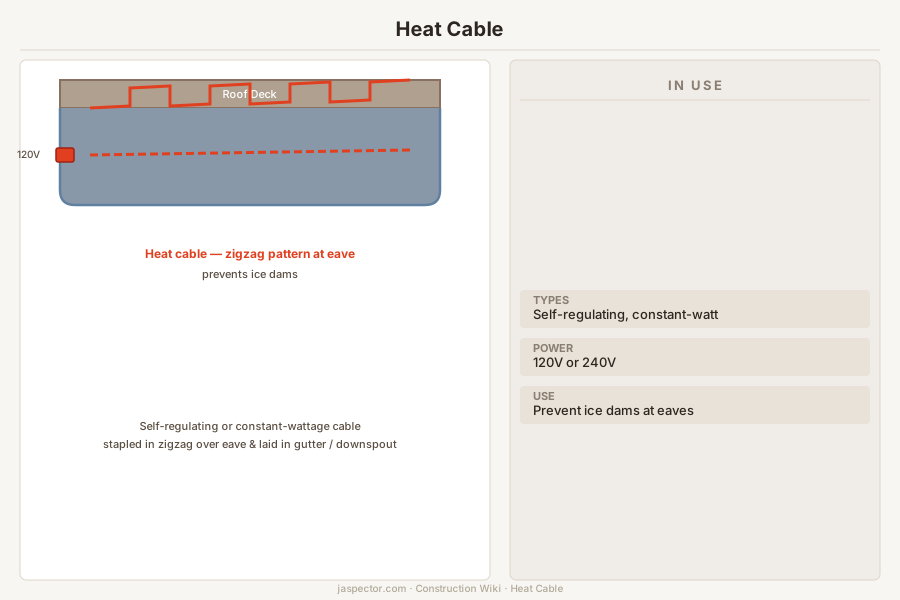
On roofs, the cable is typically run in a zigzag pattern along the lower 2 to 3 feet of the roof edge, extending into the gutter and down through each downspout. On pipes, the cable is either spiraled around the pipe or run in a straight line along the bottom and then covered with pipe insulation to retain heat and improve efficiency.
How to Identify One
Heat cable appears as a flat or round cable run attached to the pipe surface with tape or cable ties, or fastened in a zigzag pattern along roof edges with plastic or metal clips. The cable is typically black or gray and noticeably thicker than standard electrical wire. At one end you will find a power connection module or weatherproof plug; at the other end, a sealed termination cap prevents moisture entry.
Labels on the cable jacket usually identify the manufacturer, wattage rating, voltage, and listing agency such as UL or CSA. A GFCI-protected outlet or thermostat sensor nearby is another common indicator that a heat cable system is present.
Replacement
Replacement is needed when the cable jacket cracks or shows burn marks, the system stops producing heat, or the plug or termination overheats. Age-related jacket degradation is common after 10 to 15 years of outdoor exposure, and UV damage accelerates the decline on roof-mounted cables.
Because heat cable systems mix electricity with wet locations, damaged cable should be replaced entirely rather than spliced or patched. On roofs, the old clips and cable are stripped off and a new cable kit is fastened according to the manufacturer's layout pattern.
All heat cable circuits should be protected by a ground-fault circuit interrupter (GFCI) to reduce the risk of shock or fire. After replacement, the system should be tested for continuity and proper heat output before the first freeze of the season.
Frequently Asked Questions
Heat Cable — FAQ
- What is the difference between heat cable and ordinary electrical wire?
- Heat cable is built to produce controlled heat along its length, while ordinary wire is meant to carry power without becoming a heating device. It has specific insulation, wattage, and installation rules for freeze protection or de-icing.
- Can heat cable prevent roof ice dams by itself?
- It can create melt paths and reduce backup at specific areas, but it does not solve the underlying attic heat-loss or ventilation problem. If ice dams are chronic, the roof and attic need attention too.
- How do I know if pipe heat cable has failed?
- Frozen pipes, cold sections along the cable, tripped GFCI protection, or visible jacket damage are common warning signs. A failed thermostat or power connection can cause the same symptoms.
- Can homeowners install heat cable themselves?
- Plug-in kits sometimes are homeowner-installed, but the product still has to be listed for the exact use and installed exactly as directed. Hardwired systems and any questionable roof installation are better handled by a qualified contractor or electrician.
- How much electricity does heat cable use?
- Residential heat cable typically draws between 3 and 12 watts per linear foot, so a 50-foot run might use 150 to 600 watts when active. Self-regulating cable reduces consumption in milder temperatures, and a thermostat or timer can further limit operating hours to only the coldest periods.
Have a question about your project? Get personalized answers from our team — $9/mo.
MembershipAlso in Electrical
- Range Outlet Appliance Circuits
- Appliance Whip Appliance Connections
- Dishwasher Cord Appliance Connections
- Dryer Cord Appliance Connections
- Range Cord Appliance Connections
- Generator Backup Power
- Transfer Switch Backup Power
- Box Cover Boxes