Hardboard Siding - Repair, Rot, and Replacement Guide
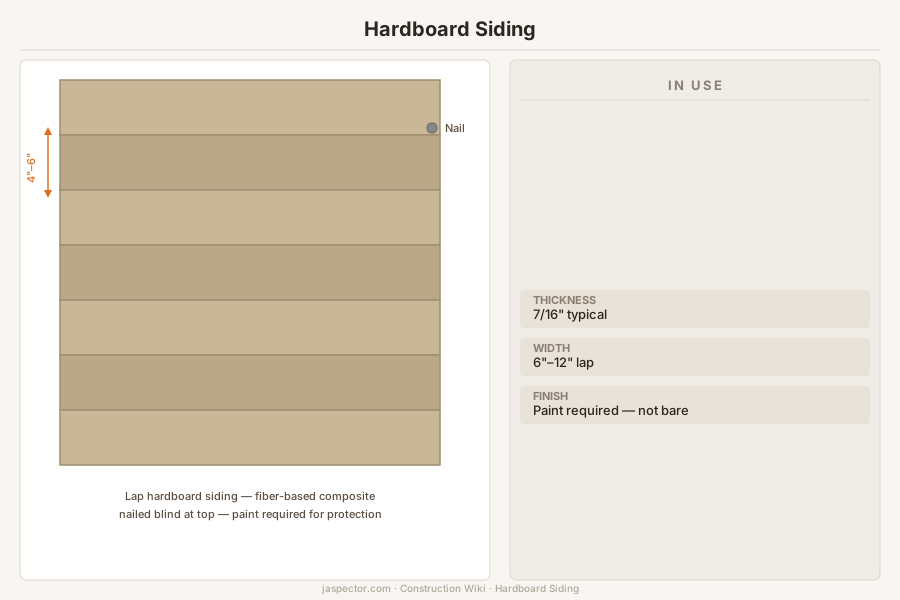
Hardboard siding is an exterior cladding made from compressed wood fibers and resin, typically formed into lap boards or panel siding.
What It Is
Hardboard siding was widely used as a lower-cost alternative to solid wood siding and was sold in both horizontal lap profiles and large sheet panels. It has a wood-based core, so it can swell, soften, and deteriorate if water repeatedly reaches exposed edges, failed paint, or poorly flashed joints.
This material can perform for years when it stays dry and well maintained, but it is less forgiving of chronic moisture exposure than fiber cement or many modern siding products. Many homeowners know it by older brand associations rather than by the generic hardboard name.
Types
Common forms include lap siding, panel siding, and textured sheets designed to mimic wood grain. Product quality and long-term durability varied significantly by manufacturer and era.
Where It Is Used
Hardboard siding is used on exterior walls of houses, garages, sheds, and additions, especially on homes built or remodeled during the late twentieth century. It is often found on tract housing where builders wanted a painted wood look at a lower installed cost.
How to Identify One
Look for painted lap boards or panels with a pressed wood-fiber core visible at damaged edges, swollen butt joints, or soft areas near the bottom courses. Bubbling paint, edge swelling, and decay around nail penetrations are classic warning signs.
Replacement
Replacement is needed when the siding swells, delaminates, rots, or has widespread moisture damage around joints and lower edges. Small isolated failures can sometimes be patched, but extensive deterioration usually pushes the project toward full recladding.
Frequently Asked Questions
Hardboard Siding — FAQ
- How do I know if I have hardboard siding instead of fiber cement?
- Damaged edges on hardboard usually show a compressed wood-fiber core, while fiber cement has a mineral-based body that looks more like dense concrete. Hardboard also tends to swell and soften at wet edges rather than just cracking.
- Why is my hardboard siding swelling at the bottom?
- The most common cause is moisture wicking into unsealed edges or repeatedly wet lower courses. Poor clearance to grade, leaking gutters, and failed paint all accelerate the damage.
- Can hardboard siding be repaired instead of replaced?
- Sometimes, if the damage is limited to a few boards or one panel and the wall behind it is dry. When swelling and rot appear across multiple elevations, full replacement usually becomes the more durable fix.
- Is hardboard siding still installed on new houses?
- It is far less common than it once was. Many builders now prefer fiber cement, vinyl, engineered wood, or other cladding products with better moisture performance.
Have a question about your project? Get personalized answers from our team — $9/mo.
MembershipAlso in Exterior
- Extension Ladder Access & Safety
- Concealed Hinge Cabinet Hardware
- Board and Batten
- EIFS (Exterior Insulation Finish System)
- Shake Siding
- Siding
- Stone Veneer
- Stucco