Handrail — Stair and Ramp Safety Rail Guide for Homes
A handrail is a graspable safety rail that provides support and balance along stairs, ramps, and some walking surfaces.
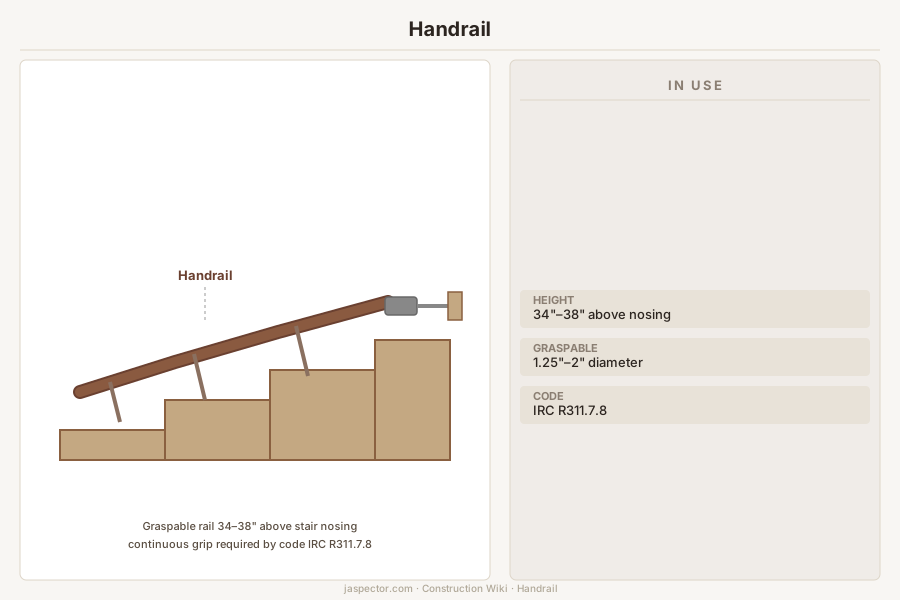
What It Is
A handrail is designed to be held by the hand while someone walks up or down a change in elevation. Its main job is to improve stability and reduce the chance of a fall. In homes, handrails are usually mounted to a wall or attached to a guard assembly along a stair. Shape, clearance, height, and continuity matter because the rail has to be easy to grip in an emergency.
Types
Common residential handrails include wall-mounted wood rails, metal tube rails, and integrated rails built into guard or baluster systems. Profiles may be round, oval, or shaped with finger recesses, but they still need to be graspable enough to meet code.
Where It Is Used
Handrails are used on stairways, porch steps, deck stairs, basement stairs, and accessibility ramps. Any place where people need support during ascent or descent may require a handrail.
How to Identify One
A handrail runs parallel to the stair slope and sits at hand height. It is different from a guardrail, which is the barrier that prevents people from falling off an open side. Loose brackets, splits, wobble, and rails that stop short before the last step are common issues.
Replacement
Replacement is needed when the rail is loose, undersized for grip, damaged, or missing where required. A new handrail should match the stair geometry and be installed at code-compliant height with solid fastening into framing.
Frequently Asked Questions
Handrail — FAQ
- Is a handrail the same as a guardrail?
- No. A handrail is meant to be gripped for support, while a guardrail is a barrier that helps prevent falls from an open edge. One assembly can include both, but they are not the same component.
- When does a stair need a handrail?
- That depends on local code, but stairs with enough risers usually require one. Even where not strictly required, adding a solid handrail is a good safety upgrade for children, older adults, and anyone carrying loads.
- What makes a handrail unsafe?
- Common problems are loose brackets, a rail that is too wide to grip well, missing sections, and ends that snag clothing. If it moves under load or cannot be grasped securely, it should be corrected.
- Can I tighten a loose handrail myself?
- Often yes, if the problem is limited to a loose bracket or screw. If the wall framing is damaged or the rail is mounted poorly, a more complete repair may be needed so it can actually support body weight.
- Should outdoor handrails be different from indoor ones?
- Outdoor rails should use weather-resistant materials and corrosion-resistant fasteners. The grip size and safety function are the same, but the finish and attachment details need to handle moisture and temperature swings.
Have a question about your project? Get personalized answers from our team — $9/mo.
MembershipAlso in Structural
- Access Panel Access & Openings
- Attic Hatch Access & Openings
- Construction Adhesive Adhesives & Sealants
- J-Bolt Anchorage
- Expansion Anchor Anchors & Fasteners
- Molly Bolt Anchors & Fasteners
- Baffle (Attic Rafter Vent) Attic & Roof
- Attic Hatch Cover Attic Access