Grout — Tile Joint Damage and Regrouting Repair Guide
Grout is the joint-filling material placed between tiles or masonry units to lock the pieces together, support edges, and seal the finished surface appearance.
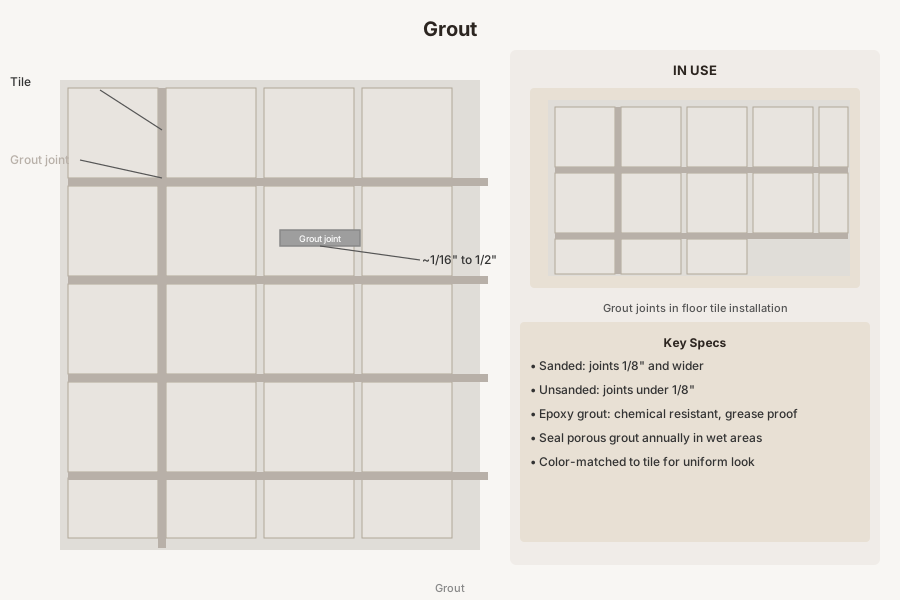
What It Is
Tile grout fills the gaps between tiles after they are set, helping distribute edge support and finish the surface visually. Depending on the product, it may be cement-based, epoxy, or another specialty formulation.
Grout is not the same as the adhesive under the tile, and it is not a substitute for movement joints. Cracking, staining, and loose grout often point to moisture, substrate movement, or wear in the assembly below.
Types
Common types include sanded grout, unsanded grout, high-performance cement grout, epoxy grout, and premixed specialty grouts. The right type depends on joint width, moisture exposure, and stain resistance needs.
Where It Is Used
Grout is used on tile floors, shower walls, backsplashes, countertops, and some masonry assemblies. Wet-area installations may also require sealers or epoxy systems depending on the product.
How to Identify One
Look at the material filling the joints between adjacent tiles. Crumbling joints, missing sections, dark staining, soft spots, or hairline cracking are common signs the grout or the tile assembly needs attention.
Replacement
Replacement is needed when grout is eroded, cracked throughout, badly stained, or separating from tile edges. Regrouting helps only if the tile and substrate are still sound; movement-related failures require deeper repair.
Frequently Asked Questions
Grout — FAQ
- Why is grout cracking in my shower?
- Movement in the substrate, water damage behind the tile, or the wrong joint treatment at corners are common causes. Regrouting alone may not solve the problem if the assembly underneath is failing.
- Does grout make tile waterproof?
- No. Grout helps fill joints, but waterproofing in wet areas comes from the membrane or backing system behind the tile.
- Can stained grout be cleaned instead of replaced?
- Often yes, if the grout is still intact. Deep staining, mold issues, or crumbling joints may mean cleaning will not be enough.
- What is the difference between sanded and unsanded grout?
- Sanded grout contains fine aggregate and is used for wider joints, while unsanded grout is smoother and better for narrow joints and some delicate tile surfaces.
Have a question about your project? Get personalized answers from our team — $9/mo.
MembershipAlso in Exterior
- Extension Ladder Access & Safety
- Concealed Hinge Cabinet Hardware
- Board and Batten Cladding
- EIFS (Exterior Insulation Finish System) Cladding
- Hardboard Siding Cladding
- Shake Siding Cladding
- Siding Cladding
- Stone Veneer Cladding