Grounding Conductor - Electrical Ground Wire Guide
A grounding conductor is the wire that connects electrical equipment or the service grounding system to a ground bar, electrode, or bonded metal path, providing a safe route for fault current to reach earth.
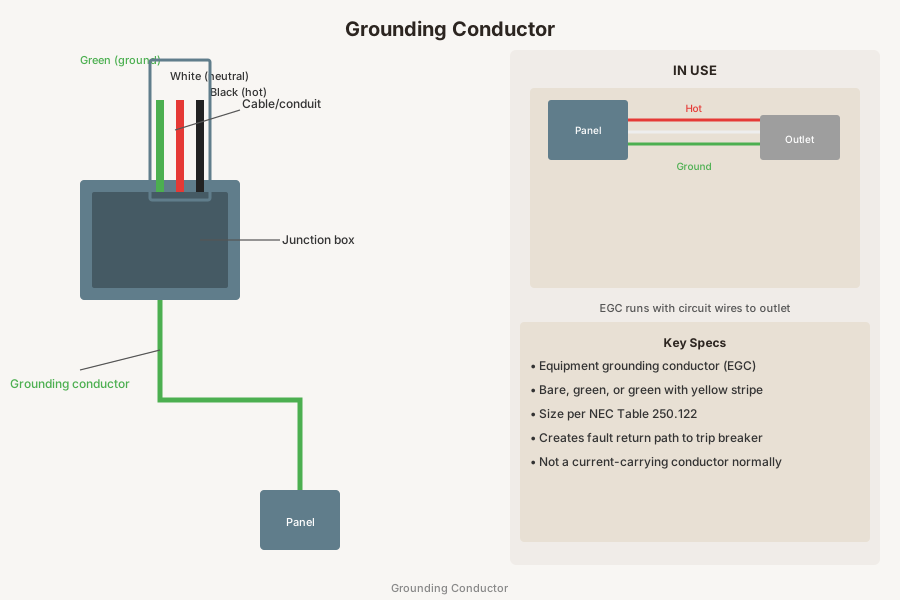
What It Is
In residential and light commercial electrical work, the term grounding conductor can refer to the equipment grounding conductor (EGC) in a branch circuit or to the grounding electrode conductor (GEC) that ties the service grounding system to approved electrodes. The core purpose in both cases is the same: provide a low-impedance path so that fault current flows quickly and trips the overcurrent device, clearing the hazard before anyone is harmed.
An equipment grounding conductor travels with the circuit conductors inside cable assemblies or conduit and bonds metal enclosures, boxes, and equipment frames back to the panel. A grounding electrode conductor runs from the service neutral or grounding bus to the grounding electrode system, which may include ground rods, a metal water pipe, or a concrete-encased electrode (Ufer ground).
Because the term covers more than one grounding role, the important distinction is where the conductor starts and ends. Size, insulation color, and permitted routing depend on whether it serves equipment grounding, grounding electrode, or bonding duties.
Types
Bare copper equipment grounding conductors are the most familiar form, bundled inside NM-B (Romex) cable alongside the circuit conductors. Insulated green ground wires appear in conduit systems, where bare wire is also permitted but green insulation provides quick visual identification. Grounding electrode conductors are typically larger gauge bare or green-insulated copper, sized per NEC Table 250.66 based on the largest service-entrance conductor. Sizes range from 8 AWG for small services up to 3/0 AWG for 1,000 kcmil service conductors.
Aluminum and copper-clad aluminum grounding conductors are allowed in certain applications but are prohibited where they would be in direct contact with the earth or masonry.
Where It Is Used
Grounding conductors are present throughout every part of an electrical system. In branch circuits, the equipment grounding conductor runs from the device or outlet box back to the panel ground bar. In feeders, a larger EGC connects subpanels to the main panel. At the service, the grounding electrode conductor leaves the main panel or meter base and routes to the electrode system, which is often a pair of ground rods driven at least six feet apart or a connection to the metal water service pipe within five feet of entry.
Beyond the panel, bonding conductors connect metal water pipes, gas piping, and structural steel to the service grounding point.
How to Identify One
Look for a bare copper or green-insulated wire landed on a ground bar, bonding screw, clamp, or grounding terminal. Inside NM-B cable, the bare wire is smaller than the insulated circuit conductors and runs alongside them the full length of the cable. In conduit systems, the green wire or bare wire will be landed on the ground bar in the panel and on the green grounding screw at each device box.
At service equipment, the grounding electrode conductor is often the largest bare copper wire leaving the panel or meter base. It may route along the exterior wall down to a ground rod clamp or enter the foundation to connect to a Ufer electrode. The conductor should be continuous or spliced only with irreversible compression connectors or exothermic welds, never with wire nuts or split bolts.
Replacement
Replacement is needed when the conductor is undersized for the circuit, cut or nicked during renovation, loose at a terminal, corroded from moisture exposure, overheated from a fault event, or incorrectly terminated on the wrong bus. Grounding electrode conductors that are physically damaged must be repaired with listed splicing methods or replaced entirely, since a break in the path defeats the purpose of the electrode system.
Because grounding paths are code-critical safety circuits, repairs should match conductor material, ampacity rules from NEC Table 250.122 or 250.66, and listed termination hardware.
Frequently Asked Questions
Grounding Conductor — FAQ
- Is a grounding conductor the same as a neutral wire?
- No. The neutral normally carries return current during regular operation, while the grounding conductor is there primarily for fault clearing and bonding. They serve different purposes even though they are connected together at the service in many systems.
- What color is a grounding conductor?
- It is commonly bare copper or green insulated. Larger service grounding electrode conductors may also be identified by installation context rather than a bright green jacket. In conduit systems, green tape on a larger wire is an accepted marking method.
- What happens if a grounding conductor is disconnected?
- Metal equipment can remain energized during a fault instead of tripping the breaker quickly. That increases shock risk and can leave hidden defects in the system. The hazard may not be obvious until someone touches the energized equipment while standing on a grounded surface.
- Do I need an electrician to replace a grounding conductor?
- Usually yes, especially if the conductor is inside a panel, conduit system, or service grounding assembly. The replacement has to be correctly sized per NEC tables and terminated with listed hardware to remain code-compliant. Permit requirements vary by jurisdiction.
- How is a grounding conductor sized?
- Equipment grounding conductors are sized from NEC Table 250.122 based on the overcurrent device protecting the circuit. Grounding electrode conductors are sized from NEC Table 250.66 based on the size of the service-entrance conductors. Using an undersized conductor can prevent the overcurrent device from tripping fast enough during a fault.
Have a question about your project? Get personalized answers from our team — $9/mo.
MembershipAlso in Electrical
- Range Outlet Appliance Circuits
- Appliance Whip Appliance Connections
- Dishwasher Cord Appliance Connections
- Dryer Cord Appliance Connections
- Range Cord Appliance Connections
- Generator Backup Power
- Transfer Switch Backup Power
- Box Cover Boxes