Ground Bar — Panel Grounding Terminal Strip Explained
A ground bar is a metal terminal strip inside an electrical panel that collects and bonds all equipment grounding conductors to a single point.
What It Is
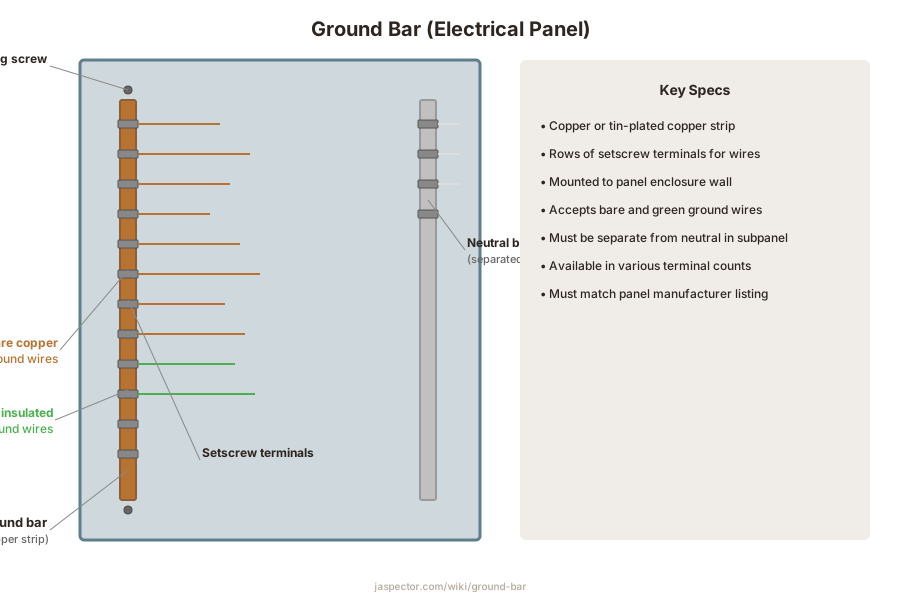
A ground bar provides the termination point for bare copper and green-insulated grounding wires inside a breaker panel or subpanel. It is typically a copper or tin-plated copper strip with rows of setscrew terminals, mounted to the metal enclosure of the panel with machine screws that ensure a solid electrical bond to the enclosure itself.
In a main service panel, the ground bar may be bonded to the neutral bar through a main bonding jumper screw or strap, creating the single bonding point required by NEC 250.24. In subpanels, the ground bar and neutral bar must remain electrically separate per NEC 250.32 to prevent normal return current from flowing on equipment grounding conductors, which would create a parallel neutral path and a potential shock hazard on metal enclosures and conduit.
Types
Ground bars come in various lengths and terminal counts to fit different panel sizes, ranging from 14-terminal bars for compact residential panels to 42-terminal bars for large commercial panels. Factory-installed ground bars ship pre-mounted in the panel enclosure on one or both side rails. Aftermarket universal ground bar kits include mounting brackets and screws that adapt to most panel brands and mount on the back wall or side rail.
Isolated ground bars are a specialty type used for circuits serving sensitive electronic equipment such as medical devices, recording studios, and data centers. These bars are insulated from the enclosure and carry only the isolated grounding conductors, which run back to the service entrance ground without contact to intermediate enclosures.
Where It Is Used
Ground bars are found in main service panels, subpanels, disconnect enclosures, meter-main combinations, and transfer switch enclosures. Every panel that serves branch circuits needs a grounding termination point, so virtually every residential and commercial electrical installation includes at least one ground bar. A 200-amp residential panel with 40 circuit spaces often needs two ground bars to accommodate all the grounding conductors, since each conductor requires its own terminal and doubling conductors under a single setscrew is a code violation per NEC 408.41.
In commercial and industrial settings, ground bars may also appear in wireway troughs, pull boxes, and motor control centers wherever equipment grounding conductors need a termination point.
How to Identify One
Inside an open panel, the ground bar appears as a flat metal strip, usually copper or silver-toned tin-plated copper, with rows of small setscrews along its length. Bare copper wires and green-insulated wires terminate at these screws. It is usually mounted on the side rail or back wall of the panel enclosure, visually distinct from the neutral bar, which carries white-insulated wires.
In subpanels, the ground bar is physically separated from the neutral bar and mounted on a different rail or wall surface. In main panels where the bars are bonded, a green bonding screw or metal strap visibly connects the neutral bar to the enclosure, and ground wires may land on either bar.
Replacement
A ground bar that is corroded, has stripped screw terminals, or lacks enough open terminals for the circuits present can be replaced or supplemented with an additional listed ground bar kit. The replacement must be compatible with the panel manufacturer and rated for the conductor sizes present, which typically range from 14 AWG to 4 AWG for residential branch circuits.
Replacement involves de-energizing the panel, disconnecting all grounding conductors from the old bar, removing the bar, mounting the new one, and reconnecting each conductor to its own terminal. The work requires an electrician who can safely handle the panel interior and verify proper torque on all connections.
Frequently Asked Questions
Ground Bar — FAQ
- Can I add a second ground bar to my panel?
- Yes, most panel manufacturers sell accessory ground bar kits that bolt onto an open mounting location inside the panel enclosure. The added bar must be listed for that panel model.
- Is the ground bar the same as the neutral bar?
- They are separate components. In a main service panel they may be bonded together, but in a subpanel the ground bar and neutral bar must be kept electrically isolated from each other.
- What size wire can a ground bar accept?
- Most residential ground bars accept conductors from 14 AWG up to 4 AWG. Larger ground bars or lug-style terminations handle bigger conductors for feeders and service entrance grounds.
- Why is my ground bar turning green?
- Green patina on a copper ground bar is normal surface oxidation. However, heavy corrosion, white powdery buildup, or pitting may indicate moisture intrusion into the panel enclosure.
- Does code require a ground bar in every panel?
- The NEC requires a means to terminate equipment grounding conductors in every panel. A dedicated ground bar satisfies this requirement and is required in subpanels where the neutral must be isolated.
Have a question about your project? Get personalized answers from our team — $9/mo.
MembershipAlso in Electrical
- Range Outlet Appliance Circuits
- Appliance Whip Appliance Connections
- Dishwasher Cord Appliance Connections
- Dryer Cord Appliance Connections
- Range Cord Appliance Connections
- Generator Backup Power
- Transfer Switch Backup Power
- Box Cover Boxes