Gas Fireplace — Venting, Soot, and Replacement Guide
A gas fireplace is a fuel-burning hearth appliance that produces visible flame and room heat using natural gas or propane.
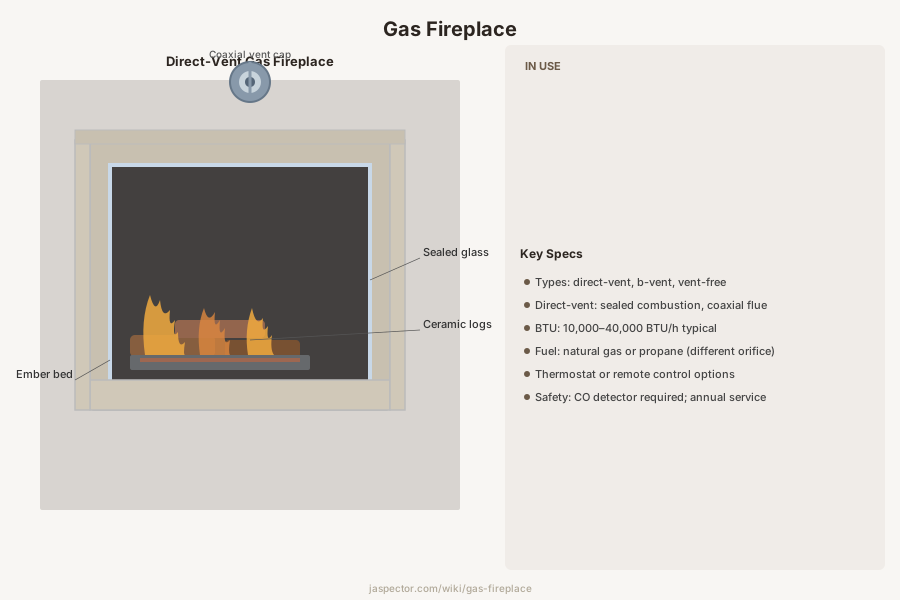
What It Is
Gas fireplaces range from decorative vent-free units to sealed direct-vent appliances that heat a room efficiently. They include a burner, controls, ignition source, and a firebox or enclosure designed for gas combustion.
Unlike a wood fireplace, a gas fireplace relies on listed components and proper clearances to operate safely. Glass condition, venting, and ignition reliability all matter to performance.
Types
Common types include direct-vent fireplaces, vent-free fireplaces where permitted, gas inserts installed into masonry fireplaces, and built-in zero-clearance gas units. Each type has different venting and service needs.
Where It Is Used
Gas fireplaces are used in living rooms, family rooms, bedrooms where allowed, and covered outdoor spaces with listed equipment. Many are installed as supplemental heat sources rather than whole-house heating systems.
How to Identify One
Look for a fireplace with a gas control valve, ignition switch or remote, burner media, and often a fixed glass front. Soot on the glass, ignition delays, unusual odor, or poor flame pattern are common signs of trouble.
Replacement
Replacement is common when the firebox or burner parts deteriorate, the glass assembly fails, or the appliance no longer meets the homeowner's safety and efficiency goals. Updating an old unit can also improve venting and control reliability.
Frequently Asked Questions
Gas Fireplace — FAQ
- Can a gas fireplace heat a whole house?
- Usually no. Most are designed as zone heaters or decorative appliances that warm one main area rather than the entire home.
- Why is there soot on my gas fireplace glass?
- Soot can come from a burner that is dirty, misaligned, or operating with poor combustion. The log placement and venting setup also affect flame quality.
- Does a gas fireplace need annual service?
- That is a good practice. Annual service helps catch venting issues, worn gaskets, dirty burners, and ignition problems before the heating season.
- Can I use a gas fireplace during a power outage?
- Some standing-pilot models can run without house power, but many modern units need electricity for fans, control boards, or electronic ignition. The answer depends on the specific appliance.
Have a question about your project? Get personalized answers from our team — $9/mo.
MembershipAlso in HVAC
- Air Handler Air Distribution
- Register Air Distribution
- Return Air Grille Air Distribution
- HVAC Filter Air Filtration
- Heat Strip Air Handler Components
- Heating Coil Air Handler Components
- Furnace Blower Air Movement
- Air Filter (HVAC) Air Quality & Filtration