Footing — concrete base that spreads foundation loads
A footing is a widened foundation base that spreads structural loads from walls or columns into the supporting soil beneath a building.
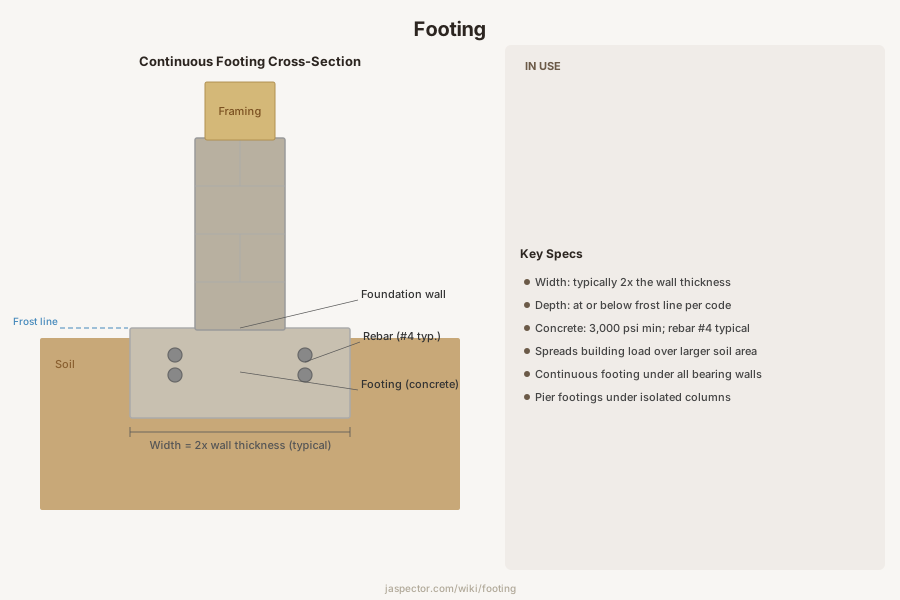
What It Is
A footing is the enlarged concrete base at the bottom of a foundation wall, pier, or column. Its purpose is to distribute structural loads over enough soil area so the building does not settle unevenly. The footing works like a snowshoe: by widening the contact area, it reduces the pressure on each square foot of soil.
Most residential footings are poured concrete reinforced with steel rebar. The International Residential Code (IRC) Section R403 specifies minimum dimensions: 12 inches wide and 6 inches thick for a one-story wood-frame wall, and wider for two-story or masonry walls. The actual size depends on the soil bearing capacity, determined by a geotechnical report or local code table.
Footings must sit below the local frost line so freezing soil does not heave the foundation upward. In northern states this can mean 42 to 48 inches deep, while warmer climates may require only 12 inches. The concrete is placed on undisturbed or properly compacted soil, never on loose fill.
Types
Strip footings run beneath the full length of a foundation wall and are the most common residential type, typically 16 to 24 inches wide and 8 to 12 inches thick for two-story homes.
Spread footings are individual pads placed under columns or point loads such as steel posts in a basement. Their size is calculated from the column load and soil capacity.
Stepped footings are used on sloped sites, following the grade in level steps. Each step must overlap the one below by at least 2 feet horizontally.
Thickened slab edges serve as combined footing and slab in monolithic slab-on-grade construction, common in warmer regions where deep frost protection is not required.
Where It Is Used
Footings are installed below foundation walls, porch supports, retaining walls, deck posts, garage walls, chimney bases, and room additions. They are one of the first structural elements placed during construction, poured after trench inspection.
In residential work, footings appear under virtually every load-bearing wall and column. Even detached garages, garden walls, and equipment pads require footings sized to local code.
How to Identify One
Footings are almost always buried and hidden once construction is complete. In an unfinished basement or crawlspace, you may see the footing projecting from the base of the foundation wall as a wider concrete ledge. During excavation or foundation repair, the footing is visible as a widened section at the bottom of the wall.
On construction plans, footings appear as wider rectangles beneath walls or columns, with dimensions, rebar placement, and depth noted.
Replacement
Footings are rarely replaced outright because doing so requires lifting or supporting the entire structure above. Instead, problems are addressed through less invasive methods.
Underpinning extends the footing depth by excavating beneath it in sections and placing new concrete. Helical piers or push piers bypass the footing by transferring loads to deep bearing strata through steel shafts. Drainage correction, including French drains and grading adjustments, addresses the moisture changes that cause many settlement issues. Any footing repair should be reviewed by a licensed structural engineer.
Frequently Asked Questions
Footing — FAQ
- What does a footing do?
- A footing spreads the structural loads from walls or columns over a wider area of soil so the building does not settle unevenly. It functions as the lowest load-bearing element in the foundation system and is sized based on the weight above and the bearing capacity of the soil below.
- How can I tell if a footing needs attention?
- Stair-step cracks in foundation walls, sloping floors, sticking doors, and visible settlement on one side of the house can all point to footing or soil support problems. Because footings are buried, the symptoms usually show up in the structure above rather than at the footing itself.
- Can I replace a footing myself?
- Footing repair is not a typical DIY project because it directly affects the structural integrity of the building. Even pouring a new footing for a small deck post usually requires a permit, an inspection, and compliance with local frost-depth and reinforcement requirements.
- How much does footing repair or replacement cost?
- New footings for an addition or garage are a routine part of construction budgets, but repairing a failing footing under an existing home is significantly more expensive. Costs are driven by excavation access, the need for temporary structural support, engineering design, and the repair method chosen, such as underpinning or pier installation.
- How deep does a footing need to be?
- The required depth depends on the local frost line and soil conditions. In cold climates, footings may need to be 42 to 48 inches below grade to sit below the frost line, while in warmer regions 12 to 18 inches may be sufficient. Local building codes specify the minimum depth for your area.
Have a question about your project? Get personalized answers from our team — $9/mo.
MembershipAlso in Structural
- Access Panel Access & Openings
- Attic Hatch Access & Openings
- Construction Adhesive Adhesives & Sealants
- J-Bolt Anchorage
- Expansion Anchor Anchors & Fasteners
- Molly Bolt Anchors & Fasteners
- Baffle (Attic Rafter Vent) Attic & Roof
- Attic Hatch Cover Attic Access