Fire Door — Rated Assembly for Fire Compartmentation
A fire door is a rated door assembly designed to resist the passage of fire and smoke between compartments of a building for a specified period of time.
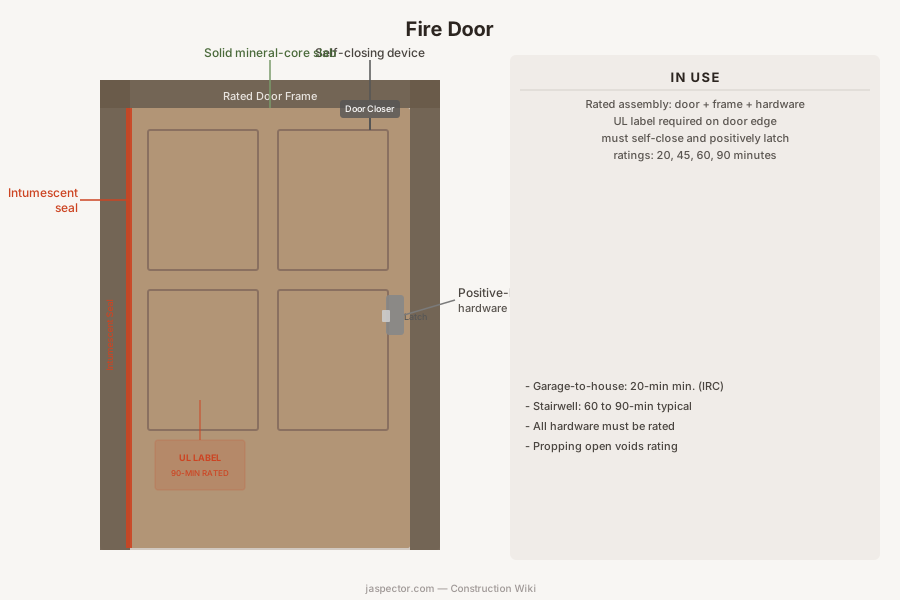
What It Is
Fire doors are constructed from materials — typically solid steel, solid-core wood, or composite mineral cores — that slow the spread of fire and limit smoke migration. Their rating, expressed in minutes (20, 45, 60, 90, or 180), indicates how long the assembly resists fire under standardized ASTM E119 or UL 10C testing conditions. A complete fire door assembly includes the door slab, frame, hinges, closing device, latching hardware, and any glazing, all of which must be tested and rated together as a system.
The fire rating of the door must match the rating of the wall it is installed in. Per IBC Table 716.5, a door in a 1-hour rated corridor wall requires a minimum 20-minute door rating, while a door in a 2-hour rated fire barrier requires a minimum 90-minute rating. The gap between the door and frame must not exceed 1/8 inch along the jamb and head, and 3/4 inch at the bottom, to maintain the smoke seal.
Types
Hollow metal steel doors are the most common fire-rated doors in commercial construction, manufactured with 18-gauge or 20-gauge steel face sheets over a honeycomb or mineral-core interior. They are available in ratings up to 180 minutes and are highly resistant to impact and abuse. Solid-core wood doors with mineral fiber or particleboard cores provide ratings up to 90 minutes and are used where a residential or office aesthetic is desired. The wood veneer face can be stained or painted to match interior finishes.
Fire-rated glass doors use ceramic glass or intumescent laminated glass panels that remain intact and opaque during fire exposure. They are specified for corridor walls, sidelites, and transoms where visibility through the fire barrier is needed. Each glazing type has maximum size limits that vary by manufacturer and rating.
Where It Is Used
Fire doors are required at stairwells, corridors, elevator lobbies, mechanical rooms, and unit-to-corridor openings in multi-family and commercial buildings. In residential construction, the door between an attached garage and the living space must be at least a 20-minute fire-rated assembly or a solid-wood door of at least 1-3/8 inches per IRC Section R302.5.1, equipped with a self-closing device.
Fire doors also appear at shaft enclosures, electrical closets, trash rooms, and any opening that penetrates a fire-rated wall or floor assembly. In hospitals and schools, fire doors with hold-open devices connected to the fire alarm system allow the doors to remain open during normal use but close automatically when smoke is detected.
How to Identify One
Look for a metal label affixed to the hinge edge of the door or on the frame head, listing the fire rating in minutes, the manufacturer's name, and the certification body (UL, Intertek/WHI, or ULC). Fire doors are typically heavier than standard doors — a 90-minute hollow-metal door can weigh 90 to 120 pounds — and include self-closing hardware such as a surface-mounted or concealed overhead closer. Intumescent seals along the edges appear as thin strips of material recessed into the door edge or frame rabbet that expand when exposed to heat to seal the gap.
Replacement
Replacement is required when the door is damaged, the label is missing or illegible, hardware is nonfunctional, intumescent seals are deteriorated, or the door fails to self-close and latch. A fire door that has been field-modified — such as cutting a new opening for a pet door or installing non-rated hardware — has its listing voided and must be replaced. Replacing a fire door requires installing a complete rated assembly — door, frame, and hardware — that matches the required rating for that opening, using only components listed in the manufacturer's product certification.
Annual fire door inspections are required per NFPA 80 Section 5.2 and should verify label presence, proper clearances, functional self-closing and latching, and intact seals.
Frequently Asked Questions
Fire Door — FAQ
- How do I know if a door is fire-rated?
- Check the door edge for a permanent metal label from a testing agency such as UL. The label lists the fire rating in minutes and the manufacturer. Painted-over or missing labels mean the rating cannot be confirmed.
- Can a fire door be propped open?
- No. Propping a fire door open defeats its purpose. Fire doors must be self-closing and must latch to provide protection. Only listed magnetic hold-open devices connected to the fire alarm system are permitted in some applications.
- What hardware is required on a fire door?
- Fire doors require rated self-closing devices, positive-latching hardware, and often intumescent edge seals. Hinges, locks, and closers must all be listed for use on fire-rated assemblies.
- Is the door between my garage and house required to be fire-rated?
- In most jurisdictions, yes. The IRC requires a solid wood door of at least 1-3/8 inches or a 20-minute fire-rated door between an attached garage and the dwelling, along with a self-closing device.
- Can I add a window to a fire door?
- Only if the glazing is a rated fire-resistant assembly approved for that door type and rating. Standard glass cannot be used — it must be fire-rated glazing listed and labeled for the specific application.
Have a question about your project? Get personalized answers from our team — $9/mo.
MembershipAlso in Fire Safety
- Chimney Insert Chimney System
- Chimney Liner Chimney System
- Masonry Chimney Chimneys & Vents
- Metal Chimney Chimneys & Vents
- Smoke Detector Detection & Alarm
- Smoke Sensor Detection & Alarm
- Carbon Monoxide Alarm Detection & Alarms
- CO Sensor (Carbon Monoxide Sensor) Detection & Alarms