Faucet Handle - Replacement and Fit Guide for Homeowners
A faucet handle is the control lever or knob used to open, close, and adjust water flow at a faucet.
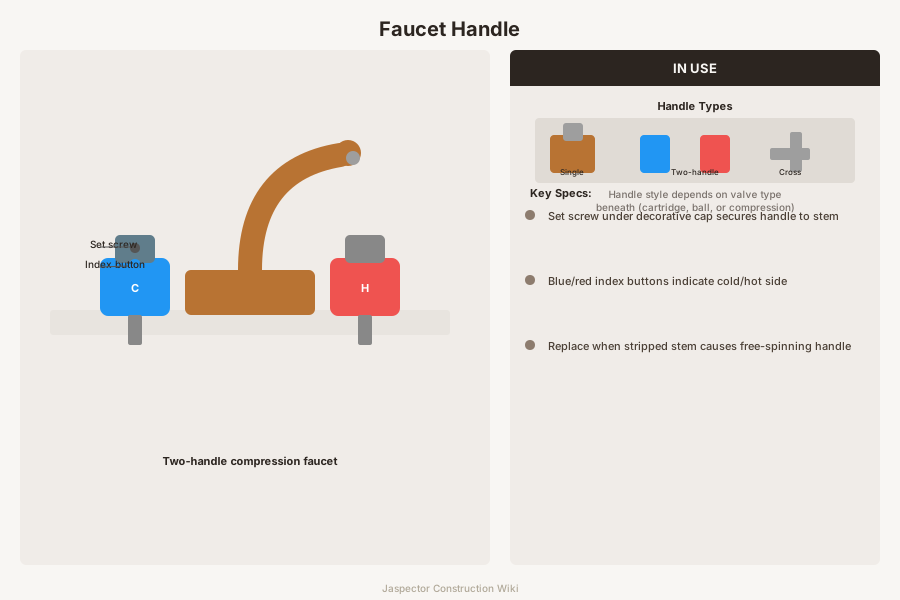
What It Is
The handle is the part a user touches, but it works as part of a larger valve system that includes a cartridge, stem, or mixing mechanism inside the faucet body. When the handle loosens, cracks, or no longer moves the valve properly, the faucet becomes difficult to operate even if the spout and body are still sound.
On some faucets the handle controls both temperature and flow, while others use separate hot and cold handles. The replacement challenge is that handle shape, broach pattern, and attachment method vary widely by faucet brand and model.
Types
Common types include single-lever handles, cross handles, knob handles, and two-handle sets for separate hot and cold control. Some attach with a visible screw, while others use hidden set screws or proprietary adapters.
Where It Is Used
Faucet handles are used on kitchen faucets, bathroom sink faucets, tub fillers, utility sinks, laundry sinks, and outdoor faucets with compatible trim assemblies. They are part of everyday fixture operation and wear out through frequent use.
How to Identify One
The handle is the visible operating piece attached to the faucet body. To identify the exact replacement, homeowners often need the faucet brand, model line, handle style, and the way it connects to the stem or cartridge below.
Replacement
Replacement is needed when the handle cracks, strips, loosens, corrodes, or no longer turns the cartridge correctly. In some cases the handle is the only failed part, but hard operation or persistent dripping often means the cartridge or valve stem needs service too.
Frequently Asked Questions
Faucet Handle — FAQ
- Can I replace just the faucet handle?
- Often yes if the handle itself is cracked, stripped, or missing and the underlying valve still works correctly. The replacement has to match the faucet brand and connection pattern, not just the general look.
- Why is my faucet handle loose?
- The attachment screw or set screw may have loosened, the internal adapter may be worn, or the handle material may have cracked around the mounting point. A loose handle can also signal wear in the cartridge stem below.
- Why is the faucet hard to turn even with a new handle?
- That usually points to the cartridge or valve stem, not the handle itself. Replacing the handle will not fix internal mineral buildup, cartridge wear, or stem damage.
- Do I need the faucet model to replace a handle?
- It helps a lot because many handles look similar but fit different stems or cartridges. Brand and model information reduce the chance of buying trim that will not attach correctly.
- How do I know if the whole faucet should be replaced instead?
- If the faucet has multiple worn parts, persistent leaks, corrosion, or hard-to-find replacement components, full faucet replacement may be the better value. A single damaged handle is a much simpler repair.
Have a question about your project? Get personalized answers from our team — $9/mo.
MembershipAlso in Plumbing
- ADA Shower Seat Accessibility
- Fold-Down Seat Accessibility
- Backflow Preventer Backflow & Cross-Connection
- Pressure Vacuum Breaker Backflow Prevention
- Toilet Bath Fixtures
- Toilet Bowl Bath Fixtures
- Toilet Tank Bath Fixtures
- Toilet Tank Gasket Bath Fixtures