Exterior Trim — boards that finish and protect edges
An exterior trim is the set of finish boards and moldings on a building exterior that cover transitions and protect edges around roofs, walls, windows, and doors.
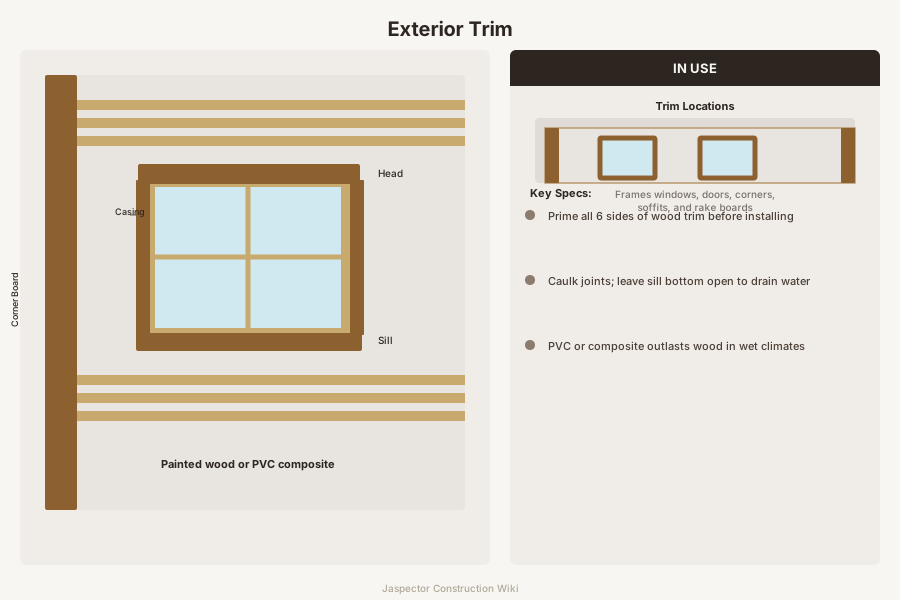
What It Is
Exterior trim includes pieces such as fascia, corner boards, frieze boards, and exterior window or door casing. These parts finish the appearance of the building while also covering joints, protecting vulnerable edges from weather, and providing a clean transition between different materials and planes on the exterior envelope.
Trim is exposed to sun, rain, wind, and seasonal movement, so material choice matters significantly. Wood trim is the traditional option and offers easy workability and a classic appearance, but it requires regular painting or staining and is susceptible to rot if moisture reaches bare wood. Fiber cement trim resists rot and insects, holds paint well, and comes in pre-primed boards typically 5/4 by 4, 6, 8, or 10 inches wide. PVC cellular trim is completely moisture-proof and never rots, but it expands and contracts more than wood with temperature swings and requires fasteners and adhesives rated for the material.
Engineered wood products offer a middle ground with treated wood fiber that resists moisture better than solid wood but still accepts paint and cuts with standard tools. The choice between materials comes down to budget, climate, the existing trim profile, and the homeowner's tolerance for maintenance.
Types
Common exterior trim pieces include fascia boards that cap the ends of rafters at the roof edge, corner boards that cover the vertical joints where two walls meet, rake trim that runs along the sloped edge of a gable, frieze boards that sit horizontally beneath the soffit where the wall meets the roof overhang, and exterior casing around doors and windows.
Decorative profiles vary widely by house style. A Craftsman home may feature wide flat trim with a simple backband, while a Colonial Revival may use built-up crown profiles at the cornice. Modern builds often use flat stock with minimal reveals. Matching existing trim on an older home sometimes requires custom milling or specialty suppliers because original profiles were often milled from old-growth lumber in shapes no longer stocked.
Where It Is Used
Exterior trim is used at roof edges, wall corners, window and door perimeters, porch details, and transitions between siding materials. It appears on nearly every finished exterior, even if the profiles are simple. On a typical house, the fascia and rake trim define the roofline, corner boards frame the wall planes, and casing surrounds every window and door opening.
Beyond aesthetics, trim also plays a functional role in the weather envelope. Properly installed trim with correct flashing, caulking, and paint directs water away from vulnerable joints. For example, a drip cap above a window casing prevents water from running behind the trim and into the wall cavity. When trim is missing or poorly detailed, water can damage sheathing, framing, and insulation behind the siding.
How to Identify One
Look for the boards or moldings that frame openings, cap wall edges, and create finished transitions on the outside of the house. Exterior trim is usually distinct from the field siding around it in profile, thickness, or paint color. Fascia runs horizontally along the roof edge, corner boards are vertical at wall intersections, and casing surrounds windows and doors with a visible reveal or offset from the siding plane.
During an inspection, pay attention to the bottom edges and end grain of trim boards, as these are the first places where moisture damage appears.
Replacement
Replacement is needed when trim is rotted, split, pulling away, or no longer holding paint. Failure often starts where water repeatedly hits joints, end grain, or poorly flashed intersections. Individual boards can usually be replaced without disturbing adjacent siding if the cuts are clean and the new material matches the existing profile and thickness.
When replacing trim, back-prime all surfaces before installation to seal against moisture absorption. Use corrosion-resistant fasteners such as stainless steel or hot-dipped galvanized nails to prevent rust staining. Caulk all butt joints with a quality exterior sealant, and prime and paint within the manufacturer's recommended window.
Frequently Asked Questions
Exterior Trim — FAQ
- What counts as exterior trim on a house?
- It includes boards and moldings such as fascia, corner boards, rake trim, frieze boards, and window or door casing. These pieces finish edges, cover joints between materials, and help protect the building envelope from weather exposure.
- Is exterior trim only decorative?
- No. It also protects edges, covers gaps, and helps water shed correctly at transitions around the exterior. Properly flashed and caulked trim prevents moisture from reaching the sheathing and framing behind the siding.
- Why does exterior trim rot first?
- Trim often has exposed edges, end grain, joints, and horizontal surfaces that catch and hold water. Failed paint, caulk, or flashing accelerates the damage because moisture gets behind the finish surface and stays trapped against the wood.
- What is the best low-maintenance exterior trim material?
- PVC and fiber cement are common low-maintenance choices, though the best option depends on the climate, the house style, and the budget. PVC never rots but expands with heat, while fiber cement is dimensionally stable but can crack if struck hard. Wood can look great but usually needs more frequent painting and inspection.
- Should I back-prime exterior trim before installing it?
- Yes. Back-priming seals the unexposed faces of the board so moisture from the wall cavity or behind the siding cannot absorb into the trim from behind. This step significantly extends the life of wood and engineered wood trim, and most manufacturers recommend or require it for warranty coverage.
Have a question about your project? Get personalized answers from our team — $9/mo.
MembershipAlso in Exterior
- Extension Ladder Access & Safety
- Concealed Hinge Cabinet Hardware
- Board and Batten Cladding
- EIFS (Exterior Insulation Finish System) Cladding
- Hardboard Siding Cladding
- Shake Siding Cladding
- Siding Cladding
- Stone Veneer Cladding