Euro Hinge - Concealed Cabinet Hinge Adjustment Guide
A Euro hinge is a concealed cabinet hinge that mounts inside the cabinet and allows the door to open and adjust without visible surface hardware.
What It Is
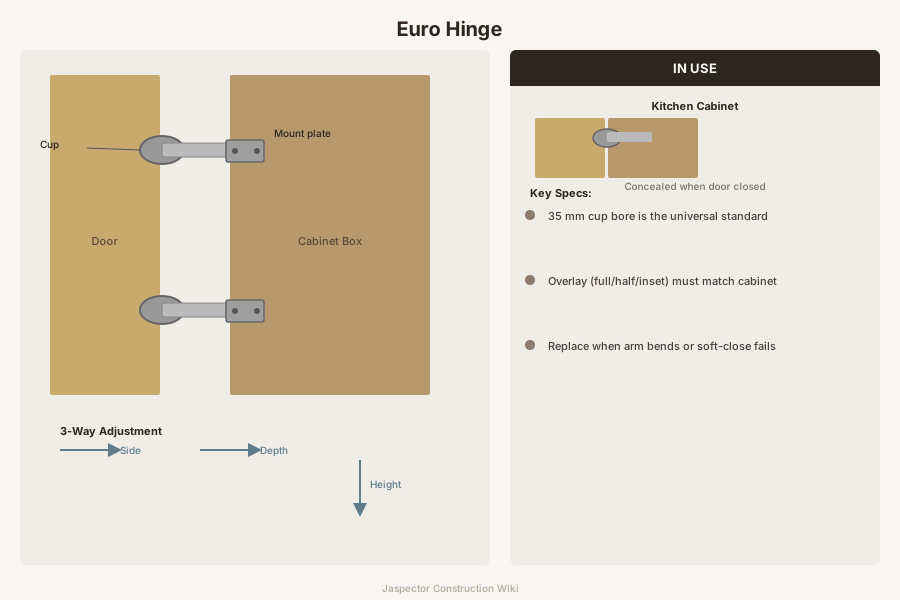
Euro hinges, often called concealed hinges, use a cup bored into the back of the cabinet door and a mounting plate attached to the cabinet box. Once the door is closed, the hinge is mostly hidden from view, which is why this style is standard on many modern kitchen and bath cabinets.
The hinge is valued not only for appearance but also for adjustability. Most Euro hinges allow side-to-side, in-and-out, and height adjustment so the installer can align door gaps and reveals after installation.
Types
Common types include full-overlay, half-overlay, and inset Euro hinges, along with soft-close and push-to-open variants. The correct hinge depends on cabinet construction, door overlay, and desired opening angle.
Where It Is Used
Euro hinges are used on frameless cabinets and many face-frame cabinets fitted with adapter plates. They are common in kitchens, bathrooms, laundries, and built-in storage where concealed hardware and fine door adjustment are important.
How to Identify One
Open the cabinet door and look for a round metal hinge cup recessed into the back of the door near the edge. The hinge arm then clips or screws onto a plate inside the cabinet instead of being visible on the outside face.
Replacement
Replacement is needed when the hinge no longer holds alignment, the soft-close feature fails, the arm bends, or the mounting screws strip out the cabinet material. Like-for-like replacement works best when the cup diameter, overlay type, and mounting pattern match the original hardware.
Frequently Asked Questions
Euro Hinge — FAQ
- What is the difference between a Euro hinge and a regular cabinet hinge?
- A Euro hinge is concealed when the door is closed and usually offers multiple adjustment directions. Traditional exposed hinges are visible on the cabinet face and often have less built-in adjustment.
- Why won't my cabinet door line up with a Euro hinge?
- Most alignment problems come from adjustment screws, loose mounting plates, or worn hinge arms. If adjustment no longer corrects the door gap, the hinge or the cabinet screw holes may already be failing.
- Can I replace a Euro hinge with any concealed hinge?
- No. The cup size, overlay, opening angle, and mounting pattern need to match the cabinet and door. A similar-looking hinge can still leave the door misaligned or unable to close properly.
- How do I know if a Euro hinge needs replacing?
- Common signs include sagging doors, soft-close failure, loose hinge arms, and repeated misalignment after adjustment. Cracked mounting points in particleboard cabinets are another common clue.
- Are soft-close Euro hinges worth upgrading to?
- Usually yes if the cabinet door size and overlay are compatible. They reduce slamming and feel better in daily use, but the upgrade still has to match the existing cup bore and mounting layout.
Have a question about your project? Get personalized answers from our team — $9/mo.
MembershipAlso in Interior
- Soft-Close Hinge
- L-Bead Drywall & Plaster
- Skirt Board Stairs & Railings
- Stair Nose Stairs & Railings
- Panel Molding Trim & Millwork
- Picture Molding Trim & Millwork
- Wainscot Panel Wall Finishes & Trim