Epoxy Anchor — Structural Adhesive Rod in Concrete
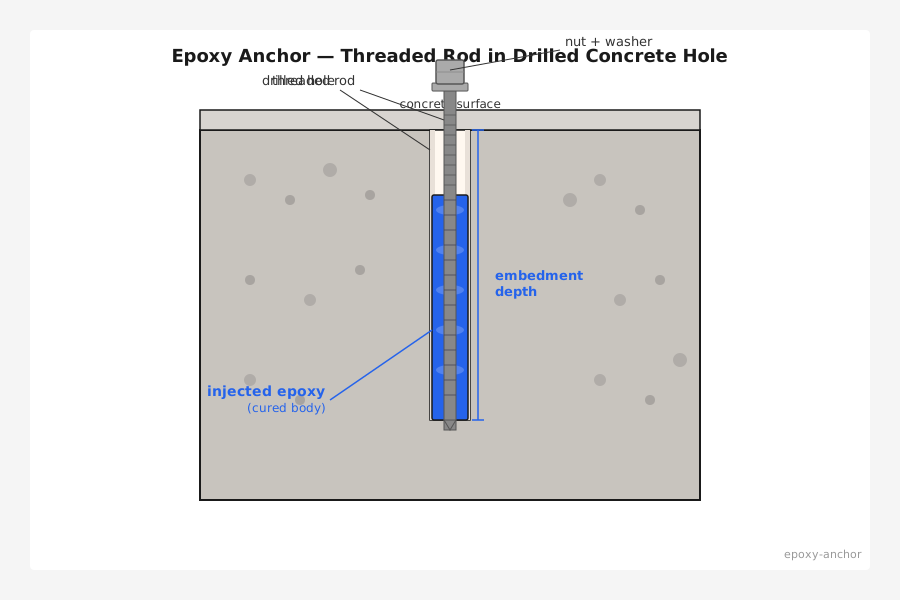
An epoxy anchor is a threaded rod or rebar insert bonded into a drilled hole in concrete or masonry using a two-component structural adhesive, creating a load-bearing fastener in hardened material without requiring mechanical expansion.
What It Is
When a structural connection must be made to existing concrete or masonry — for a ledger board, a post base, a handrail anchor, or a sill plate retrofit — drilling a hole and injecting structural epoxy before inserting a threaded rod creates a bonded anchor with high tensile and shear capacity. The epoxy fills the annular gap between the rod and the drilled hole and bonds chemically and mechanically to both the concrete and the steel.
A two-part epoxy is packaged in a side-by-side cartridge with a static mixing nozzle that blends the resin and hardener as it dispenses. After drilling the hole to the specified diameter and depth (typically 1/8 inch larger than the rod diameter), thorough cleaning is critical. The hole must be blown out with compressed air, brushed with a wire brush, and blown again — at minimum two cycles. Dust contamination is the single most common cause of epoxy anchor failure because it prevents direct contact between the adhesive and the concrete substrate.
The epoxy is injected starting at the bottom of the hole and working outward to avoid trapping air pockets. The threaded rod is inserted with a slow twisting motion to distribute the adhesive evenly, then held or propped in position while the epoxy cures. Curing time depends on temperature and product chemistry — typically 30 minutes to several hours for initial set, with full load capacity reached in 4 to 24 hours at 70 degrees Fahrenheit. Epoxy anchors achieve strength comparable to cast-in-place anchors and are the preferred retrofit method where hole-edge distances or spacing are too tight for mechanical expansion-anchor products.
Types
Hybrid epoxy-acrylic anchors (sometimes called polyester or vinylester) are faster-curing than pure epoxy and are used for light-to-medium loads such as handrail bases and non-structural brackets. True two-part structural epoxy offers the highest load ratings and is the standard for seismic retrofits, ledger connections, and structural steel base plates.
Rebar dowel epoxy anchors use deformed reinforcing bar rather than a threaded rod, typically for connecting new concrete pours to existing structures, adding shear reinforcement to existing beams, or doweling new foundation sections to old footings. The deformed surface profile of the rebar increases the mechanical bond with the cured epoxy.
Where It Is Used
Epoxy anchors are used for ledger-to-foundation connections, sill plate seismic retrofits per FEMA P-1100 guidelines, deck post bases, handrail anchorage to concrete steps, structural steel column connections to existing footings or slabs, equipment anchoring in industrial facilities, and anywhere a post-installed structural anchor is needed in hardened concrete or grouted masonry. They are listed in seismic applications under ICC-ES AC308 where expansion anchors may not be accepted due to cracked-concrete performance limitations.
How to Identify One
A drilled hole in concrete with a threaded rod protruding, accompanied by a smooth or slightly rough epoxy fillet visible around the rod at the surface, is an epoxy anchor. The rod may have a nut and washer on top securing a bracket or plate. There is no visible expansion sleeve, clip, or wedge at the surface — the absence of any mechanical expansion hardware is the distinguishing feature compared to sleeve or wedge anchors.
Replacement
Epoxy anchors are permanent — they cannot be removed and reused without drilling out and patching the hole. If an anchor fails or is in the wrong location, the rod must be cut flush with a reciprocating saw or angle grinder, the hole filled with structural epoxy or non-shrink concrete repair mortar, and a new hole drilled at the correct location with proper edge-distance and spacing clearances maintained. Failed anchors should be investigated to determine whether the cause was contamination, improper hole sizing, insufficient embedment depth, or substrate cracking before installing replacements.
Frequently Asked Questions
Epoxy Anchor — FAQ
- Why is hole cleaning so important for epoxy anchors?
- Epoxy bonds to clean concrete surfaces. Dust and debris left in the hole act as a release layer between the epoxy and the concrete, dramatically reducing pullout capacity. Holes must be blown out with compressed air, brushed, and blown again before injecting epoxy. Skipping this step is the most common cause of epoxy anchor failure.
- How long does epoxy anchor adhesive take to cure?
- Cure time depends on temperature and the specific product. At 70 degrees Fahrenheit most structural epoxy systems reach full load capacity in 4 to 24 hours. At cold temperatures, cure time extends significantly — some products should not be installed below 40 degrees Fahrenheit without heating the substrate. Always follow the manufacturer's published cure schedule before applying load.
- Can epoxy anchors be used near the edge of a concrete slab or wall?
- Epoxy anchors generally allow smaller edge distances than mechanical expansion anchors, which is one reason they are preferred in tight locations. However, minimum edge distances and spacing are still required and must be followed per the published anchor evaluation report or ICC-ES listing. Installing too close to an edge can cause concrete breakout failure.
- Are epoxy anchors approved for seismic applications?
- Many epoxy anchor systems are tested and listed under ICC-ES AC308 for seismic applications, including cracked and uncracked concrete. Mechanical expansion anchors are often not accepted in seismic zones for critical structural connections. Verify the specific product has the appropriate listing for your application.
- How much do epoxy anchor installations cost?
- Materials for a standard epoxy anchor kit (cartridge, nozzle, rod, nut, washer) run $15 to $50 per anchor for residential applications. Professional installation including drilling, cleaning, injection, and hardware typically costs $75 to $200 per anchor depending on location, rod size, and embedment depth.
Have a question about your project? Get personalized answers from our team — $9/mo.
MembershipAlso in Masonry
- Masonry Anchor
- Wall Tie
- Arch Brick Brick Masonry
- Brick Ledge Brick Masonry
- Corbel Brick Masonry
- Face Brick Brick Masonry
- Tuckpointing Mortar Brick Masonry
- Smoke Chamber Chimney Masonry