Edging Board - Landscape Border Types and Repair Guide
An edging board is the straight border board used to define the edge of a planting bed, path, lawn, or landscape area.
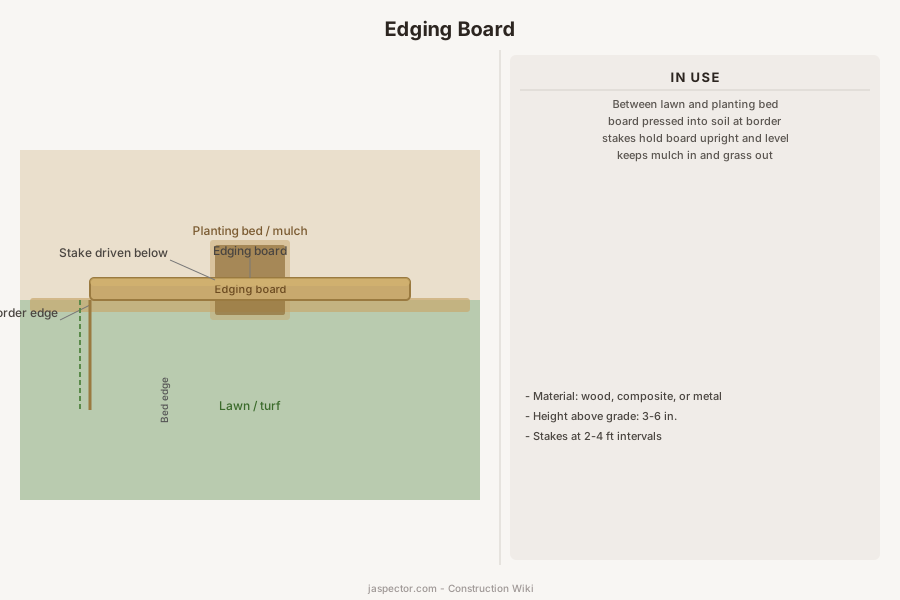
What It Is
Edging boards create a clean visual boundary and help hold mulch, gravel, or soil where it belongs. They can also separate turf from planting beds so grass does not creep into the landscape area as quickly.
The term usually refers to wood or composite boards used as landscape edging rather than structural decking or framing members. Performance depends on the material, stake support, soil contact, and drainage around the edge.
Types
Common types include pressure-treated landscape edging boards, cedar edging boards, redwood boards, composite edging boards, and flexible board systems designed for curved bed lines.
Where It Is Used
Edging boards are used around planting beds, tree rings, gravel paths, lawn borders, playground areas, and other landscape zones where a visible edge helps contain material and shape the space.
How to Identify One
Look for a narrow board set along the ground at the edge of a bed or path, often held by stakes on one or both sides. Rot, bowing, separation at joints, and soil washing under the board are common signs of age or poor installation.
Replacement
Replacement is needed when the board rots, warps, loosens from its stakes, or no longer holds the bed edge cleanly. Upgrading the stakes, drainage, or material type often matters as much as swapping the board itself.
Frequently Asked Questions
Edging Board — FAQ
- What is an edging board used for?
- It defines the border of a bed, path, or lawn area and helps contain mulch, gravel, or soil. It also gives the landscape a cleaner, more intentional outline.
- How long does a wood edging board last?
- That depends on the wood species, ground moisture, and drainage, but boards in constant soil contact wear out faster than above-grade wood. Rot usually starts at the bottom edge and around fasteners or stakes.
- Is composite edging better than wood?
- Composite usually resists rot better, but it can cost more and may flex differently than wood in curves or long runs. The right choice depends on the look you want and how wet the site stays.
- Can I replace just one section of edging board?
- Usually yes, if you can match the thickness and appearance and the adjoining stakes are still sound. If the whole run is rotting or leaning, piecemeal repairs may not last long.
Have a question about your project? Get personalized answers from our team — $9/mo.
MembershipAlso in Landscaping
- Erosion Mat Erosion Control
- Berm Grading & Drainage
- Landscape Fabric Ground Cover
- Landscape Pin Ground Cover
- Pea Gravel Ground Cover & Aggregate
- Flagstone
- Paver
- Drip Emitter Irrigation