Dryer Cord — Three-Prong and Four-Prong 240V Power Cords
A dryer cord is a heavy-duty power cord that connects an electric clothes dryer to a dedicated wall outlet, carrying 240 volts through either three or four conductors depending on the wiring era and code requirements.
What It Is
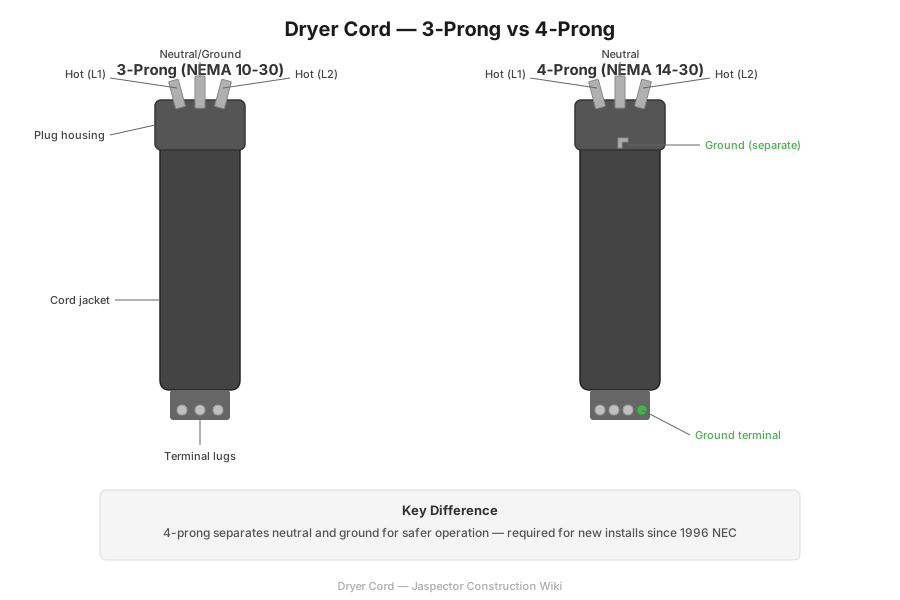
A dryer cord is the detachable power supply cable for a residential electric dryer. Dryers ship without a cord because outlet configurations differ between homes. The homeowner or installer must purchase the correct cord type to match the existing outlet. Two standards exist: the older 3-prong configuration (NEMA 10-30) and the current 4-prong configuration (NEMA 14-30). The 4-prong cord separates the neutral and ground conductors, which is the safer design and has been required by the NEC for new construction since 1996.
The cord attaches to a terminal block on the back of the dryer, typically located behind a small metal access cover held by two or three screws. The connection involves matching each conductor to the correct terminal — hot to hot, neutral to neutral, and ground to ground on a 4-prong setup. Incorrect wiring at this point can energize the dryer chassis and create a shock hazard. On a 4-prong installation, the bonding strap between neutral and the dryer frame must be removed; on a 3-prong installation, that strap must remain in place because the neutral conductor also serves as the ground path.
Dryer cords use 10 AWG stranded copper conductors rated for 30 amps at 240 volts. The outer jacket is typically SRDT (Service Rated Dryer Type) rubber rated for 300 volts, which provides the flexibility needed to maneuver behind the appliance while withstanding the heat generated near the dryer exhaust.
Types
The two main types are 3-prong (NEMA 10-30) and 4-prong (NEMA 14-30). Both are rated for 30 amps at 240 volts. Cord lengths typically range from 4 to 6 feet, with 5-foot cords being the most common retail size. The 3-prong cord has two hot conductors and one combined neutral-ground conductor arranged in a flat configuration. The 4-prong cord has two hot conductors, one neutral, and one separate ground, with the ground prong curved in an L shape to prevent insertion into the wrong slot.
Range cords (NEMA 10-50 and NEMA 14-50) look similar but are rated for 50 amps and use heavier 6 AWG conductors. They are not interchangeable with dryer cords even though the plug shapes appear comparable at first glance.
Where It Is Used
Dryer cords connect electric clothes dryers to dedicated 30-amp, 240-volt outlets in laundry rooms, utility closets, garages, and basements. The outlet is typically mounted at the wall behind the dryer, 12 to 18 inches above the floor, positioned so the cord does not need to stretch across the dryer exhaust duct. Gas dryers use a standard 120-volt plug and do not require a dryer cord.
How to Identify One
A dryer cord is a thick, flexible cable about 4 to 6 feet long with a large molded plug on one end and bare wire terminals — ring or spade lugs — on the other. The plug will have either three flat angled prongs (NEMA 10-30) or three flat angled prongs plus a curved ground prong (NEMA 14-30). The cord is noticeably heavier than a standard appliance cord due to the 10 AWG stranded conductors inside, and the outer jacket diameter is typically 5/8 to 3/4 inch.
The conductor colors follow a standard scheme: two hot wires are black and red, the neutral is white, and the ground on a 4-prong cord is green. On a 3-prong cord, the center conductor serves as the combined neutral-ground and is typically white or gray.
Replacement
Replace a dryer cord when switching between a 3-prong and 4-prong outlet, when the cord shows cracking or heat damage at the plug or terminal end, or when moving a dryer to a home with a different outlet type. A cord with a scorched or discolored plug face indicates a loose connection at the outlet and should be replaced immediately along with inspection of the receptacle.
Replacement involves removing the dryer's rear access panel, disconnecting the old cord from the terminal block, attaching the new cord to the correct terminals, adjusting the bonding strap as required for 3-prong or 4-prong configuration, and securing the strain relief clamp so the cord cannot pull free. The terminal block wiring must follow the manufacturer's diagram exactly — reversing neutral and ground on a 4-prong cord defeats the safety purpose of the separate ground. After reconnection, verify that the dryer frame is properly grounded by checking continuity between the frame and the ground prong with a multimeter.
Frequently Asked Questions
Dryer Cord — FAQ
- What is the difference between a 3-prong and 4-prong dryer cord?
- A 3-prong cord combines the neutral and ground into one conductor, while a 4-prong cord provides a separate ground wire. The 4-prong design is safer because it keeps the equipment ground independent from the neutral return path, preventing the dryer chassis from becoming energized if the neutral fails.
- Can I use a 3-prong dryer cord in a new home?
- New construction since 1996 requires a 4-prong outlet per the NEC. If your home has a 4-prong outlet, you must use a 4-prong cord. Existing 3-prong outlets in older homes can still be used with a 3-prong cord as long as the installation follows the dryer manufacturer's instructions for bonding.
- How do I know which dryer cord to buy?
- Look at the wall outlet. Count the slots — three slots means you need a 3-prong NEMA 10-30 cord, four slots means you need a 4-prong NEMA 14-30 cord. Buy a cord rated for 30 amps and choose a length that reaches the outlet without stretching.
- Is it safe to change a dryer cord myself?
- Changing a dryer cord is one of the simpler electrical tasks, but it must be done correctly. The dryer must be unplugged before starting, and each conductor must connect to the correct terminal per the manufacturer's wiring diagram. If you are unsure about terminal identification, hire an electrician.
- How much does a dryer cord replacement cost?
- A dryer cord itself costs $15 to $30 at most hardware stores. If you hire an electrician or appliance technician to install it, expect to pay $75 to $150 total including the cord and labor.
Have a question about your project? Get personalized answers from our team — $9/mo.
MembershipAlso in Electrical
- Range Outlet Appliance Circuits
- Appliance Whip
- Dishwasher Cord
- Range Cord
- Generator Backup Power
- Transfer Switch Backup Power
- Box Cover Boxes
- Box Extender Boxes