Dishwasher Cord — Power Cable Selection and Wiring
A dishwasher cord is a three-conductor power supply cable that connects a dishwasher to a dedicated electrical receptacle under the kitchen counter.
What It Is
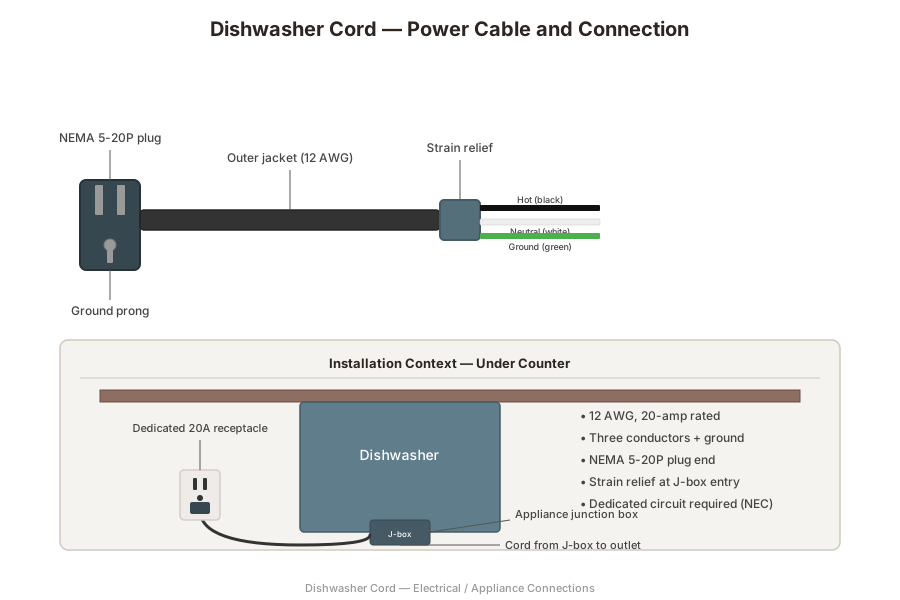
A dishwasher cord provides the electrical connection between the dishwasher junction box and a wall receptacle. It consists of three insulated conductors — hot (black), neutral (white), and ground (green) — inside a flexible outer jacket, with a three-prong plug on one end and stripped leads or a strain-relief fitting on the appliance end. The cord is typically 12 AWG wire rated for 20 amps to match the dedicated dishwasher circuit required by NEC Article 422.16.
Many dishwashers ship without a power cord because local codes vary on whether the appliance must be cord-and-plug connected or hardwired directly to the branch circuit. Homeowners or installers add the appropriate cord based on the installation method their jurisdiction requires. The cord jacket is rated SJT or SJTO, which designates a hard-service junior thermoplastic cord suitable for appliance connections.
The appliance end of the cord passes through a strain-relief clamp that secures the cord to the junction box and prevents the wire connections inside from being stressed if the cord is pulled. Without proper strain relief, movement during dishwasher service or installation can loosen internal wire nut connections and create arcing hazards.
Types
Standard three-prong dishwasher cords have a NEMA 5-15P or 5-20P plug for 120-volt receptacle connections. The 5-20P plug has one blade oriented perpendicular to the other to match a 20-amp T-slot receptacle and will not fit a standard 15-amp duplex outlet. Some cords include a built-in strain relief for the appliance junction box end, while others require a separate strain-relief clamp purchased individually.
Cords are available in various lengths, typically three to six feet, to reach the receptacle location under the counter without excess slack that could contact the dishwasher motor or drain components. Hardwire kits with a flexible conduit whip are used where code requires direct wiring instead of a plug connection. These kits include a length of flexible metallic conduit with pre-installed conductors and a junction box connector on each end.
Where It Is Used
Dishwasher cords are used in residential kitchens wherever the dishwasher connects to a receptacle rather than being hardwired. NEC Section 422.16(B)(2) has required a readily accessible receptacle for dishwashers since the 2020 code cycle, making cord-and-plug connections the standard method in jurisdictions that have adopted that edition. The receptacle must be located in the space adjacent to the dishwasher, accessible without moving the appliance.
In older homes where the dishwasher was originally hardwired, upgrading to a cord-and-plug connection during appliance replacement is a common practice that brings the installation into compliance with current code. The existing cable is terminated in a junction box behind or beside the dishwasher opening, and a receptacle is installed in that box.
How to Identify One
A dishwasher cord runs from the bottom of the dishwasher to a receptacle under the counter, usually next to the sink cabinet. It has a standard three-prong plug on the outlet end and connects to the dishwasher junction box on the appliance end. The cord is visibly heavier than a standard lamp cord, typically 3/8 inch in outer diameter, and is printed with the wire gauge, amperage rating, and cord type designation such as SJT 12/3.
If no cord is visible and the dishwasher has power, the unit is likely hardwired through a flexible conduit whip or direct cable connection to the junction box underneath the appliance.
Replacement
Replace a dishwasher cord when the plug prongs are bent or corroded, the jacket is cracked or melted, the strain relief is broken, or the cord does not match the circuit amperage. Turn off the circuit breaker, unplug the cord, remove the junction box cover on the dishwasher, disconnect the wire nuts, and install the new cord with proper color-matched connections — black to black, white to white, green to the ground screw or green pigtail.
Secure the strain-relief clamp snugly around the cord jacket so that pulling on the cord does not stress the internal connections. Use a cord rated for the appliance amperage and the receptacle configuration. After connecting, restore power and verify the dishwasher operates through a complete cycle before pushing the unit back into the cabinet opening.
Frequently Asked Questions
Dishwasher Cord — FAQ
- Why does my dishwasher not come with a power cord?
- Manufacturers omit the cord because installation methods vary by jurisdiction. Some codes require a cord-and-plug connection to a receptacle, while others allow or require hardwiring. The installer adds the correct connection method based on local code requirements.
- What size cord do I need for a dishwasher?
- Most dishwashers require a 12 AWG, 20-amp cord with a NEMA 5-20P plug to match the dedicated 20-amp circuit. Check the dishwasher installation manual for the specific cord requirements, as some smaller units may accept a 15-amp cord.
- Can I hardwire a dishwasher instead of using a cord?
- Hardwiring is permitted in jurisdictions that have not adopted the 2020 NEC requirement for a receptacle outlet serving the dishwasher. Check your local code, as the trend is toward cord-and-plug connections for easier appliance replacement and servicing.
- Does a dishwasher need a dedicated circuit?
- Yes. The NEC requires a dedicated 20-amp branch circuit for a dishwasher. This circuit should not be shared with the garbage disposal or other kitchen appliances, though some older installations may have combined circuits that were code-compliant when installed.
- How do I connect a dishwasher cord to the appliance?
- Remove the junction box cover on the bottom of the dishwasher, run the cord through the strain-relief fitting, connect black to black, white to white, and green to the ground screw or green wire using wire nuts, then secure the strain relief and replace the cover.
Have a question about your project? Get personalized answers from our team — $9/mo.
MembershipAlso in Electrical
- Range Outlet Appliance Circuits
- Appliance Whip
- Dryer Cord
- Range Cord
- Generator Backup Power
- Transfer Switch Backup Power
- Box Cover Boxes
- Box Extender Boxes