Dehumidifier - Indoor Moisture Control Guide at Home
A dehumidifier is an appliance that removes excess moisture from indoor air to reduce dampness, mold risk, and musty odors.
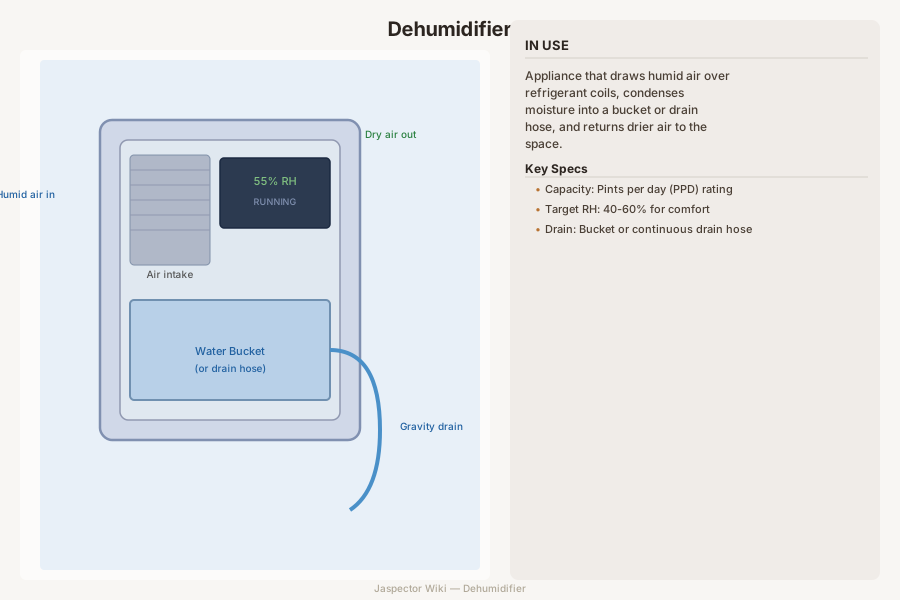
What It Is
A dehumidifier pulls humid air across cold coils so water condenses out and collects in a bucket or drains away through a hose. The drier air then passes back through the room, which helps keep relative humidity in a healthier range.
Lower humidity protects finishes, stored belongings, and building materials from chronic moisture exposure. It also makes basements, crawl spaces, and damp rooms feel less clammy and can reduce the conditions that allow mold and dust mites to thrive.
Types
Portable dehumidifiers are moved from room to room and usually empty into a bucket or gravity drain. Whole-house units tie into HVAC ductwork or operate as dedicated basement systems for larger or more consistent moisture control.
Where It Is Used
Dehumidifiers are common in basements, crawl spaces, laundry rooms, finished lower levels, and humid climates where indoor moisture stays high for long periods. They are also used after water intrusion while drying a building.
How to Identify One
A dehumidifier is usually a box-shaped appliance with intake and exhaust grilles, a water bucket or drain connection, and humidity controls on the top or front panel. Whole-house models are larger metal cabinets connected to ducts or dedicated drain lines.
Replacement
Replacement is common when the unit runs constantly without lowering humidity, freezes up repeatedly, leaks, stops collecting water, or becomes uneconomical to repair. If moisture remains high even with a working unit, the house may also have drainage, air sealing, or ventilation problems that need attention.
Frequently Asked Questions
Dehumidifier — FAQ
- What humidity level should a dehumidifier keep in a house?
- A common target is about 40% to 50% relative humidity. That range is dry enough to discourage mold and musty conditions without making the air feel uncomfortably dry.
- How do I know if I need a dehumidifier?
- Common signs include condensation on windows, musty odors, visible mildew, damp-feeling air, and stored items that smell stale or feel wet. A hygrometer reading consistently above about 60% is also a strong signal.
- Why is my dehumidifier running but not collecting much water?
- The room may already be fairly dry, the filter or coils may be dirty, the temperature may be too low for efficient operation, or the unit may be undersized or failing. Check the settings before assuming the appliance is bad.
- Can a dehumidifier solve a wet basement by itself?
- Not always. It can manage indoor moisture, but it does not fix exterior grading, groundwater intrusion, foundation leaks, or failed drainage systems that keep adding water to the space.
Have a question about your project? Get personalized answers from our team — $9/mo.
MembershipAlso in HVAC
- Air Handler Air Distribution
- Register Air Distribution
- Return Air Grille Air Distribution
- HVAC Filter Air Filtration
- Heat Strip Air Handler Components
- Heating Coil Air Handler Components
- Furnace Blower Air Movement
- Air Filter (HVAC) Air Quality & Filtration