Cripple Wall - Crawl Space Framing Support Basics Guide
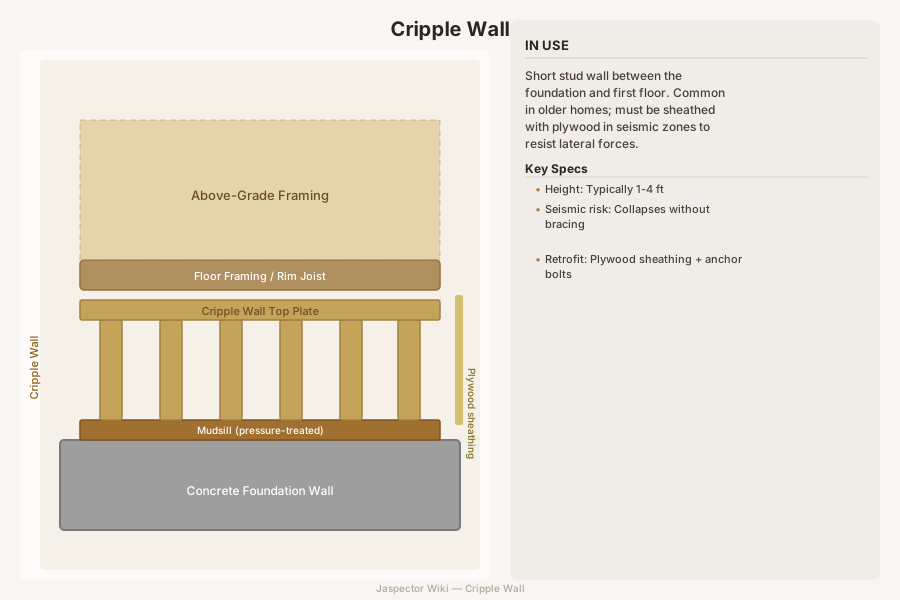
A cripple wall is the short stud wall between a foundation and the first-floor framing, usually found in raised-floor homes with crawl spaces.
What It Is
Cripple walls create the elevated platform between the top of the foundation and the floor framing above. They are common in older wood-frame homes and can range from a few inches to several feet tall depending on site slope and foundation design.
These walls matter structurally because they can be a weak point in earthquakes and lateral movement if they are tall, poorly braced, or inadequately bolted. In some regions, cripple wall bracing is a major seismic retrofit topic.
Where It Is Used
Cripple walls are used in crawl space foundations, especially in older raised-floor houses. They are typically found along the building perimeter between the concrete foundation and the floor joists.
How to Identify One
A cripple wall is visible inside a crawl space as a short framed wall sitting on top of the foundation. It supports the floor framing above and is usually sheathed lightly or left open in older homes.
Replacement
Cripple walls are not usually replaced as isolated components, but they are often strengthened, braced, or rebuilt during foundation and seismic retrofit work. Structural evaluation matters because the goal is system stability, not cosmetic repair.
Frequently Asked Questions
Cripple Wall — FAQ
- What is a cripple wall in a house?
- It is the short framed wall between the top of the foundation and the floor framing above. It raises the house above the foundation and creates crawl space height.
- Why are cripple walls a concern in earthquakes?
- Unbraced cripple walls can rack or collapse under lateral movement, allowing the house above to shift. That is why they are often targeted in seismic retrofit programs.
- Can a cripple wall be strengthened instead of replaced?
- Yes. Many retrofit projects add plywood sheathing, better bolting, and improved connections rather than replacing the whole wall. The right solution depends on the existing framing and foundation.
- How do I know if my house has a cripple wall?
- Look in the crawl space or review foundation plans. If there is a short framed wall between the concrete foundation and the floor framing, that is a cripple wall.
Have a question about your project? Get personalized answers from our team — $9/mo.
MembershipAlso in Structural
- Access Panel Access & Openings
- Attic Hatch Access & Openings
- Construction Adhesive Adhesives & Sealants
- J-Bolt Anchorage
- Expansion Anchor Anchors & Fasteners
- Molly Bolt Anchors & Fasteners
- Baffle (Attic Rafter Vent) Attic & Roof
- Attic Hatch Cover Attic Access