Countertop Support Bracket — Overhang Load and Spacing
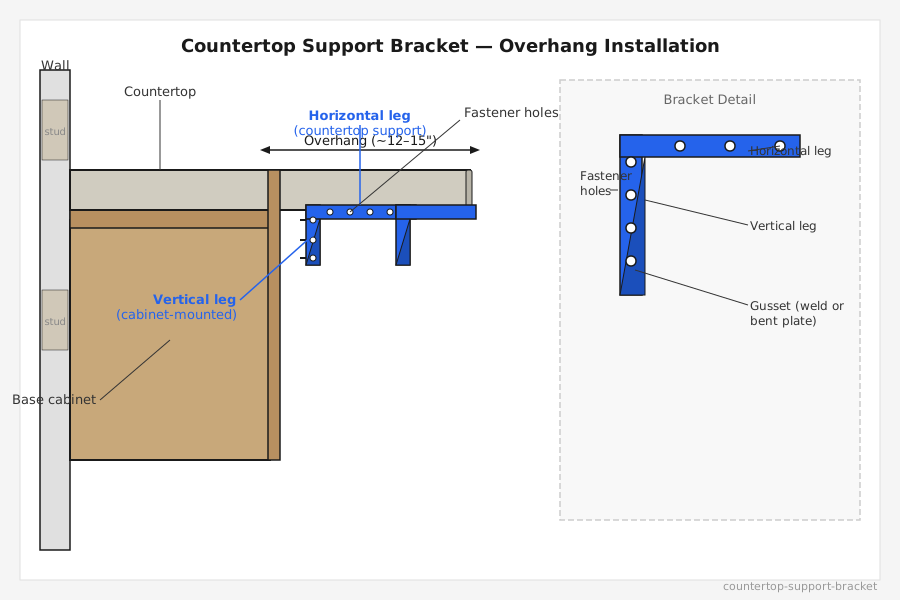
A countertop support bracket is an L-shaped metal bracket wall-mounted beneath a countertop overhang to carry the load of the cantilevered section and prevent cracking or deflection.
What It Is
A countertop support bracket is a structural metal bracket, typically 1/4-inch or 3/8-inch steel plate, used to support the underside of a countertop overhang where the counter extends beyond the cabinet base without a supporting leg below. Overhangs are common at kitchen islands, breakfast bars, and peninsula seating areas where people sit on stools and the countertop must project 12 to 15 or more inches past the cabinet edge.
Without support, a cantilevered countertop overhang will crack over time, particularly at the transition point where the unsupported section begins. Stone countertops such as granite (typically 1-1/4 inches thick, weighing about 18 pounds per square foot) and quartz are especially vulnerable because they are brittle under bending stress. Laminate countertops flex more but can delaminate or crack at the particleboard substrate. Butcher block countertops are more forgiving due to the wood grain's tensile strength but still benefit from support on overhangs beyond 8 inches.
Brackets mount to wall studs or blocking through their vertical leg using 3/8-inch or 5/16-inch lag screws, and support the underside of the countertop through their horizontal leg. The horizontal leg should extend to within 2 inches of the overhang edge for full support. Heavy-duty corbel brackets and knee braces are variations used when the aesthetic of exposed support is intentional, as in farmhouse and traditional kitchen designs.
Types
Flat L-brackets are the most utilitarian option and mount flush to the underside of the countertop, concealed from view when seated at the counter. They are typically 3/16-inch to 1/4-inch steel and come in depths from 8 to 18 inches to match common overhang dimensions.
Decorative corbels serve the same structural function but are designed to be visible as an architectural element. They come in wood, iron, and composite materials and range from simple tapered profiles to ornate scrollwork. Load ratings vary widely — verify the corbel is rated for structural use before relying on it.
Fold-down brackets allow the countertop extension to be folded up when not in use — common in tight spaces, pass-through windows, and laundry rooms. The hinge mechanism locks in the open position and releases with a lever.
Heavy-duty welded steel brackets are used for stone countertops with overhangs beyond 12 inches. These are typically 3/8-inch steel plate with a diagonal brace welded between the vertical and horizontal legs, rated for 500 pounds or more per bracket.
Where It Is Used
Countertop support brackets are used at kitchen cabinet islands, peninsula seating, bar tops, and any countertop with an unsupported overhang greater than about 6 inches. Manufacturer guidelines and fabricator recommendations for stone countertops typically require support every 18 to 24 inches along the overhang, with the outermost brackets placed no more than 6 inches from the ends of the countertop.
In outdoor kitchens, brackets must be stainless steel or hot-dipped galvanized to resist corrosion. Indoor brackets in standard powder-coated or painted steel are adequate for kitchen and bath environments.
How to Identify One
Look under the countertop overhang near the wall or cabinet edge. Support brackets will be visible as L-shaped metal pieces screwed to the wall or cabinet side and touching the underside of the countertop. In finished installations, they may be painted to match the cabinetry or concealed behind a decorative panel. On stone countertops, the bracket's horizontal leg is often adhered to the underside of the stone with a bead of silicone in addition to bearing contact.
If no brackets are visible under a long stone overhang, the countertop may be supported by a hidden steel rod system (called a floating countertop support), which uses threaded rods epoxied into the edge of the stone slab.
Replacement
Brackets are replaced when they corrode, loosen from their wall anchors, or when a countertop is being upgraded to a heavier material. New brackets must be sized to match the overhang depth and anchored into wall studs or solid 2x blocking with lag screws — toggle bolts or drywall anchors are not adequate for countertop loads. Stone countertop installations may require the fabricator to specify bracket placement and spacing before the slab is templated and cut.
No permit is required for bracket replacement or installation. When adding brackets to an existing installation, the countertop must be temporarily supported from below while new brackets are positioned and secured.
Frequently Asked Questions
Countertop Support Bracket — FAQ
- How far can a countertop overhang without support?
- Laminate countertops can typically cantilever six to eight inches without additional support. Stone countertops such as granite or quartz should not overhang more than six to ten inches without brackets, depending on the stone thickness and the fabricator's specifications. Overhangs for seating areas are usually twelve to fifteen inches and always require support.
- How many countertop support brackets do I need?
- A common rule is one bracket every eighteen to twenty-four inches along the overhang. For stone countertops, the fabricator will specify the spacing based on slab thickness and material. More brackets are better, and they should always land on wall studs or solid blocking.
- Can I use countertop support brackets on granite?
- Yes, and they are often required by granite fabricators for any overhang greater than six inches. Granite and other stone countertops are heavy and brittle in tension, so unsupported overhangs will crack at the point where the countertop transitions off the cabinet. Use heavy-duty steel brackets rated for the weight.
- Do countertop support brackets need to be anchored into studs?
- Yes. The vertical leg of the bracket must be fastened into wall studs or solid blocking to carry the load effectively. Anchoring into drywall alone is not adequate for a countertop that will support seated users or heavy items.
- Are decorative corbels structural?
- Some corbels are purely decorative and provide no meaningful structural support, while others are engineered for load-bearing use. If you need functional support, buy corbels or brackets explicitly rated for countertop loads and install them as directed.
Have a question about your project? Get personalized answers from our team — $9/mo.
MembershipAlso in Cabinetry
- Cabinet Door Cabinet Components
- Cabinet Shelf Cabinet Components
- Shelf Pin Cabinet Components
- Toe Kick Cabinet Components
- Cabinet Hinge Hardware
- Cabinet Pull Hardware
- Linen Cabinet Storage
- Medicine Cabinet Storage