Corner Bead - Drywall Edge Protection Repair Guide
A corner bead is the trim strip installed over an outside drywall corner to create a straight edge and protect the corner from damage.
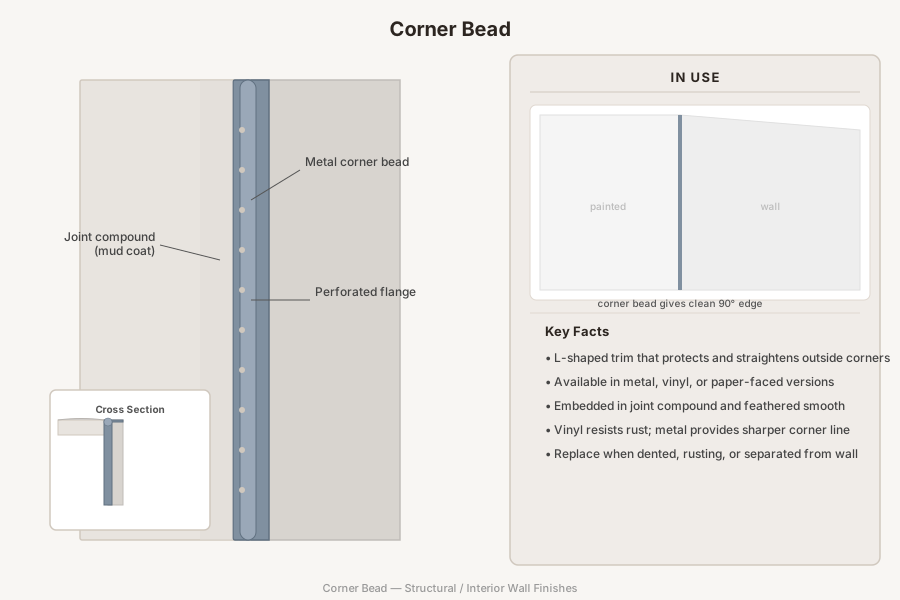
What It Is
Drywall outside corners are vulnerable because the gypsum edge is soft and chips easily. Corner bead reinforces that edge so it can be finished straight, coated with joint compound, and hold up better to normal impacts.
Corner bead affects both appearance and durability. A badly installed bead can crack, bulge, or show through the finish, while a loose bead can make a wall corner look damaged even if the framing behind it is fine.
Types
Common types include metal corner bead, vinyl corner bead, paper-faced metal bead, and specialty profiles for arches or bullnose corners. The right type depends on the wall finish and installer preference.
Where It Is Used
Corner bead is used on outside drywall corners at walls, soffits, chases, and column wraps. It appears anywhere two finished drywall faces meet at an exposed outside angle.
How to Identify One
You usually see corner bead only through its finished shape. When damaged, the hidden metal or vinyl edge may become visible beneath cracked compound at the corner.
Replacement
Replacement is needed when the bead is dented, rusting, loose, or repeatedly cracking through the finish. Repairs often require cutting back damaged compound, refastening or replacing the bead, and refinishing the corner.
Frequently Asked Questions
Corner Bead — FAQ
- What does corner bead do on drywall?
- It reinforces an outside drywall corner and helps create a straight, durable finished edge. Without it, corners chip and deform much more easily.
- Why is my drywall corner cracking?
- The bead may be loose, dented, rusting, or the framing may be moving slightly. Surface patching alone will not last if the underlying bead is no longer secure.
- Can damaged corner bead be repaired without replacing the whole wall?
- Usually yes. Corner bead repairs are commonly localized to the damaged corner section and then patched and painted. Full wall replacement is rarely necessary.
- Is metal or vinyl corner bead better?
- Both can work well. Metal is traditional and rigid, while vinyl resists rust and can be more forgiving in some environments. The better choice depends on the project and installer method.
Have a question about your project? Get personalized answers from our team — $9/mo.
MembershipAlso in Structural
- Access Panel Access & Openings
- Attic Hatch Access & Openings
- Construction Adhesive Adhesives & Sealants
- J-Bolt Anchorage
- Expansion Anchor Anchors & Fasteners
- Molly Bolt Anchors & Fasteners
- Baffle (Attic Rafter Vent) Attic & Roof
- Attic Hatch Cover Attic Access