Corbel — Brick Masonry Projection: Purpose, Limits, and Repair
A corbel is a stepped or curved projection built out from a masonry wall course by course, with each successive unit extending slightly beyond the one below to support a load or create an architectural feature.
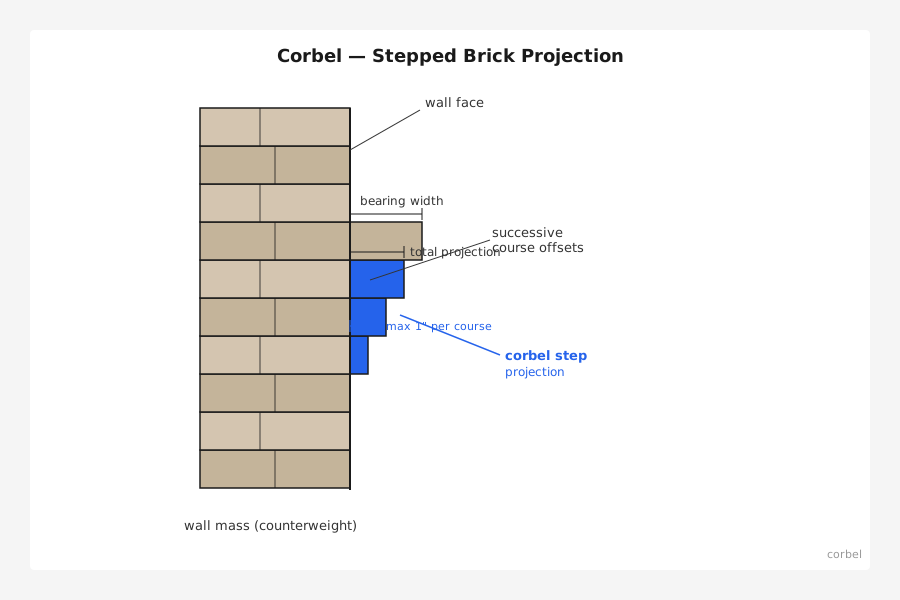
What It Is
A corbel works by cantilevering each course of masonry incrementally from the wall face. The weight of the masonry above and behind the corbel holds the projecting units in place through compression and the lever action of the wall mass acting as a counterweight. Per TMS 402 (the Building Code Requirements for Masonry Structures), each course of a corbel may project no more than one-half the unit height or one-third the unit bed depth, whichever is less, beyond the course below. The total corbel projection should not exceed the total corbel height, and the final corbeled course must not extend beyond the face of the wythe below.
Corbels serve both structural and decorative purposes. Structurally, they support concentrated loads — a beam end, a bay window floor, a chimney offset, or a shelf course for a brick ledge. Decoratively, corbels create shadow lines, transition profiles, and visual interest on cornices, chimneys, and gable ends. The corbeled profile can be straight-stepped, curved (using specially shaped or cut units), or a combination of both.
Modern brick-veneer walls sometimes use steel shelf angles instead of true corbels for structural bearing, but decorative corbeling in brick is still common on chimney caps, wall transitions, and exterior detailing. ## Types Structural corbel supports a beam, floor, or roof load transferred from the wall. The bearing width at the top of the corbel must be calculated to handle the concentrated load, and the wall behind the corbel must have sufficient mass to resist the overturning moment. A structural engineer typically specifies the number of courses and projection per course.
Decorative corbel is used for architectural effect at cornices, chimney transitions, and wall caps. Load is minimal — the main concern is weathering, mortar adhesion, and proper tie-back to the wall behind. Decorative corbels often use three to five courses with a 3/4-inch projection per course.
Chimney corbel creates the widened base or offset section of a masonry chimney as it transitions from the flue framing to the cap profile or from one stack size to another. Chimney corbels are exposed to severe weathering conditions and must be built with durable materials and Type S or Type N mortar.
Interior corbel appears in fireplace mantels, arched openings, and decorative niches inside the home. Interior corbels face no weather exposure but still must comply with projection limits if they support a load.
Where It Is Used
Corbels appear on chimney stacks at the roofline, on exterior brick walls at floor transitions, at the top of brick columns supporting arches, on historic building cornices, and in fireplaces where the mantel shelf is carried on corbeled brickwork. In residential construction, chimney corbels and decorative cornice corbels are the most common applications.
Corbeling is also used on retaining walls and garden walls to create a decorative cap profile wider than the wall itself. On commercial buildings, corbeled string courses mark floor levels and add visual articulation to otherwise plain brick facades.
How to Identify One
Look for a section of masonry that projects progressively outward from the wall face, with each course visibly stepping out further than the one below. The stepped profile is the defining feature — each step is typically 3/4 inch to 1 inch deep. In decorative applications, the step may be subtle; in structural applications the projection is more pronounced and may span four to eight courses.
On a chimney, the corbel is visible just above the roofline where the chimney stack widens before the cap. On a cornice, the corbeling runs horizontally along the top of the wall, projecting outward beneath the roof overhang.
Replacement
Repairing a damaged corbel requires shoring the load above with temporary steel or timber supports before removing any units, then rebuilding course by course following the original projection limits. New units should match the existing brick or stone in size, color, and texture — obtaining a sample of the original unit and matching through a brick supplier is standard practice. Mortar mix and joint profile must also match; Type S mortar (2,500 psi compressive strength) is typical for exterior corbel repairs.
Any embedded flashing or weep-hole system at the base of the corbel should be maintained or restored during the repair. Repointing deteriorated mortar joints on the projecting horizontal surfaces of a corbel should be done proactively, as these surfaces collect water and are the first to fail from freeze-thaw cycling.
Frequently Asked Questions
Corbel — FAQ
- How far can each course of a brick corbel project?
- The traditional masonry rule limits each course to project no more than 1 inch (or one-third of the unit height) beyond the course below, and the total corbel projection should not exceed the total corbel height. Exceeding these limits creates a tipping risk unless the wall mass provides sufficient counterweight.
- Is a corbel the same as a bracket?
- Not exactly. A corbel is built integrally from the masonry itself, with each course projecting incrementally. A bracket is a separate structural element — wood, metal, or stone — attached to or inserted into the wall. Both can serve similar support functions, but corbels rely on the masonry geometry while brackets rely on fasteners or bearing.
- What does a cracked corbel mean?
- Cracks in a corbel can indicate settlement, overloading, freeze-thaw deterioration of the projecting courses, or corrosion of any embedded ties or anchors. Step cracking along the mortar joints often means differential movement. Displaced or leaning corbel courses are a more urgent concern and should be evaluated before the corbel shifts further.
- Do corbels on a chimney need maintenance?
- Yes. The projecting horizontal surfaces of chimney corbels collect water and are exposed to freeze-thaw cycles. Mortar joints on the top faces should be inspected every few years and tuckpointed when they deteriorate. A cap or flashing at the top of the corbeled section helps shed water before it saturates the joints.
- How much does corbel repair cost?
- Minor repointing of corbel joints runs $150–$500 depending on height and accessibility. Replacing displaced or damaged corbel courses with proper shoring typically costs $600–$2,500 per section. Chimney corbel repairs at the roofline add scaffolding costs that can double the labor expense.
Have a question about your project? Get personalized answers from our team — $9/mo.
MembershipAlso in Masonry
- Epoxy Anchor Anchors & Fasteners
- Masonry Anchor Anchors & Fasteners
- Wall Tie Anchors & Fasteners
- Arch Brick
- Brick Ledge
- Face Brick
- Tuckpointing Mortar
- Smoke Chamber Chimney Masonry