Concrete Screw - Masonry Fastening Repair Basics Guide
A concrete screw is a threaded masonry fastener that cuts into a predrilled hole in concrete, brick, or block to create a secure mechanical attachment.
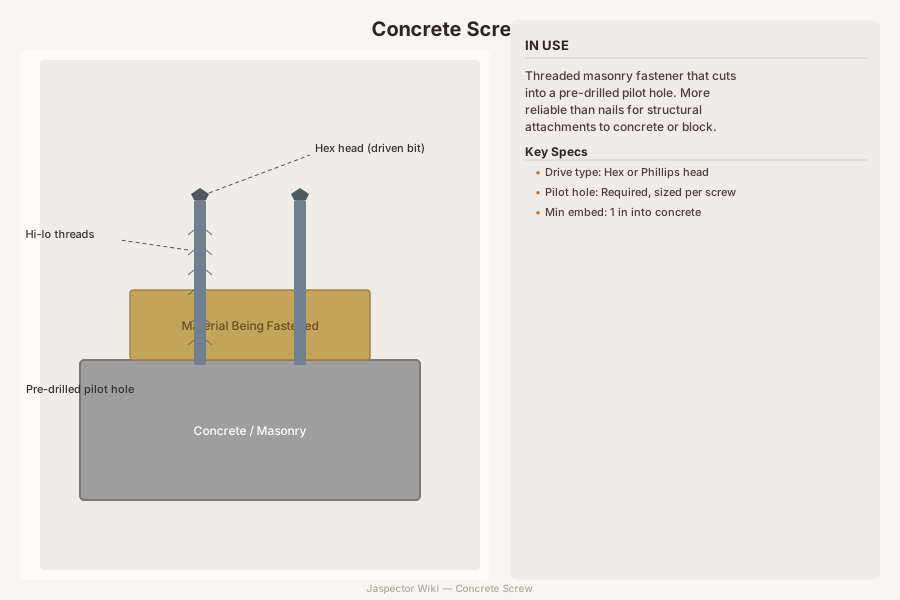
What It Is
Concrete screws are widely used for anchoring fixtures and framing to masonry substrates. After a correctly sized pilot hole is drilled, the screw threads bite into the surrounding material and hold the attachment in place.
They are popular because they install quickly, require no separate anchor sleeve for many applications, and can often be removed if needed. Their performance still depends on correct embedment, hole cleaning, and the condition of the base material.
Where It Is Used
Concrete screws are used for sill plates, electrical boxes, handrail brackets, ledger accessories, shelving, and many light-to-medium-duty residential attachments. They are common anywhere installers need a fast, direct masonry fastening method.
How to Identify One
A concrete screw usually has a hardened body with aggressive threads and a hex, star, or flat head. It is installed into a drilled hole rather than driven directly like a wood screw.
Replacement
Replacement is needed when the screw strips out, corrodes, snaps, or no longer holds because the hole is damaged. If the surrounding concrete is compromised, simply installing a new screw in the same hole may not be a reliable fix.
Frequently Asked Questions
Concrete Screw — FAQ
- Do concrete screws need a pilot hole?
- Yes. Concrete screws are installed into a correctly sized predrilled hole using the manufacturer's specified bit diameter and embedment depth. They will not perform properly without that preparation.
- Can concrete screws be removed and reused?
- They can often be removed, but reuse is not always recommended for critical attachments. The condition of the threads and the hole both matter if the connection needs to remain reliable.
- Why is my concrete screw spinning without tightening?
- That usually means the hole is oversized, dusty, too deep, or the surrounding concrete has weakened. A stripped hole often requires a larger anchor strategy or a new fastening location.
- Are concrete screws stronger than plastic anchors?
- For many masonry applications, yes. Concrete screws provide a more direct mechanical connection and are commonly used where a stronger and more predictable hold is needed.
Have a question about your project? Get personalized answers from our team — $9/mo.
MembershipAlso in Structural
- Access Panel Access & Openings
- Attic Hatch Access & Openings
- Construction Adhesive Adhesives & Sealants
- J-Bolt Anchorage
- Expansion Anchor Anchors & Fasteners
- Molly Bolt Anchors & Fasteners
- Baffle (Attic Rafter Vent) Attic & Roof
- Attic Hatch Cover Attic Access