Concrete Form - Pour Mold and Formwork Installation Guide
A concrete form is the temporary or permanent mold that holds wet concrete in shape until it hardens.
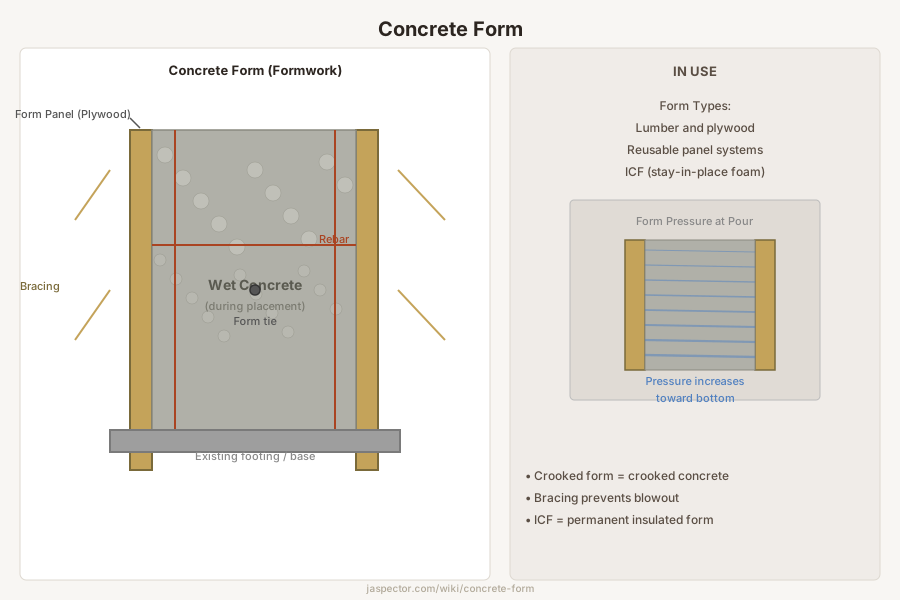
What It Is
Concrete forms define the size, shape, and surface of a poured concrete element such as a footing, wall, slab edge, curb, or column. They resist the pressure of wet concrete during placement and keep the pour aligned until the mix gains enough strength to stand on its own.
Form quality directly affects the finished concrete. Crooked, weak, or poorly braced forms can bow, leak, or fail during the pour, leaving structural and appearance problems that are far harder to fix after the concrete cures.
Types
Concrete forms may be built from lumber and plywood, reusable panel systems, insulated concrete forms, metal forms, or specialty curved form systems. The right type depends on the shape, load, finish requirements, and whether the form stays in place after the pour.
Where It Is Used
Concrete forms are used for footings, foundation walls, slabs, steps, curbs, columns, retaining walls, and other cast-in-place concrete work. Nearly every site-built concrete element relies on some type of forming system.
How to Identify One
Before the pour, a concrete form appears as a braced enclosure or edge restraint built around the future concrete shape. After the pour, removable forms are stripped away, while permanent form systems may remain as part of the assembly.
Replacement
Forms are replaced when they are warped, damaged, out of square, contaminated, or no longer safe to reuse. On a project in progress, a bad form is corrected before placement because form failure during a pour can become a major safety and quality problem.
Frequently Asked Questions
Concrete Form — FAQ
- What does a concrete form do?
- It contains wet concrete and holds the planned dimensions until the material cures. Without a properly built form, the concrete cannot keep the intended shape or alignment.
- Are concrete forms always removed after the pour?
- No. Many forms are temporary and stripped away, but some systems stay in place permanently. Insulated concrete forms are one common example of permanent formwork.
- What happens if a concrete form fails during a pour?
- The form can bow, leak, or blow out under pressure, causing an unsafe site condition and a bad concrete placement. A major failure can ruin the pour and require extensive cleanup and rework.
- Can old concrete forms be reused?
- Yes, if they are still straight, clean, and structurally sound for the next pour. Warped or damaged forms leave poor results and should not be reused just to save material.
Have a question about your project? Get personalized answers from our team — $9/mo.
MembershipAlso in Structural
- Access Panel Access & Openings
- Attic Hatch Access & Openings
- Construction Adhesive Adhesives & Sealants
- J-Bolt Anchorage
- Expansion Anchor Anchors & Fasteners
- Molly Bolt Anchors & Fasteners
- Baffle (Attic Rafter Vent) Attic & Roof
- Attic Hatch Cover Attic Access