Concrete Block - Masonry Wall Material Basics Guide
A concrete block is a manufactured masonry unit used to build walls, piers, partitions, and other durable concrete-based structures.
What It Is
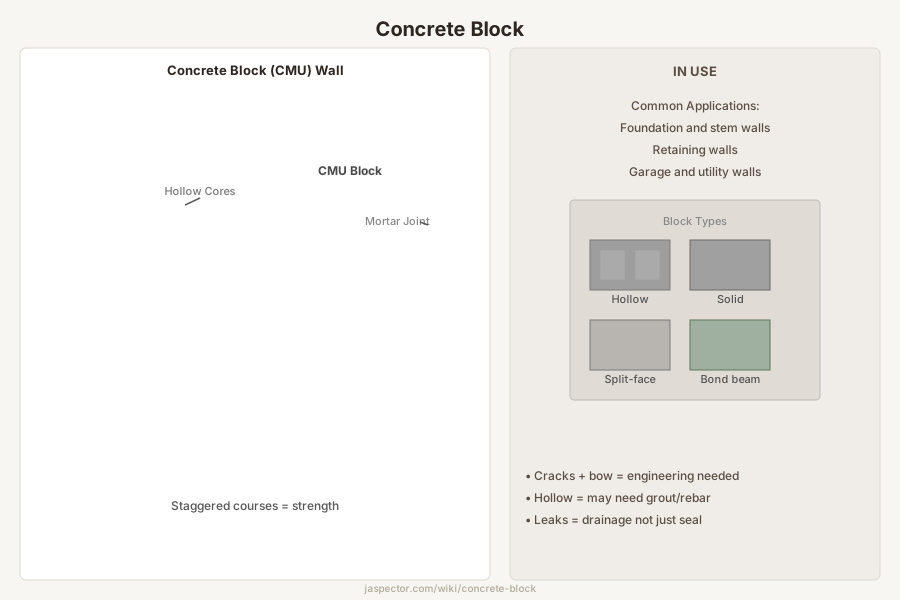
Concrete block is the common homeowner term for a concrete masonry unit used in laid masonry construction. These units are stacked in courses with mortar and may be reinforced and grouted depending on whether the wall is structural.
Concrete block is valued for strength, fire resistance, and durability, but the performance of a block wall depends on the whole assembly, including footing support, reinforcement, drainage, and control joints. The block itself is only one part of the system.
Types
Common varieties include hollow block, solid block, split-face decorative block, lintel block, and specialty shapes for corners or bond beams. Size, density, finish, and reinforcement details vary by application.
Where It Is Used
Concrete blocks are used in foundation walls, retaining walls, garage walls, utility rooms, perimeter site walls, and partitions. They are common in crawl spaces, basements, and exterior site construction.
How to Identify One
A concrete block is a rectangular masonry unit with a uniform manufactured appearance. Many blocks have hollow cores visible from the top when not fully grouted.
Replacement
Individual blocks can sometimes be removed and replaced, but cracking, bowing, or moisture issues usually need evaluation at the wall level. Replacing one damaged unit does not solve a footing, drainage, or structural movement problem.
Frequently Asked Questions
Concrete Block — FAQ
- Is a concrete block wall structural?
- It can be. Some concrete block walls carry loads and include reinforcing steel and grout, while others are simple partitions or landscape walls. You need the wall design and context to know which it is.
- What is the difference between concrete block and CMU?
- They are usually the same thing in practice. "Concrete block" is the common term, and "CMU" is the construction and specification term for concrete masonry units.
- Can cracked concrete blocks be repaired?
- Minor surface damage may be patchable, but cracks that repeat, widen, or affect multiple blocks can point to movement or water pressure. In that case, the wall needs broader evaluation.
- Why do concrete block walls leak?
- Leaks often come from missing drainage, unsealed penetrations, cracked mortar joints, or water pressure against the exterior side of the wall. The fix usually involves drainage and waterproofing, not just interior patching.
Have a question about your project? Get personalized answers from our team — $9/mo.
MembershipAlso in Structural
- Access Panel Access & Openings
- Attic Hatch Access & Openings
- Construction Adhesive Adhesives & Sealants
- J-Bolt Anchorage
- Expansion Anchor Anchors & Fasteners
- Molly Bolt Anchors & Fasteners
- Baffle (Attic Rafter Vent) Attic & Roof
- Attic Hatch Cover Attic Access