Compressor - Air Conditioner Core System Basics Guide
A compressor is the pump-like component in an air conditioner or heat pump that pressurizes refrigerant so the system can move heat.
What It Is
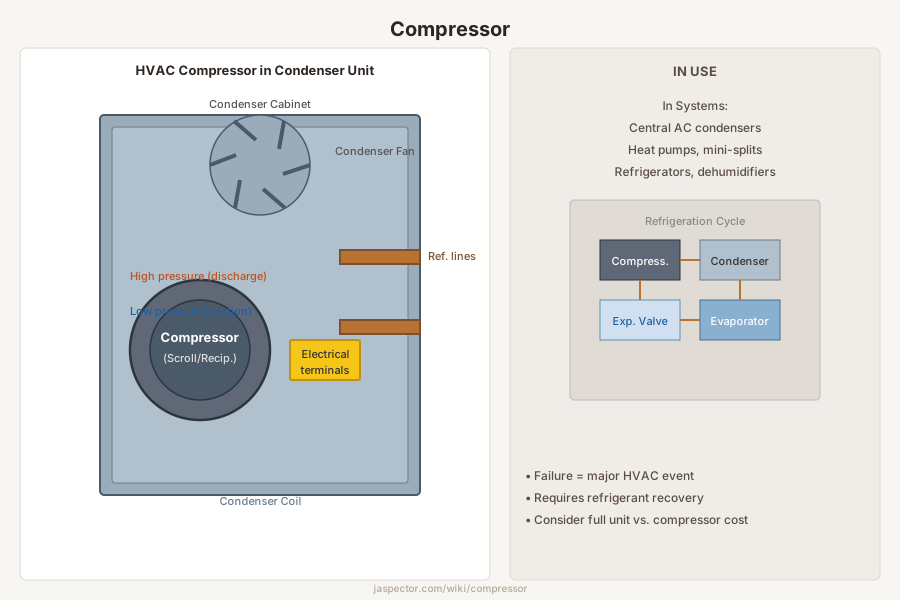
The compressor is one of the core working parts of a refrigeration cycle. It takes in low-pressure refrigerant vapor, compresses it to a higher pressure and temperature, and sends it through the system so heat can be rejected outdoors and absorbed elsewhere.
In residential HVAC equipment, the compressor is usually housed inside the outdoor condensing unit. Because it works under high mechanical and electrical stress, compressor failure is one of the most significant air conditioning repair events homeowners face.
Types
Reciprocating compressors use pistons and valves. Scroll compressors use interleaving spiral elements and are common in modern residential equipment. Variable-speed inverter-driven compressors can modulate output for better efficiency and comfort control.
Where It Is Used
Compressors are used in central air conditioners, heat pumps, mini-split systems, refrigerators, freezers, and dehumidification equipment. In home HVAC, the most visible application is inside the outdoor condenser cabinet.
How to Identify One
Homeowners usually do not see the compressor directly without opening the unit cabinet. It is the sealed metal component inside the condenser that connects to refrigerant lines and electrical terminals.
Replacement
Compressor replacement is considered major HVAC work because it involves refrigerant recovery, brazing, electrical diagnosis, and system cleanup. In many cases, the decision is between replacing the compressor and replacing the entire outdoor unit or full system.
Frequently Asked Questions
Compressor — FAQ
- What does the compressor do in an air conditioner?
- It compresses refrigerant so the system can move heat from inside the house to the outdoors. Without a working compressor, the air conditioner cannot complete the refrigeration cycle.
- How do I know if my AC compressor is bad?
- Common signs include the outdoor unit humming without cooling, tripped breakers, hard starting, loud mechanical noise, or a diagnosis showing locked or open windings. Compressor failure should be confirmed by an HVAC technician because other faults can look similar.
- Can a compressor be replaced without replacing the whole AC unit?
- Sometimes yes, but not always economically. If the system is older, uses outdated refrigerant, or has contamination in the refrigerant lines, full equipment replacement may make more sense.
- Why is compressor replacement expensive?
- It is a labor-intensive repair that involves refrigerant handling, welding or brazing, filter-drier replacement, evacuation, charging, and electrical verification. The part itself is also one of the most expensive components in the system.
Have a question about your project? Get personalized answers from our team — $9/mo.
MembershipAlso in HVAC
- Air Handler Air Distribution
- Register Air Distribution
- Return Air Grille Air Distribution
- HVAC Filter Air Filtration
- Heat Strip Air Handler Components
- Heating Coil Air Handler Components
- Furnace Blower Air Movement
- Air Filter (HVAC) Air Quality & Filtration