Circuit Breaker - Electrical Fault Protection Guide
A circuit breaker is a resettable electrical safety switch that shuts off power when a circuit draws too much current or develops a fault.
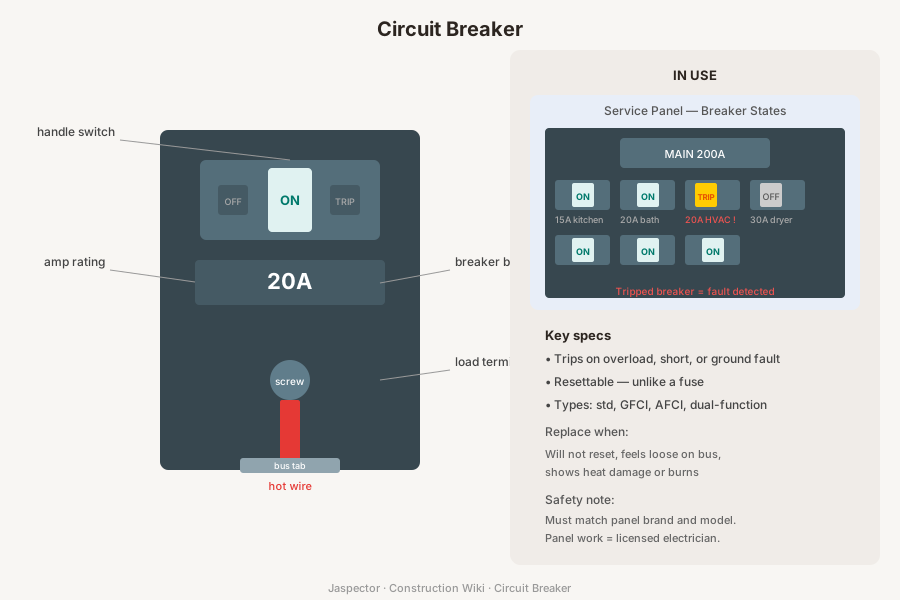
What It Is
A circuit breaker protects wiring from overheating and helps prevent electrical fires. It monitors the current flowing through a branch circuit or larger feeder and trips open when it detects an overload, short circuit, or other unsafe condition.
Unlike a fuse, a breaker does not need to be replaced after it trips. It can be reset once the underlying problem is corrected. That resettable design is why breakers are the standard overcurrent protection device in modern residential panels.
Types
Standard thermal-magnetic breakers protect against overloads and short circuits. GFCI breakers add shock protection by detecting current leaking to ground. AFCI breakers detect dangerous arcing in wiring, and dual-function breakers combine arc-fault and ground-fault protection in one unit.
Where It Is Used
Circuit breakers are used in the main service panel and subpanels throughout a home. Individual branch circuit breakers protect outlets, lighting, appliances, HVAC equipment, and other loads, while larger breakers may protect feeders or the entire service disconnect.
How to Identify One
A circuit breaker is mounted in an electrical panel and has a switch handle marked with its amperage rating. Tripped breakers usually sit between fully on and fully off, and specialty breakers often include a test button or indicator label.
Replacement
A breaker should be replaced when it will not reset properly, feels loose on the bus, shows heat damage, or repeatedly trips after the connected circuit has been verified safe. Replacement must match the panel manufacturer and model listing, and panel work is usually a licensed electrical task.
Frequently Asked Questions
Circuit Breaker — FAQ
- What causes a circuit breaker to trip?
- The most common causes are overloaded circuits, short circuits, ground faults, or a failing appliance drawing abnormal current. A breaker that trips repeatedly is signaling a problem that should be diagnosed instead of simply reset over and over.
- What is the difference between a fuse and a circuit breaker?
- A fuse melts once and must be replaced after it opens the circuit. A circuit breaker trips mechanically and can be reset after the fault is corrected. Both protect wiring, but breakers are more convenient and are standard in modern panels.
- Can I replace a circuit breaker myself?
- Replacing a breaker means working inside an energized panel where dangerous live parts remain exposed. Most homeowners should treat breaker replacement as licensed electrical work, especially because the wrong breaker type can create a safety and code problem.
- How do I know if a circuit breaker is bad?
- Warning signs include a breaker that will not reset, trips without load, feels hot, smells burnt, or shows visible damage at the handle or terminal. A licensed electrician can confirm whether the breaker or the circuit is the real issue.
Have a question about your project? Get personalized answers from our team — $9/mo.
MembershipAlso in Electrical
- Range Outlet Appliance Circuits
- Appliance Whip Appliance Connections
- Dishwasher Cord Appliance Connections
- Dryer Cord Appliance Connections
- Range Cord Appliance Connections
- Generator Backup Power
- Transfer Switch Backup Power
- Box Cover Boxes