Chimney Insert - Fireplace Efficiency Upgrade Guide
A chimney insert is a firebox unit that fits inside an existing masonry fireplace to improve heating efficiency and vent smoke through a dedicated flue path.
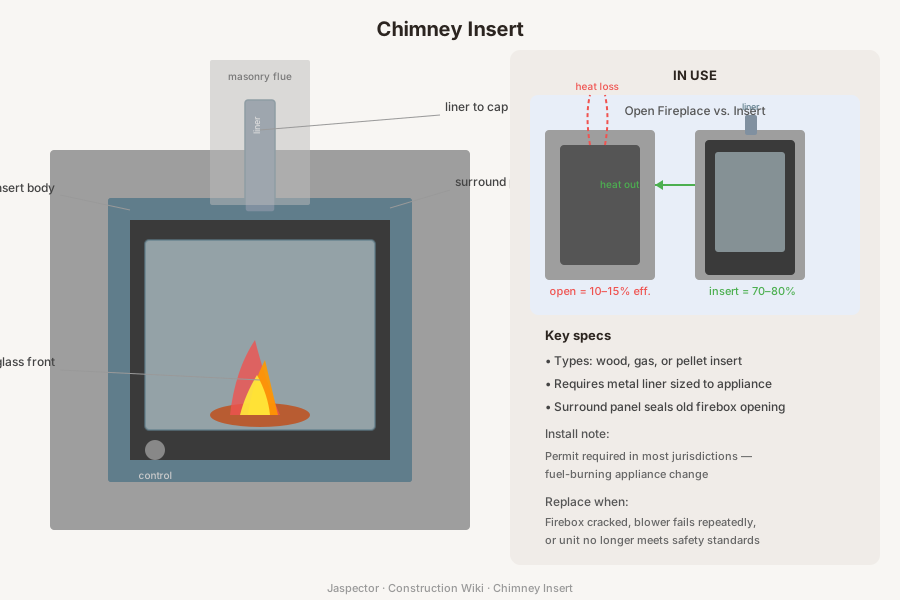
What It Is
A chimney insert is a sealed wood, gas, or pellet appliance installed inside the opening of an existing fireplace. Unlike an open fireplace, an insert is designed to control combustion, move more heat into the room, and reduce the amount of warm indoor air lost up the chimney.
Most inserts are paired with a metal liner that runs from the appliance to the top of the chimney. That liner creates a properly sized exhaust path and is one reason inserts perform more safely and predictably than trying to burn fuel in an oversized masonry flue.
Types
Wood-burning inserts burn split firewood and often use blowers to push heat into the room. Gas inserts offer easier ignition and steady heat output. Pellet inserts feed compressed pellets from a hopper and require electrical power for controls and fans.
Where It Is Used
Chimney inserts are used in homes with an existing masonry fireplace where the owner wants better efficiency, more usable heat, or a cleaner upgrade than rebuilding the whole fireplace. They are common in living rooms, family rooms, and older houses with large open hearths.
How to Identify One
A chimney insert sits inside the old fireplace opening and has a finished surround panel that covers the remaining gap around the appliance. You will usually see a glass-front firebox door, control knobs or switches, and a metal liner connection rather than a fully open masonry firebox.
Replacement
Replacement usually happens when the firebox cracks, the blower or controls fail repeatedly, or the unit no longer meets safety or emissions expectations. Insert installation and replacement should be handled by a qualified fireplace or HVAC contractor, and many jurisdictions require permits for fuel-burning appliance work.
Frequently Asked Questions
Chimney Insert — FAQ
- What is the difference between a chimney insert and a regular fireplace?
- A regular open fireplace sends much of its heat up the chimney. A chimney insert is a sealed appliance that burns fuel more efficiently and pushes more heat into the room. It also uses a dedicated venting setup instead of relying on the oversized masonry cavity alone.
- Does a chimney insert need a liner?
- In most installations, yes. Inserts are typically vented through a metal liner sized to the appliance so exhaust gases draft correctly and the chimney stays protected. Installing an insert without the proper liner setup is a common safety problem.
- Do I need a permit to install a chimney insert?
- Usually yes. A chimney insert changes a fuel-burning appliance and its venting system, which commonly triggers permit and inspection requirements. Local rules vary, but homeowners should expect building or mechanical review.
- When should a chimney insert be replaced?
- Replacement is appropriate when the firebox is damaged, controls or blowers fail repeatedly, or the unit can no longer be vented safely. Older inserts may also be replaced to improve heating performance and meet newer safety or emissions standards.
Have a question about your project? Get personalized answers from our team — $9/mo.
MembershipAlso in Fire Safety
- Chimney Liner
- Masonry Chimney Chimneys & Vents
- Metal Chimney Chimneys & Vents
- Smoke Detector Detection & Alarm
- Smoke Sensor Detection & Alarm
- Carbon Monoxide Alarm Detection & Alarms
- CO Sensor (Carbon Monoxide Sensor) Detection & Alarms
- Fire Door Doors