Check Valve - One-Way Valve for Reverse Flow Control
A check valve is a one-way valve that allows water or other fluid to flow in one direction and prevents reverse flow.
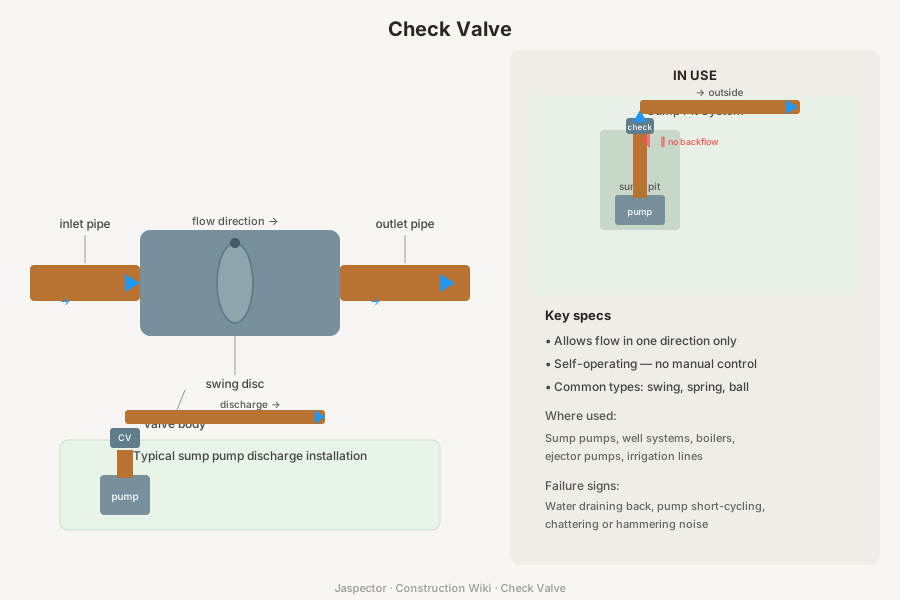
What It Is
A check valve opens automatically when fluid moves in the intended direction and closes when flow tries to reverse. In homes, it protects pumps, drainage systems, and some plumbing equipment from backflow, backspin, or unwanted discharge.
Unlike a shutoff valve, a check valve is not manually operated during normal use. It works automatically based on pressure and flow direction.
Types
Common residential types include swing check valves, spring-loaded check valves, sump pump check valves, and backwater valves for sewer protection. The body material and internal mechanism vary based on the system and pressure conditions.
Where It Is Used
Check valves are used on sump pump discharge lines, well pump systems, boiler and hydronic systems, ejector pumps, irrigation equipment, and some appliance water lines. Placement matters because the valve must be oriented to the correct flow direction.
How to Identify One
A check valve usually has a flow-direction arrow cast or printed on the body. It is installed inline with the pipe and may have a larger body than the surrounding piping. Chattering, hammering, reverse flow, or water draining back after a pump stops are common signs of a problem.
Replacement
Replacement requires matching the valve type, size, orientation, and pressure rating to the system. A poorly chosen replacement can create noise, flow restriction, or pump problems.
Frequently Asked Questions
Check Valve — FAQ
- What is a check valve used for in a house?
- It prevents water or waste from flowing backward in a pipe. Common examples include sump pump discharge lines, well systems, and some boiler or irrigation connections.
- How do I know if a check valve is bad?
- Reverse flow, repeated pump cycling, banging noise, and water draining back after the pump stops are common clues. Some failed valves also stick partly closed and restrict normal flow.
- Is a sump pump check valve necessary?
- Yes. Without it, water in the discharge pipe can fall back into the sump pit after each cycle, making the pump run more often and wear out faster.
- Can a check valve be installed backwards?
- Yes, and it will not work correctly if that happens. The body always has a flow-direction marking, and the valve must be installed so flow follows that arrow.
- What is the difference between a check valve and a backflow preventer?
- A check valve is a broad one-way valve category used in many systems, while a backflow preventer is a plumbing protection device designed to safeguard potable water. Some backflow devices contain check valves, but the terms are not interchangeable.
Have a question about your project? Get personalized answers from our team — $9/mo.
MembershipAlso in Plumbing
- ADA Shower Seat Accessibility
- Fold-Down Seat Accessibility
- Backflow Preventer Backflow & Cross-Connection
- Pressure Vacuum Breaker Backflow Prevention
- Toilet Bath Fixtures
- Toilet Bowl Bath Fixtures
- Toilet Tank Bath Fixtures
- Toilet Tank Gasket Bath Fixtures