Ceramic Tile - Fired Clay Finish for Walls and Floors
A ceramic tile is a fired clay finish unit used on floors, walls, and other surfaces for a durable and water-resistant finish.
What It Is
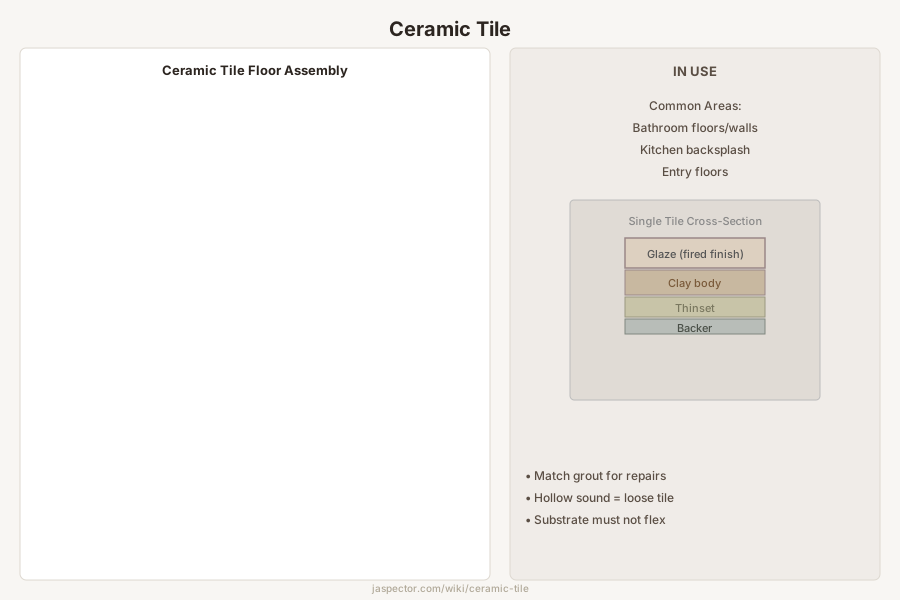
Ceramic tile is made from shaped clay fired in a kiln and usually finished with a glaze. In homes, it is used because it is hard-wearing, easy to clean, and available in a wide range of sizes, colors, and patterns.
Tile performance depends on both the tile and the assembly below it. A stable substrate, correct mortar, proper spacing, and well-maintained grout joints all determine how long the finished surface lasts.
Types
Common ceramic tile categories include glazed wall tile, floor tile, quarry tile, and porcelain tile, which is a denser subtype made from refined clay and fired at higher temperatures. Finishes range from glossy wall tile to slip-resistant matte floor tile.
Where It Is Used
Ceramic tile is used on bathroom floors, shower walls, kitchen backsplashes, laundry rooms, entry floors, and fireplace surrounds. Some products are rated only for walls, while others are designed for floor traffic.
How to Identify One
Ceramic tile has hard fired edges and is installed in a field with grout joints between units. Chipped glaze, cracked tiles, hollow sounds, and loose grout are common signs of a failing tile assembly.
Replacement
Replacement can involve a few broken tiles or the full tiled surface if the substrate is failing. Matching older tile is often the hardest part, which is why many repairs end up becoming a larger retiling project.
Frequently Asked Questions
Ceramic Tile — FAQ
- What is the difference between ceramic tile and porcelain tile?
- Porcelain is a denser, less porous type of ceramic tile fired at higher temperatures. In practical terms, porcelain is usually tougher and more water resistant, while standard ceramic is often easier to cut and more common on walls.
- How do I know if ceramic tile needs replacement?
- Cracked tiles, loose tiles, persistent grout failure, and water damage beneath the surface are common signs. If multiple tiles sound hollow or the floor moves, the problem may be in the substrate rather than the tile alone.
- Can a single ceramic tile be replaced?
- Yes, if matching tile is available and the surrounding field is stable. The damaged tile can be removed carefully and reset without replacing the whole surface.
- Is ceramic tile waterproof?
- The tile face is usually water resistant, but the full assembly is not automatically waterproof. Water can pass through grout joints and around edges unless the substrate and waterproofing are built correctly.
- Why are my floor tiles cracking?
- Tile usually cracks because the substrate moves, the installation lacks proper support, or impact damage occurs. The tile is often showing a structural or installation problem below it.
Have a question about your project? Get personalized answers from our team — $9/mo.
MembershipAlso in Structural
- Access Panel Access & Openings
- Attic Hatch Access & Openings
- Construction Adhesive Adhesives & Sealants
- J-Bolt Anchorage
- Expansion Anchor Anchors & Fasteners
- Molly Bolt Anchors & Fasteners
- Baffle (Attic Rafter Vent) Attic & Roof
- Attic Hatch Cover Attic Access