Ceiling Fan - Ceiling-Mounted Air Circulation Fixture
A ceiling fan is a powered ceiling-mounted fixture that circulates room air with rotating blades to improve comfort year-round.
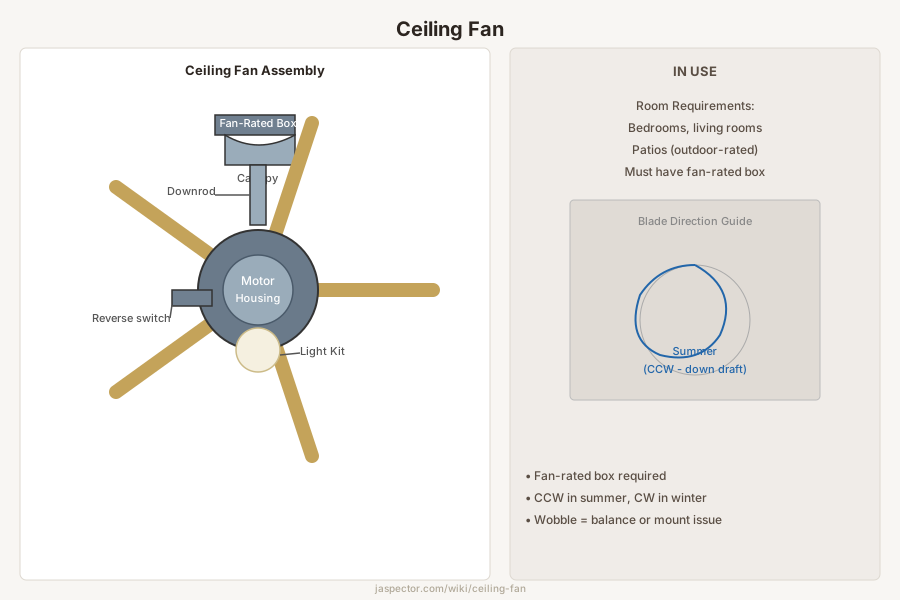
What It Is
A ceiling fan uses an electric motor to spin blades that move air through a room. The airflow does not lower the room temperature itself, but it improves perceived comfort by increasing evaporation from the skin.
Many residential ceiling fans also include a light kit and a reversible motor setting. In summer, the fan is used to create a cooling breeze, and in winter, a lower-speed reverse setting can help redistribute warm air near the ceiling.
Types
Common types include standard downrod fans, flush-mount fans for low ceilings, outdoor-rated fans for damp or wet locations, and smart fans with remote or app control. Blade span and motor size should match the room size.
Where It Is Used
Ceiling fans are used in bedrooms, living rooms, patios, porches, and great rooms. Proper installation requires an electrical box rated to support a fan, not just a light fixture.
How to Identify One
A ceiling fan is mounted at the ceiling with visible blades and a central motor housing. Wobble, clicking, hum, slow startup, and inoperative speed controls are common signs of wear or improper installation.
Replacement
Replacement may involve the fan itself, the switch or remote receiver, or the support box if the existing electrical box is not fan-rated. Safe replacement requires securing the mounting bracket to a proper fan support assembly.
Frequently Asked Questions
Ceiling Fan — FAQ
- Does a ceiling fan lower room temperature?
- No. A ceiling fan moves air to make people feel cooler, but it does not actually reduce the air temperature in the room. The cooling effect is from air movement across the skin.
- Why is my ceiling fan wobbling?
- Wobble is usually caused by loose blade screws, mismatched blade pitch, warped blades, or an out-of-balance set. A loose mounting bracket or incorrect electrical box can also make the fan unsafe.
- Can I replace a light fixture with a ceiling fan?
- Only if the ceiling box is rated to support a fan. Standard light boxes are not designed for the moving load and vibration of a fan and must be upgraded if they are not fan-rated.
- Which direction should a ceiling fan spin?
- In summer, most fans should spin counterclockwise to push air downward and create a breeze. In winter, a low-speed clockwise setting can help circulate warm air near the ceiling.
- How long do ceiling fans last?
- A quality ceiling fan can last many years, but switches, capacitors, remote receivers, and bearings may fail sooner than the housing. Noise, wobble, and unreliable speeds are common signs that repair or replacement is due.
Have a question about your project? Get personalized answers from our team — $9/mo.
MembershipAlso in Electrical
- Range Outlet Appliance Circuits
- Appliance Whip Appliance Connections
- Dishwasher Cord Appliance Connections
- Dryer Cord Appliance Connections
- Range Cord Appliance Connections
- Generator Backup Power
- Transfer Switch Backup Power
- Box Cover Boxes