Carpet - Floor Covering Types and Replacement Guide
A carpet is a textile floor covering installed wall to wall or in defined sections to provide a softer and quieter walking surface.
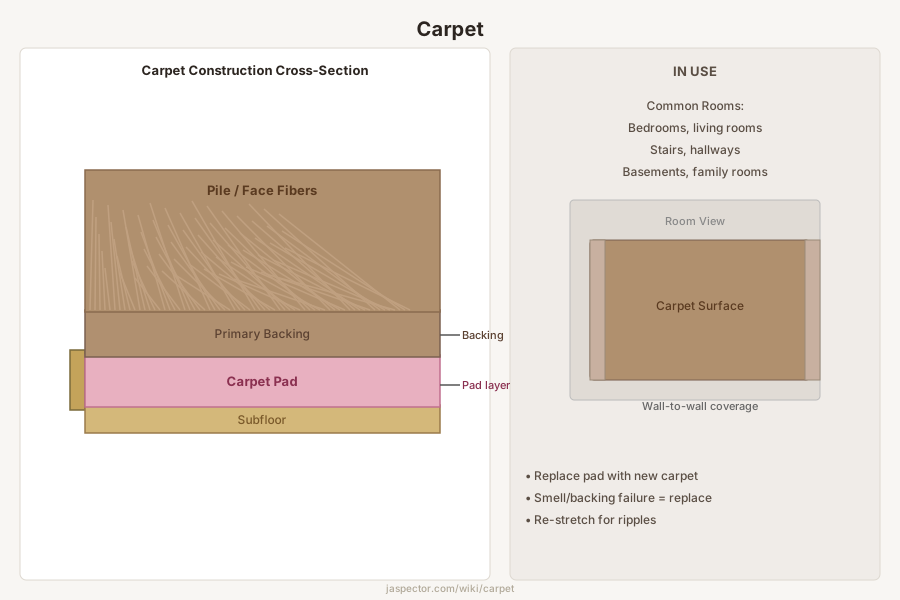
What It Is
Carpet is made from face fibers tufted or woven into a backing and usually installed over a cushioned pad. It improves comfort underfoot, reduces noise, and adds insulation value compared with hard-surface flooring.
Its performance depends on the fiber type, pile construction, backing, pad, and installation quality. Wear patterns, matting, odor retention, stains, and pet damage are the issues homeowners notice most often when carpet ages.
Types
Common types include cut pile, loop pile, cut-and-loop carpet, nylon carpet, polyester carpet, olefin carpet, and wool carpet. Different styles balance softness, stain resistance, durability, and appearance.
Where It Is Used
Carpet is used in bedrooms, living rooms, basements, stairs, family rooms, offices, and rental units. It is less common in bathrooms and other wet areas because moisture can damage the backing and pad.
How to Identify One
Carpet is easy to identify by its soft textile surface stretched or laid across the floor. The pile height, fiber texture, seam lines, and condition of the edges or transitions often reveal its age and installation quality.
Replacement
Replacement is common when carpet is heavily stained, matted, torn, contaminated by moisture or pet odor, or worn through in traffic lanes. Deep cleaning can help with surface dirt, but widespread backing failure or odor usually means replacement is the better long-term choice.
Frequently Asked Questions
Carpet — FAQ
- How long does carpet usually last?
- Residential carpet often lasts several years, but lifespan depends heavily on fiber quality, pad quality, traffic level, and maintenance. Stairs and hallways usually wear out first.
- Can carpet be cleaned instead of replaced?
- Yes, if the main issue is surface dirt or minor staining. Replacement becomes more likely when the backing fails, the carpet is badly matted, or odors and contamination have soaked into the pad.
- Why does my carpet have ripples or wrinkles?
- That usually means the carpet has loosened and needs to be re-stretched. Age, humidity, poor installation, or moving heavy furniture can all contribute.
- Is carpet a bad choice for a basement?
- It can be if the basement has any moisture history. Even minor dampness can lead to odor, mold growth in the pad, and premature replacement.
- What is the difference between carpet and a rug?
- Carpet is typically installed as a fitted floor covering, often wall to wall, while a rug is a movable floor covering laid on top of another finished floor. Installation and replacement are very different.
Have a question about your project? Get personalized answers from our team — $9/mo.
MembershipAlso in Structural
- Access Panel Access & Openings
- Attic Hatch Access & Openings
- Construction Adhesive Adhesives & Sealants
- J-Bolt Anchorage
- Expansion Anchor Anchors & Fasteners
- Molly Bolt Anchors & Fasteners
- Baffle (Attic Rafter Vent) Attic & Roof
- Attic Hatch Cover Attic Access