Capacitor - Motor Start and Run Electrical Part Guide
A capacitor is an electrical component that stores and releases energy to help motors start, run, or smooth voltage in equipment.
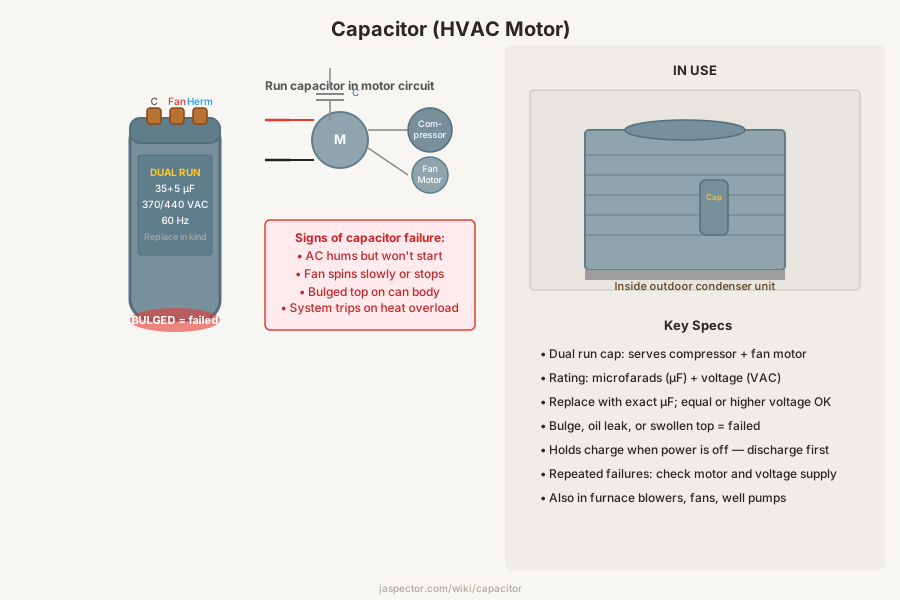
What It Is
In homes, the capacitor most often discussed is the motor capacitor used in HVAC condensers, air handlers, furnace blowers, and some well pumps. It stores an electrical charge and releases it in a way that helps a motor overcome startup load or operate efficiently once running.
When a capacitor weakens or fails, the motor it supports may struggle, overheat, hum, or fail to start at all. That is why a bad capacitor is one of the most common causes of a non-starting air conditioner outdoor unit.
Types
The two main residential motor capacitor types are start capacitors and run capacitors. Start capacitors provide a brief boost during startup, while run capacitors stay in the circuit to support efficient operation.
Many outdoor condensers use a dual run capacitor that serves both the compressor and the fan motor in one metal can. These units are labeled with microfarad ratings and voltage ratings that must match the equipment requirements.
Where It Is Used
Capacitors are used in air conditioner condensers, heat pumps, furnace blower assemblies, whole-house fans, garage door openers, and pump motors. In residential service calls, the most visible example is the run capacitor inside the outdoor condensing unit.
How to Identify One
A motor capacitor is usually a small cylindrical or oval metal can with terminals on top and a printed rating label. Swelling, oil leakage, rust at the seams, or a bulged top are common signs of failure. Testing requires a meter that reads capacitance and the power must be disconnected first.
Replacement
Capacitors must be replaced with the exact specified microfarad rating and an equal or higher voltage rating. Because they can hold a charge even when the equipment is off, replacement should be done with proper lockout and electrical safety procedures.
Frequently Asked Questions
Capacitor — FAQ
- What happens when an HVAC capacitor goes bad?
- The motor may hum, start slowly, overheat, or fail to start at all. In an air conditioner, that can leave the outdoor unit silent or cause the fan to stall while the system still calls for cooling.
- Can I tell if a capacitor is bad by looking at it?
- Sometimes. A bulged top, leaking oil, or a swollen case strongly suggests failure, but some bad capacitors look normal. The reliable way to confirm condition is with a capacitance test after power is disconnected.
- Can I replace a capacitor myself?
- The part itself is inexpensive, but it sits inside energized equipment and can retain a charge after shutoff. Safe replacement requires correct electrical isolation, discharge procedures, and an exact replacement rating.
- Why does my AC keep blowing capacitors?
- Repeated capacitor failures often point to heat, voltage problems, a failing motor, or an oversized workload on the system. Replacing the part without addressing the cause usually leads to another failure.
- What do the numbers on a capacitor mean?
- The microfarad rating shows how much capacitance the part provides, and the voltage rating shows the maximum safe operating voltage. Both values matter, and the equipment nameplate or manufacturer data determines the correct replacement.
Have a question about your project? Get personalized answers from our team — $9/mo.
MembershipAlso in HVAC
- Air Handler Air Distribution
- Register Air Distribution
- Return Air Grille Air Distribution
- HVAC Filter Air Filtration
- Heat Strip Air Handler Components
- Heating Coil Air Handler Components
- Furnace Blower Air Movement
- Air Filter (HVAC) Air Quality & Filtration