Cap Block — Solid CMU Top Course: Purpose and Installation
A cap block is a solid or nearly solid concrete masonry unit placed as the top course of a CMU wall to close the hollow cores, provide a finished appearance, and protect the wall from water infiltration.
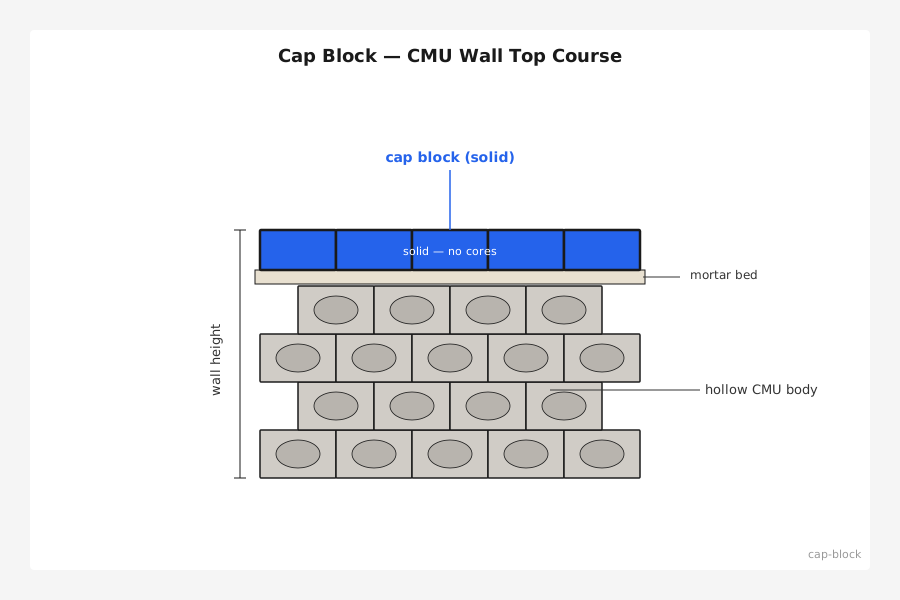
What It Is
Standard concrete-block units are hollow — their cores reduce weight and allow grouting or reinforcing steel to be placed. The open tops of hollow blocks on the uppermost course expose the wall interior to rain, debris, and freeze-thaw cycling. Cap blocks solve this by providing a dense, flat top surface with no open cores for water to enter.
Cap blocks are typically 4 inches tall (nominal) with actual dimensions of 3-5/8 inches high, and the same face dimension as the wall below — 8x16 inches nominal (7-5/8 x 15-5/8 inches actual) for standard CMU. They are set in a full mortar-bed over the last course and tooled to match the wall joints. The solid mass of the cap also adds compressive strength at the wall top and provides a stable bearing surface for coping, ledgers, or other items placed on top of the wall.
Where reinforced walls require vertical rebar to extend through the top, split-cap blocks or special bond-beam blocks with a notch or channel are used so the bar can pass through while still partially closing the core. The grout or mortar is then packed around the rebar within the channel to complete the connection between the reinforcing and the cap course.
Types
Solid cap block is a fully solid CMU unit with no cores, weighing approximately 35 pounds for a standard 8x8x16 unit. Used on non-reinforced walls and as a finished capping unit where no further extension of reinforcing is needed.
Half-high cap block is 2 inches tall (nominal) rather than 4 inches, used to fine-tune wall height to a specific elevation or where a lower-profile cap is preferred. These units are sometimes called cap tiles and weigh about half as much as a full-height cap.
Bullnose cap block has one or two rounded edges for a softer finished appearance on top of garden walls, seat walls, and landscape applications. The radius is typically 1/2 inch to 1 inch and the rounded edge sheds water more effectively than a square edge.
Split-face cap block has a rough, textured face that matches split-face field units below. It provides the same core-closing function while maintaining a consistent architectural texture from base to cap.
Where It Is Used
Cap blocks appear on top of CMU retaining walls, garden walls, fence walls, foundation stem walls exposed above grade, and any CMU wall where the top course needs to be closed and protected. They are standard on residential block walls for landscaping and property boundary walls.
In commercial construction, cap blocks may also serve as the bearing course for steel ledger angles or structural connections at the top of a masonry wall. The solid bearing surface distributes point loads across a wider area than a hollow block would, reducing the risk of localized crushing.
How to Identify One
The cap block sits as the top course of a CMU wall and is visually denser — it lacks the hollow core openings visible in the units below. The top face is solid and flat. Some cap blocks have a slightly different texture or color from the field units because they come from a different production mold. Tapping the top course with a hammer produces a solid, ringing sound compared to the hollow thud of an uncapped block.
If the top course looks identical to the courses below and you can see open cores from above, the wall is not capped and is vulnerable to water entry.
Replacement
Individual cap blocks can be removed by cutting the mortar joints with a 4-inch angle grinder fitted with a diamond blade or by chiseling along the joint line. Once the mortar is cut on all sides, the unit can be pried up and lifted out. Set the new cap block in a full bed of Type S mortar — the same mortar grade used for the rest of the wall — and tool the joints to match the existing profile.
If the cap blocks have shifted or cracked from wall movement or freeze-thaw, the underlying cause — typically inadequate drainage, missing control joints, or saturated soil loading — should be addressed before simply replacing the cap. Applying a penetrating silane or siloxane sealer to the new cap blocks after the mortar has cured for 28 days helps reduce water absorption and extends service life in exposed conditions.
Frequently Asked Questions
Cap Block — FAQ
- Why do CMU walls need cap blocks?
- Hollow block units have open cores that collect water if left exposed at the top. Water in the cores can cause efflorescence, spalling from freeze-thaw, corrosion of any embedded reinforcing steel, and gradual deterioration of mortar at the top course. Cap blocks close the wall and redirect water off the surface.
- Can I use mortar to fill the top course instead of cap blocks?
- Filling the top hollow course with mortar or grout is sometimes done but is not equivalent to a cap block. A solid cap unit provides a consistent, dense surface with better resistance to surface wear and weathering. Grout fill is appropriate for reinforced walls but may still benefit from a capping unit on top for appearance and durability.
- How do I know when a cap block needs replacement?
- Cracking across the cap face, pieces missing or displaced, visible gaps in the mortar joints, and water staining or efflorescence on the wall face below the cap are all signs of cap failure. A cap block that sounds hollow when tapped has likely lost mortar contact with the course below.
- Do cap blocks on a garden wall need sealing?
- Sealing is optional but can extend cap block life in wet climates or areas with freeze-thaw cycling. A penetrating concrete sealer reduces water absorption without changing the appearance. Reapply every 3–5 years depending on exposure.
- Is a permit required to replace cap blocks?
- Replacing individual cap blocks as routine maintenance generally does not require a permit. If the wall itself is being reconstructed or modified structurally, a permit may be required. Check local requirements if the wall is a retaining wall or is adjacent to a property line.
Have a question about your project? Get personalized answers from our team — $9/mo.
MembershipAlso in Masonry
- Epoxy Anchor Anchors & Fasteners
- Masonry Anchor Anchors & Fasteners
- Wall Tie Anchors & Fasteners
- Arch Brick Brick Masonry
- Brick Ledge Brick Masonry
- Corbel Brick Masonry
- Face Brick Brick Masonry
- Tuckpointing Mortar Brick Masonry