Cabinet Shelf — Materials, Shelf Pins, and Replacement
A cabinet shelf is a horizontal panel installed inside a cabinet box to divide the interior space and support stored items.
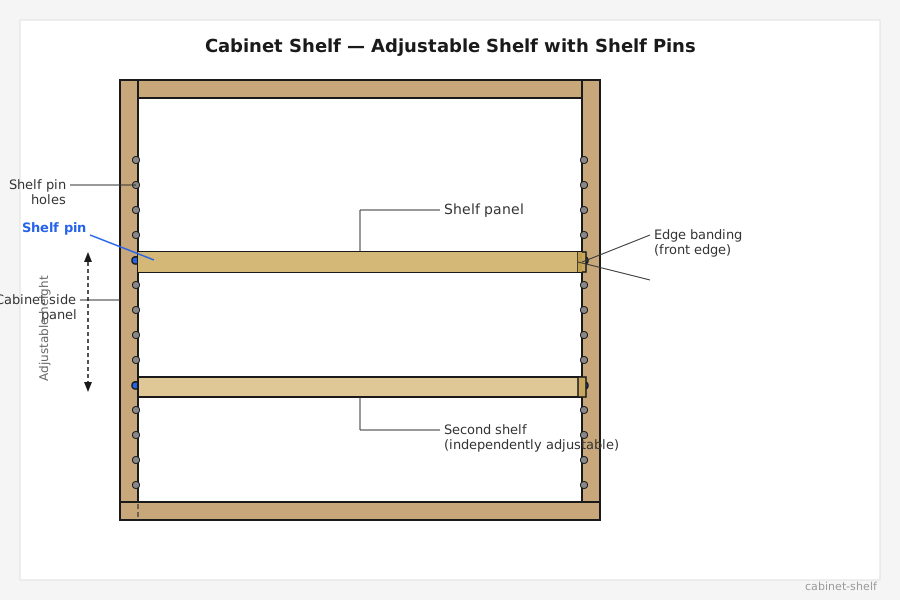
What It Is
A cabinet shelf is the flat horizontal surface inside a cabinet that holds dishes, food, toiletries, or other stored goods. Most modern cabinet shelves are adjustable, resting on 5 mm shelf pins inserted into a vertical row of holes drilled at 32 mm intervals into the cabinet side panels. This spacing follows the European 32 mm system used by most cabinet manufacturers and allows the shelf height to be repositioned without tools to accommodate items of different heights.
Fixed shelves are glued, nailed, or dadoed into the cabinet box and cannot be repositioned. They appear more often in face-frame cabinets built before adjustable shelving became standard, or in cabinets where structural rigidity is a design requirement. A fixed center shelf in a tall pantry cabinet, for example, adds racking resistance to the box.
Shelf material affects both appearance and load capacity. Three-quarter-inch plywood shelves resist sagging better than MDF under heavy loads such as canned goods or stacked dinnerware. A 36-inch-wide plywood shelf can support 50 pounds or more without visible deflection, while a particleboard shelf of the same span may begin to sag under 30 pounds within a few months. Edge banding applied to the front edge — typically 0.5 mm or 2 mm PVC or wood veneer tape — conceals the substrate and gives the shelf a finished appearance matching the cabinet interior.
Types
Adjustable shelves are the most common type in residential cabinetry — they sit on shelf pins and can be moved to any available pin row. Standard thickness is 3/4 inch, and shelves are usually notched at the rear corners to clear the cabinet back panel.
Fixed shelves are permanently installed with dado joints, screws, or glue. They add structural rigidity to the cabinet box and are common as the center divider in stacked upper cabinets.
Pull-out shelves are mounted on drawer slides — typically full-extension ball-bearing slides rated for 75 to 100 pounds — and roll forward for full-access storage. They are a popular retrofit for deep base cabinets where items get lost at the back.
Corner cabinet shelves include kidney-shaped lazy Susan trays and half-moon pull-out trays designed for blind-corner base cabinets. These rotating or sliding shelves make the deep interior of corner cabinets accessible without reaching blindly into the back.
Where It Is Used
Cabinet shelves are found in virtually every kitchen cabinet, bathroom vanity, pantry, linen closet, and built-in storage unit. Upper kitchen cabinets typically have one or two adjustable shelves per door section, spaced to accommodate standard dinner plates (10-1/2 inches tall) or glasses (6 to 8 inches). Tall pantry cabinets may have five or more shelves at closer spacing for canned goods and boxed items.
Bathroom vanity shelves sit behind the doors and must be notched or shortened to clear plumbing supply lines and the drain trap. Linen closet shelves are usually fixed at 12- to 14-inch vertical spacing for folded towels and bedding.
How to Identify One
Open a cabinet and look for horizontal panels inside the box. Adjustable shelves can be lifted straight up and out of their pin supports — the pins remain in the side-panel holes. Fixed shelves have no visible gap at the sides — they are continuous with the cabinet box or secured with fasteners. A sagging shelf will show a visible downward bow at the center of its span when viewed from the side.
Replacement
Replacement shelves are cut to match the interior cabinet width and depth, typically with a 1/8-inch clearance on each side for easy insertion and removal. Three-quarter-inch plywood is the preferred material for replacements because of its superior sag resistance compared to MDF or particleboard. For shelves wider than 30 inches, adding a 3/4-inch by 1-1/2-inch solid wood front edge (sometimes called a stiffener rail) dramatically reduces deflection under load.
Pre-drilled pin holes in the side panels set the available height positions. If additional holes are needed, a self-centering shelf-pin jig and a 5 mm drill bit make accurate drilling straightforward. Apply iron-on or peel-and-stick edge banding to the exposed front edge before installing the new shelf. No permit is required for shelf replacement.
Frequently Asked Questions
Cabinet Shelf — FAQ
- Why is my cabinet shelf sagging?
- Sagging is most common in MDF or particleboard shelves carrying heavy loads such as canned goods, cast iron cookware, or stacked plates. The shelf material has deflected over time and should be replaced with a thicker plywood shelf or reinforced with a solid wood front edge.
- Can I add more shelves to my cabinets?
- Yes, if the cabinet side panels have shelf-pin holes already drilled. You can cut a new shelf to the interior width and depth and set it on shelf pins at whatever height you need. If no holes are drilled, you can add a shelf-pin jig and drill them yourself.
- What is the best material for a replacement cabinet shelf?
- Three-quarter-inch plywood is generally the best choice for load capacity and sag resistance. MDF is acceptable for light loads and has a smoother surface for painting, but it sags more under weight. Avoid particleboard for heavy items.
- How do I stop a shelf from sliding off its pins?
- Most shelf pins have a lip or flange that prevents the shelf from sliding forward. If pins are missing their shelf-stop function, you can add small rubber or metal shelf-pin clips that grip the shelf edge and hold it in place.
- Do cabinet shelf replacements require a permit?
- No. Replacing or adding cabinet shelves is interior maintenance work that does not require a permit. It is well within typical homeowner DIY scope.
Have a question about your project? Get personalized answers from our team — $9/mo.
MembershipAlso in Cabinetry
- Cabinet Door
- Shelf Pin
- Toe Kick
- Countertop Support Bracket Countertops
- Cabinet Hinge Hardware
- Cabinet Pull Hardware
- Linen Cabinet Storage
- Medicine Cabinet Storage