Brick Veneer Walls: Identification, Damage, and Repair
Brick veneer is a single non-structural layer of brick attached to a framed wall to provide exterior cladding, weather protection, and appearance.
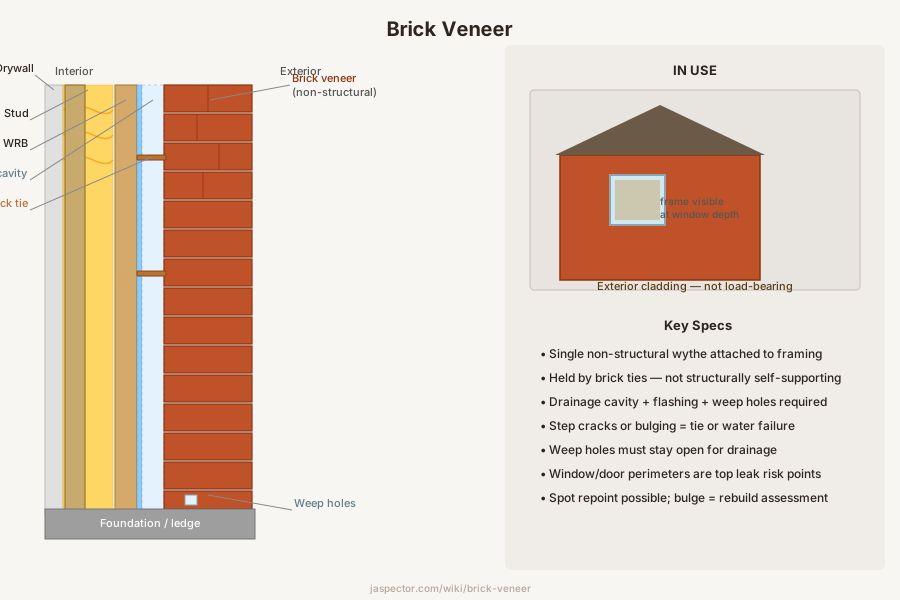
What It Is
Brick veneer looks like a full brick wall from the outside, but it does not carry the house structure. Instead, the brick is supported at the base and tied back to a wood or steel stud wall with metal brick ties. A drainage cavity, flashing, and weep holes are used behind the veneer so water that gets through the brick can drain back out.
Because it is a cladding system rather than a structural wall, proper moisture management and tie attachment are critical to long-term performance.
Types
Wood-frame brick veneer is installed over wood studs with a weather-resistive barrier and metal ties. This is common in single-family residential construction.
Steel-frame brick veneer is similar but attaches to light-gauge or structural steel framing. It is more common in larger residential or mixed-use buildings.
Where It Is Used
Brick veneer is used on house fronts, entire exterior elevations, foundation facades, porches, and attached garages. It is common in subdivisions where the look of brick is desired without building a fully structural masonry house. Property managers often monitor veneer walls for cracking, movement, failed sealant, blocked weeps, and moisture intrusion around openings.
How to Identify One
Brick veneer can often be identified by looking at wall thickness and structural clues. Window and door openings may show a framed wall depth behind the brick, and the veneer usually has weep holes near the base. In basements, crawlspaces, attics, or unfinished interiors, you may also see conventional wood or steel framing directly behind the exterior wall, confirming that the brick is not load-bearing.
Replacement
Individual damaged bricks and localized mortar joints can often be repaired without replacing the whole wall. More serious problems such as bulging veneer, widespread cracking, corroded ties, or missing flashing may require partial dismantling and reconstruction. Repairs should preserve the drainage plane and tie system, not just the surface appearance.
Frequently Asked Questions
Brick Veneer — FAQ
- Is brick veneer the same as a structural brick wall?
- No. Brick veneer is cladding attached to a framed wall, while a structural brick wall carries building loads itself. They can look similar from the exterior, so the distinction often depends on construction details behind the brick.
- Are cracks in brick veneer a serious problem?
- Sometimes. Small mortar cracks may be cosmetic, but step cracks, bulging, displaced bricks, or repeated cracking can point to movement, tie failure, or water problems. The pattern and progression matter more than the crack alone.
- What are weep holes in brick veneer for?
- Weep holes let water drain out of the space behind the brick. They are part of the moisture management system and should stay open so trapped water does not build up inside the wall assembly.
- Can brick veneer cause leaks inside the house?
- Yes. The brick itself is not fully waterproof, so leaks can happen if flashing, sealant, the water-resistive barrier, or the drainage cavity is missing or damaged. Water problems around windows and doors are especially common failure points.
- Can a damaged brick veneer wall be repaired?
- Usually yes, but the repair scope depends on the cause. Repointing or replacing a few bricks is straightforward, while bulging or loose veneer may require partial rebuild and correction of hidden tie or flashing defects.
Have a question about your project? Get personalized answers from our team — $9/mo.
MembershipAlso in Exterior
- Extension Ladder Access & Safety
- Concealed Hinge Cabinet Hardware
- Board and Batten Cladding
- EIFS (Exterior Insulation Finish System) Cladding
- Hardboard Siding Cladding
- Shake Siding Cladding
- Siding Cladding
- Stone Veneer Cladding