Brick Ledge — Foundation Bearing Shelf for Brick Veneer
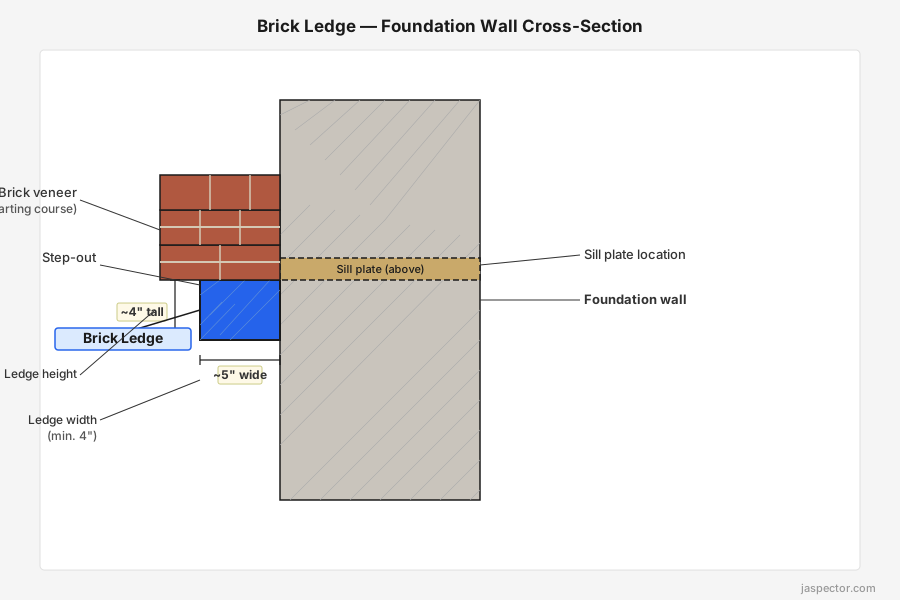
A brick ledge is a step-down shelf cast or formed into the top of a concrete foundation wall that provides a horizontal bearing surface where the first course of brick veneer sits.
What It Is
A brick ledge is not a separate component — it is an integral feature of the foundation-wall itself. When the foundation is poured, the forms are stepped inward at the top of the wall, leaving a projecting shelf that is typically 4 to 6 inches wide and several inches below the top of the main stem wall. That shelf carries the dead load of the brick-veneer wythe above it without transferring that load to the wood framing or sheathing.
The structural logic is straightforward: brick is heavy — a single wythe of standard brick weighs about 40 pounds per square foot — and it must bear on a surface capable of carrying that load continuously. Wood framing deflects under sustained load. Concrete does not. The brick ledge concentrates that load path directly into the foundation.
Types
Brick ledges vary by foundation type:
Cast-in-place concrete ledge is the most common. The step is formed during the original foundation pour and becomes monolithic with the stem wall.
Masonry block ledge uses a step course of concrete masonry units (CMU) at the top of the block foundation to create the bearing shelf. Block foundations often use a solid cap block or a poured-concrete-filled top course at the ledge location for bearing strength.
Retrofit steel angle (angle bracket) is used on foundations that were not originally built with a brick ledge — typically in older renovations where brick veneer is being added to a structure. A heavy steel angle bolted to the foundation face provides the equivalent bearing surface.
Where It Is Used
Brick ledges are present at the base of any exterior wall clad in brick veneer where the foundation is concrete or masonry. They run continuously along all brick-veneered wall planes. On slab-on-grade construction, the brick ledge is typically formed as a thickened section at the slab perimeter. On basement or crawl space walls, it appears near the top of the stem wall, at or just below the sill-plate elevation.
How to Identify One
From outside, a brick ledge is visible only when no brick is yet laid — during new construction or after brick removal. Once the veneer is installed, the ledge is hidden. Clues to its presence include the first course of brick sitting noticeably lower than the floor framing line, and a visible horizontal mortar joint at the transition where the brick transitions from the ledge elevation upward.
In crawl space homes, inspectors sometimes view the ledge from inside the crawl space by looking at the interior face of the foundation wall — the step-down shelf will be visible from that angle.
Replacement
Brick ledges are cast in place and cannot be removed or replaced as a standalone item. If a ledge is damaged — cracked, spalled, or undermined — the repair involves concrete patching, epoxy injection for cracks, or in severe cases underpinning. If no ledge was provided and brick veneer is planned, the standard retrofit approach is to bolt a continuous steel angle to the face of the foundation at the required bearing elevation.
Frequently Asked Questions
Brick Ledge — FAQ
- Why does brick veneer need a brick ledge?
- Brick is heavy — a single wythe weighs roughly 40 pounds per square foot — and that load must bear on a continuous, rigid surface. The brick ledge transfers the veneer's dead load directly into the concrete foundation rather than through the wood framing, which would deflect over time under sustained load.
- How wide does a brick ledge need to be?
- A standard brick ledge needs to be at least as wide as the brick it supports — typically 4 inches minimum. Most codes and engineering standards require a minimum bearing of 4 inches for brick veneer, though 5 to 6 inches is common in practice to allow for tolerance and mortar.
- Can brick veneer be added to a house without a brick ledge?
- Yes, but not without engineering. A continuous steel angle — sometimes called a shelf angle — can be anchored to the foundation or structure to provide equivalent bearing. This is a common approach in renovation projects and must be designed by a structural engineer to ensure the angle size and anchor bolts are adequate for the load.
- What happens if the brick ledge is too narrow or damaged?
- A damaged or undersized brick ledge can cause differential settlement of the brick veneer, leading to stair-step cracking in the mortar joints, brick displacement, and possible veneer instability. Settlement at the base of the veneer also stresses the [weep-hole](/wiki/weep-hole/) flashing and ties. Significant damage warrants a structural evaluation.
- Is a brick ledge visible after construction?
- Usually not. Once brick veneer is laid and the first course buries the ledge, the shelf is hidden. It may be visible from inside a crawl space where the interior face of the foundation wall is accessible, or from an exterior excavation.
Have a question about your project? Get personalized answers from our team — $9/mo.
MembershipAlso in Masonry
- Epoxy Anchor Anchors & Fasteners
- Masonry Anchor Anchors & Fasteners
- Wall Tie Anchors & Fasteners
- Arch Brick
- Corbel
- Face Brick
- Tuckpointing Mortar
- Smoke Chamber Chimney Masonry