Box Extender — Fix Recessed Electrical Boxes Easily
A box extender is a ring-shaped adapter that attaches to the front of an existing electrical box to bring it flush with a finished wall surface when the box is recessed too deeply.
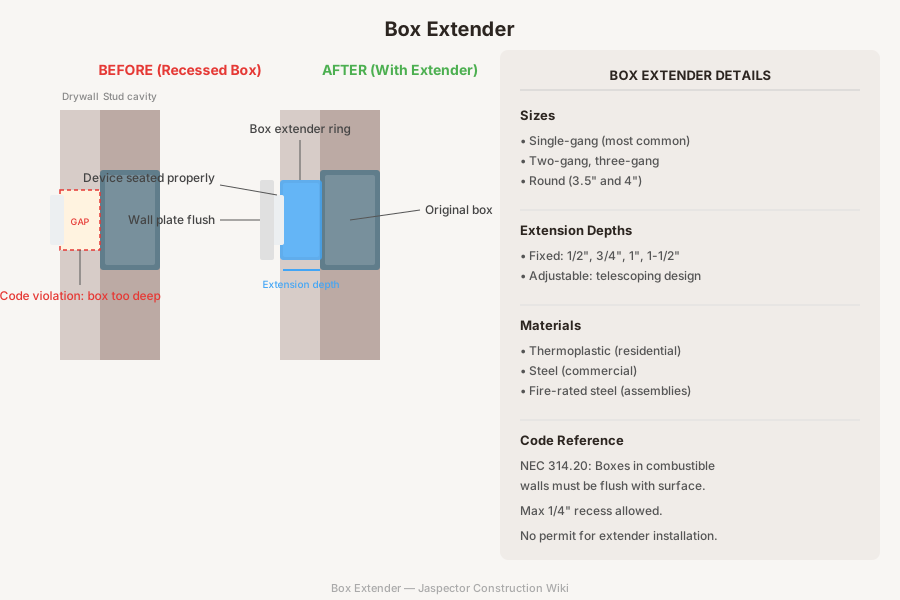
What It Is
A box extender solves a common problem in residential and commercial construction: an electrical box that sits too far back from the finished wall surface. When drywall, tile, stone, or other finish materials are installed over the framing, the box must end up flush with or slightly behind the finished surface. If the box was set too deep during rough-in, or if additional finish material was added later, the box ends up recessed. A recessed box creates code violations — the device ears cannot seat properly, wire connections are harder to make safely, and the gap between the box and the wall surface can allow fire to spread into the wall cavity.
The box extender snaps or screws onto the existing box and extends the box opening forward by a set amount, typically 1/2 inch to 1-1/2 inches. This brings the effective box edge flush with the finished wall and restores proper device mounting.
Types
Single-gang box extenders fit standard single-gang switch and receptacle boxes. Two-gang and three-gang extenders cover wider multi-device boxes. Round box extenders fit 3.5-inch and 4-inch round ceiling boxes. Material options include thermoplastic (the most common for residential use), steel, and fire-rated steel for commercial applications.
Adjustable-depth extenders use a telescoping design that allows the installer to set the extension distance to match the exact recess depth. Fixed-depth extenders come in set sizes and are stacked if more extension is needed. Some extenders include built-in ground clips or grounding features to maintain the box's equipment grounding path.
Where It Is Used
Box extenders are used during renovation work when new drywall, tile, or wainscoting is applied over existing walls, increasing the wall thickness beyond what the original box depth accommodated. They appear in kitchens where tile backsplashes push the wall surface forward, in living areas where additional drywall layers are added for soundproofing or insulation, and in basements where furring strips and drywall are installed over concrete walls.
New construction occasionally requires box extenders when framing tolerances leave boxes slightly out of position. Inspectors look for box extenders as evidence that the builder addressed recessed boxes rather than leaving them as-is.
How to Identify One
A box extender looks like a rectangular frame or ring that sits between the electrical box and the wall plate. It is visible when the wall plate is removed — you will see a plastic or metal frame extending the box opening forward from the original box face. The extender has screw holes that align with the box's device mounting screws and often has small tabs that clip into the box for initial positioning.
If a device plate does not sit flat against the wall and there is a visible gap, the box may need an extender. If an extender is already installed, the plate will sit flush and the extender will be hidden behind it.
Replacement
Installing or replacing a box extender requires turning off the circuit breaker and removing the device and wall plate. Disconnect the device from its wires if necessary to access the box. Place the extender over the box face, aligning the screw holes, and secure it with the device mounting screws. Reconnect the device, reattach the plate, and restore power.
No permit is typically required for adding a box extender since it is a correction to an existing installation rather than new electrical work. However, if the box is significantly recessed and requires repair beyond what an extender can address, the box itself may need to be repositioned, which may involve opening the wall and could require a permit.
Frequently Asked Questions
Box Extender — FAQ
- How do I know if I need a box extender?
- If the front edge of your electrical box is more than 1/4 inch behind the finished wall surface, the box is too recessed and needs an extender. NEC Section 314.20 requires that boxes in combustible walls (drywall over wood framing) be flush with the finished surface. A gap larger than 1/4 inch is a code violation.
- Can I stack multiple box extenders to reach the wall surface?
- Stacking fixed-depth extenders is possible with some products, but it is better to use an adjustable-depth extender or select a single extender that matches the recess depth. Stacking adds potential weak points and may make the device mounting less secure. Some inspectors may not accept stacked extenders.
- Do box extenders affect box fill calculations?
- Yes. The interior volume added by the extender counts toward the box's total fill capacity per NEC Section 314.16. This can be beneficial because a recessed box that needs an extender may also be at its fill limit, and the extender adds usable volume for conductors and devices.
- Are box extenders required by code?
- Box extenders themselves are not required, but having the box flush with the finished wall surface is required. If the box is recessed beyond allowable limits, some correction method is needed, and a box extender is the simplest approved solution. The alternative is repositioning the box, which is far more labor-intensive.
- Do I need a permit to install a box extender?
- In most jurisdictions, adding a box extender to an existing box does not require a permit because it is a correction to bring an existing installation into compliance, not new electrical work. However, if you discover other wiring deficiencies during the process, those repairs may require a permit and inspection.
Have a question about your project? Get personalized answers from our team — $9/mo.
MembershipAlso in Electrical
- Range Outlet Appliance Circuits
- Appliance Whip Appliance Connections
- Dishwasher Cord Appliance Connections
- Dryer Cord Appliance Connections
- Range Cord Appliance Connections
- Generator Backup Power
- Transfer Switch Backup Power
- Box Cover