Bond Beam in Masonry Walls: What Homeowners Should Know
A bond beam is a horizontal reinforced course in a masonry wall that ties units together and helps the wall resist lateral and concentrated loads.
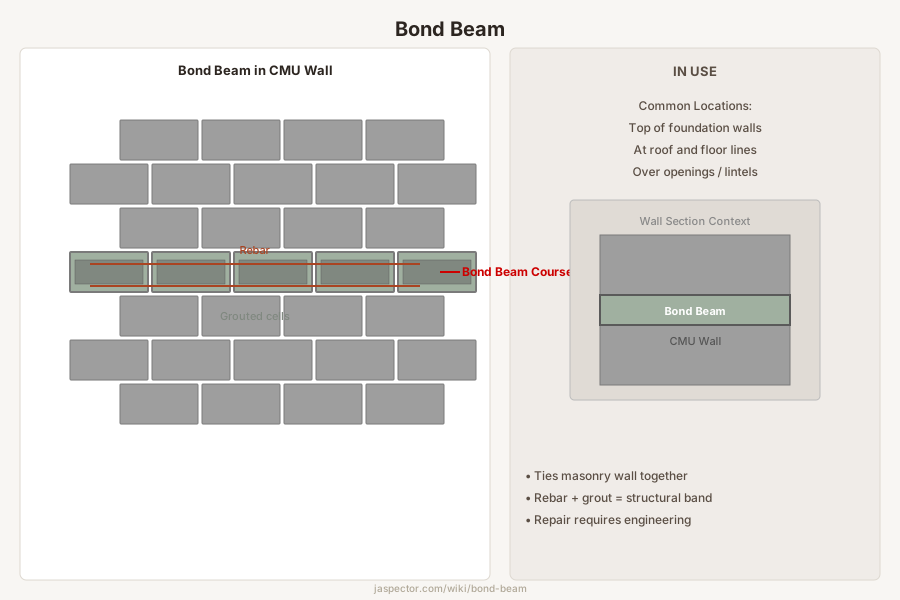
What It Is
A bond beam is formed by using specially shaped concrete masonry units or block cells that can hold reinforcing steel and grout continuously along the wall. Once filled, the beam acts like a reinforced band within the masonry assembly. It improves structural continuity and helps distribute wind, seismic, roof, and point loads.
In inspection work, bond beams are often discussed at the top of foundation walls, at floor and roof lines, over openings, and anywhere the design calls for added stiffness or anchorage.
Types
Knockout bond beam block has a removable web so horizontal reinforcing can pass through the course before grout is placed. It is common in CMU construction.
Lintel or U-block bond beam forms a channel that can receive reinforcing steel and grout. It is often used where the same unit can serve as both a bond beam and a reinforced lintel over an opening.
Where It Is Used
Bond beams are used in concrete block walls, foundation stem walls, retaining walls, parapets, and reinforced masonry partitions. They are especially common where walls need to resist lateral forces from wind or soil pressure. They also provide a solid, reinforced location for anchor bolts, joist anchors, and roof tie-down connections.
How to Identify One
A finished bond beam is often hidden inside the wall, so identification usually comes from construction documents, exposed unfinished masonry, or visible grout and reinforcing at open cells. In crawlspaces, basements, or unfinished garages, you may see a continuous grouted top course with anchor bolts embedded in it. On older or damaged walls, cracking patterns can sometimes suggest where a bond beam is missing or inadequate, but that is not definitive without further evaluation.
Replacement
Bond beams are not simple replaceable parts. If a bond beam is missing, undersized, poorly grouted, or deteriorated, repair usually involves engineered masonry work such as selective demolition, rebuilding, added reinforcement, or supplemental steel. Because the beam is part of the wall structure, correction should be designed and performed by qualified professionals.
Frequently Asked Questions
Bond Beam — FAQ
- What does a bond beam do in a block wall?
- A bond beam ties the wall together horizontally and gives the masonry a reinforced band that can carry and spread loads. It helps the wall resist wind, seismic movement, and force from framing or anchors bearing on the wall.
- Is a bond beam always visible during a home inspection?
- No. Many bond beams are buried inside finished or fully grouted masonry, so an inspector may only infer their presence from plans, exposed construction, or connection details. When verification matters, destructive investigation or engineering documentation may be needed.
- Can a crack mean the bond beam failed?
- Possibly, but not by itself. Cracks can come from settlement, shrinkage, movement, missing reinforcement, or poor grouting, so the bond beam is only one possible factor. A structural evaluation is the right next step when cracking is significant or progressive.
- Are bond beams required in every masonry wall?
- Not in every wall and not in the same locations. The need depends on the wall design, loads, height, openings, and local code requirements. Structural masonry plans typically show exactly where reinforced bond beams must be installed.
- Can a contractor add a bond beam later?
- Sometimes, but it usually involves major masonry work rather than a simple retrofit. The repair may require cutting, rebuilding, grouting, and adding steel in a way that preserves the wall's strength, so it should be engineered first.
Have a question about your project? Get personalized answers from our team — $9/mo.
MembershipAlso in Structural
- Access Panel Access & Openings
- Attic Hatch Access & Openings
- Construction Adhesive Adhesives & Sealants
- J-Bolt Anchorage
- Expansion Anchor Anchors & Fasteners
- Molly Bolt Anchors & Fasteners
- Baffle (Attic Rafter Vent) Attic & Roof
- Attic Hatch Cover Attic Access