Boiler: Hydronic Heating System Basics for Homeowners
A boiler is a closed vessel that heats water or makes steam for circulation through a hydronic heating system.
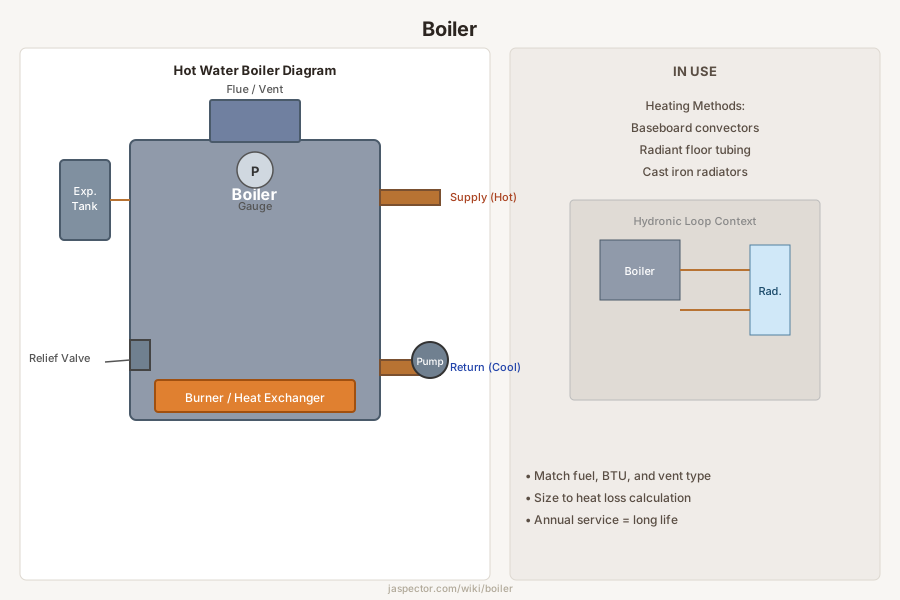
What It Is
A boiler transfers heat into water, which is then distributed through radiators, baseboard convectors, radiant floor tubing, fan coils, or steam piping depending on the system design. Unlike a forced-air furnace, a boiler does not rely on ducts as its primary means of delivering heat to occupied spaces.
Residential boilers may use natural gas, propane, oil, or electricity. Their operation depends on controls, pumps, expansion management, relief protection, and proper venting or flue design.
Types
Hot water boilers circulate heated water through a closed hydronic loop.
Steam boilers boil water and distribute steam to radiators, with condensate returning to the boiler.
Conventional and cast-iron boilers are durable but less efficient than many newer designs.
Condensing boilers extract more heat from combustion gases and are typically more efficient when system temperatures allow condensing operation.
Where It Is Used
Boilers are used in homes and multifamily buildings with hydronic or steam heat. They are commonly located in basements, utility rooms, mechanical rooms, or dedicated boiler rooms, with distribution piping running throughout the structure.
Property managers often see boilers in older apartment buildings, homes with radiator heat, and buildings that use central hydronic systems for comfort heating.
How to Identify One
A boiler is typically a floor-mounted or wall-mounted heating appliance connected to water piping rather than large supply and return ducts. You may see circulator pumps, expansion tanks, pressure gauges, relief valves, zone valves, and a flue or venting system.
If the building has radiators, baseboards, or radiant floor heat instead of a central air supply plenum, the heat source is often a boiler rather than a furnace.
Replacement
Boiler replacement is a major mechanical project that requires matching the fuel type, heat loss needs, venting method, distribution system, and control strategy. Oversizing can reduce efficiency and shorten equipment life, while undersizing can leave rooms underheated.
Replacement work commonly includes near-boiler piping changes, combustion setup, venting updates, and safety control verification. Because boilers involve fuel combustion, pressure, and hot water or steam, replacement should be handled by qualified professionals.
Frequently Asked Questions
Boiler — FAQ
- What is the difference between a boiler and a furnace?
- A boiler heats water or steam and sends that heat through pipes to radiators, baseboards, or radiant floors. A furnace heats air and distributes it through ducts with a blower.
- How do I know if my home has a boiler?
- If your heat comes from radiators, baseboard heaters, or radiant floor tubing, the main heat source is often a boiler. The equipment itself will usually be connected to water piping, pumps, and an expansion tank rather than large air ducts.
- Why is my boiler making banging or gurgling noises?
- Those sounds can come from air in the system, sediment buildup, pressure issues, delayed ignition, or improper steam operation depending on the boiler type. Noises should be evaluated because some causes are minor while others affect safety or equipment life.
- How long does a residential boiler last?
- Many boilers last 15 to 30 years, and some cast-iron units last longer when maintained well. Lifespan depends on water quality, maintenance, operating conditions, and whether the unit was sized and installed correctly.
Have a question about your project? Get personalized answers from our team — $9/mo.
MembershipAlso in HVAC
- Air Handler Air Distribution
- Register Air Distribution
- Return Air Grille Air Distribution
- HVAC Filter Air Filtration
- Heat Strip Air Handler Components
- Heating Coil Air Handler Components
- Furnace Blower Air Movement
- Air Filter (HVAC) Air Quality & Filtration