Board and Batten - Vertical Siding and Cladding Guide
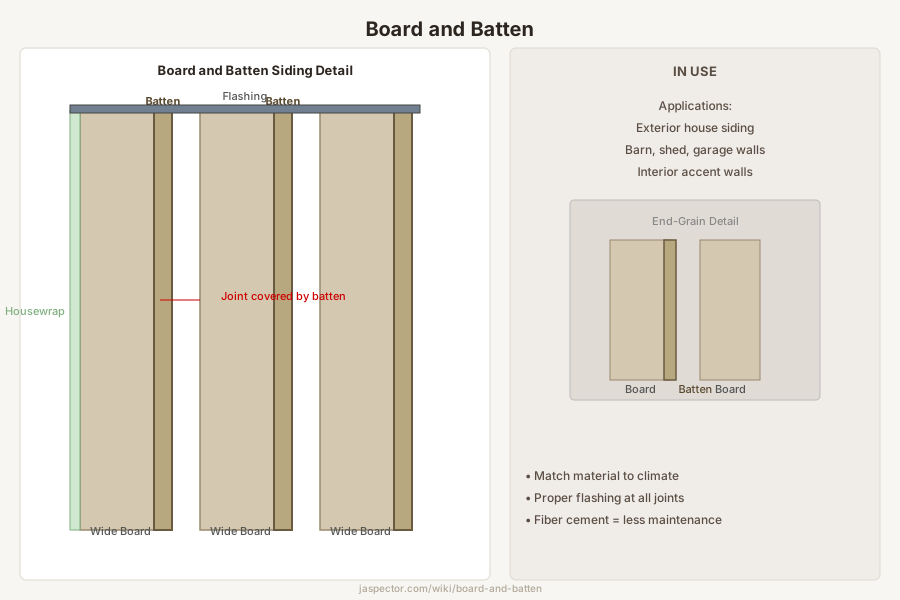
Board and batten is an exterior or interior cladding system made from wide boards with narrow strips covering the joints between them.
What It Is
In traditional form, the wide boards create the main wall surface and the battens cover the gaps where those boards meet. That layered arrangement lets the wall move with seasonal expansion while still protecting the joint and creating the vertical pattern associated with board-and-batten siding.
Modern versions may use wood, engineered wood, fiber cement, vinyl, or panel systems that imitate the same look. Whether traditional or modern, the assembly still depends on proper flashing, drainage, and fastening behind the visible battens.
Types
Traditional wood board-and-batten uses separate boards and battens fastened over a drainage-backed wall assembly.
Panelized board-and-batten siding uses large panels with applied battens to create the same appearance more quickly.
Fiber cement and engineered wood versions offer the look of board-and-batten with different maintenance and durability profiles.
Where It Is Used
Board and batten is used on exterior walls of houses, barns, sheds, garages, and accent gables. It is also used on some interior feature walls where the goal is decorative texture rather than weather protection.
How to Identify One
Look for a vertical siding pattern with narrow battens covering the seams between wider boards or panels. Cracked battens, open joints, rot at lower edges, swelling, peeling paint, or missing flashing at windows and trim are common signs the assembly needs attention.
Replacement
Replacement can mean swapping damaged battens, replacing individual boards or panels, or recladding the wall if water has gotten behind the siding system. Matching the batten spacing, board thickness, and trim details matters because patch repairs are easy to spot when the pattern changes.
Frequently Asked Questions
Board and Batten — FAQ
- Is board and batten a type of siding?
- Yes. On exterior walls it is a vertical cladding system, and on interior walls it is a decorative finish style based on the same board-and-batten pattern.
- What is the purpose of the battens?
- The battens cover the joints between the larger boards or panels. They help protect the seams while giving the wall its distinct vertical rhythm.
- Can board and batten leak if the boards look fine?
- Yes. The visible siding can look acceptable while flashing, housewrap, or drainage details behind it are failing. Repeated staining or rot around windows and trim is a warning sign.
- Does board and batten require more maintenance than other siding?
- It depends on the material. Traditional wood versions need more attention to paint, caulk, and moisture exposure, while fiber cement and vinyl versions usually need less routine maintenance.
- When should board and batten be replaced instead of repaired?
- Localized cracked battens or a few damaged boards can often be repaired. Widespread rot, swelling, hidden moisture damage, or repeated failure at multiple joints usually makes broader replacement the better option.
Have a question about your project? Get personalized answers from our team — $9/mo.
MembershipAlso in Exterior
- Extension Ladder Access & Safety
- Concealed Hinge Cabinet Hardware
- EIFS (Exterior Insulation Finish System)
- Hardboard Siding
- Shake Siding
- Siding
- Stone Veneer
- Stucco