Blower Wheel - HVAC Squirrel-Cage Fan Repair Guide
A blower wheel is the squirrel-cage fan inside an HVAC blower assembly that moves air through a furnace, air handler, or fan cabinet.
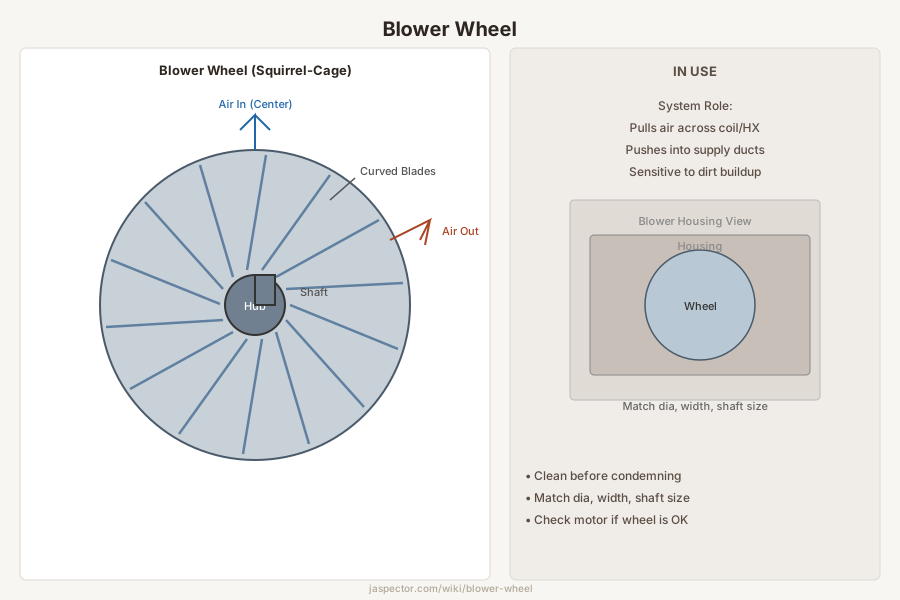
What It Is
The blower wheel is the rotating fan component that actually pushes conditioned air through the duct system, while the blower motor is the drive component that spins it. The wheel is a forward-curved centrifugal fan, meaning its many small blades curve in the direction of rotation. Air enters the open center of the wheel, the spinning blades accelerate it outward, and the surrounding scroll-shaped housing collects and directs that air into the supply plenum.
Because the blower wheel handles the entire airflow volume for the HVAC system, it is sensitive to dirt buildup, balance issues, and physical damage. A wheel packed with dust and debris can lose 20 to 30 percent of its airflow capacity even when the motor is still running at full speed. That reduction can cause comfort complaints, frozen evaporator coils in cooling mode, high-limit trips in heating mode, and increased energy consumption across all operating seasons.
Residential blower wheels are typically made from galvanized steel or aluminum. The blades are spot-welded or riveted to two circular end plates, and a central hub with a setscrew locks the wheel onto the motor shaft. Diameters commonly range from 9 to 12 inches for standard residential furnaces, with widths between 6 and 10 inches depending on the CFM rating.
Types
Single-width, single-inlet wheels are the most common in residential furnaces and air handlers. Double-width, double-inlet wheels have two sets of blades side by side, drawing air from both ends, and are found in larger commercial air handlers.
Forward-curved wheels dominate the residential HVAC market because they move large volumes of air at relatively low static pressure and operate quietly. Some blower wheels are direct-drive, mounted directly on the motor shaft, while others are belt-drive and connected to the motor through a belt and pulley, which allows speed adjustment but requires more maintenance.
Where It Is Used
Blower wheels are used inside gas and electric furnaces, air handlers, fan coil units, packaged rooftop HVAC equipment, heat pumps, range hoods, and other mechanical systems that rely on centrifugal airflow. In a typical residential forced-air system, the blower wheel sits inside a sheet-metal housing in the blower compartment, which is accessed through a removable panel on the front or bottom of the unit.
The same centrifugal wheel design also appears in bathroom exhaust fans, dryer vent boosters, and commercial kitchen ventilation equipment.
How to Identify One
After opening the blower compartment and removing the access panel, the wheel appears as a cylindrical cage with many narrow curved blades arranged around its circumference. The two flat end plates hold the blades in place, and the hub at the center connects to the motor shaft. On most residential systems, the entire blower assembly slides out on rails or can be unbolted for service.
Vibration, scraping noises, thumping at startup, weak airflow from the registers, or visible dirt caked between the blades are common signs that the blower wheel needs attention. If the wheel wobbles when spun by hand with the power off, it is either loose on the shaft or out of balance.
Replacement
Replacement is needed when the wheel is bent, cracked, badly out of balance, or stripped at the hub setscrew. The process usually requires disconnecting power, removing the blower assembly from the unit, loosening the hub setscrew, and sliding the old wheel off the motor shaft.
The replacement wheel must match four critical dimensions: outside diameter, width, rotation direction (clockwise or counterclockwise as viewed from the hub end), and shaft bore size. These specifications are found on the equipment data plate or in the manufacturer's parts catalog.
After mounting the new wheel, the hub setscrew should be tightened firmly against the flat on the motor shaft, and the assembly should be spun by hand to verify that the blades clear the housing on all sides before power is restored.
Frequently Asked Questions
Blower Wheel — FAQ
- Is a blower wheel the same as a blower motor?
- No. The blower motor provides the power, while the blower wheel is the fan that moves the air. They work together, but they are different parts.
- Can a dirty blower wheel reduce heating and cooling performance?
- Yes. Heavy dirt on the blades reduces airflow, and low airflow can make rooms uncomfortable, raise energy use, and cause system problems like coil icing or furnace limit trips.
- What does a bad blower wheel sound like?
- It can make scraping, rattling, thumping, or vibration noises, especially if the wheel is bent or rubbing the housing. Noise that changes with blower speed often points to a wheel or motor issue.
- Can a blower wheel be cleaned instead of replaced?
- Often yes, if the wheel is intact and just coated with dust and debris. Replacement is usually reserved for wheels that are bent, cracked, loose on the shaft, or too corroded to clean reliably.
- How do I know the blower wheel is the problem and not the motor?
- A technician usually checks both because the symptoms overlap. If the motor runs but airflow is weak, the wheel may be dirty or damaged. If the motor hums or overheats and the wheel does not turn freely, both parts may need attention.
Have a question about your project? Get personalized answers from our team — $9/mo.
MembershipAlso in HVAC
- Air Handler Air Distribution
- Register Air Distribution
- Return Air Grille Air Distribution
- HVAC Filter Air Filtration
- Heat Strip Air Handler Components
- Heating Coil Air Handler Components
- Furnace Blower Air Movement
- Air Filter (HVAC) Air Quality & Filtration