Bladder Tank: Well Pressure Storage and Hydronic Use
A bladder tank is a pressure tank with an internal rubber bladder that separates water from compressed air in a well or hydronic system.
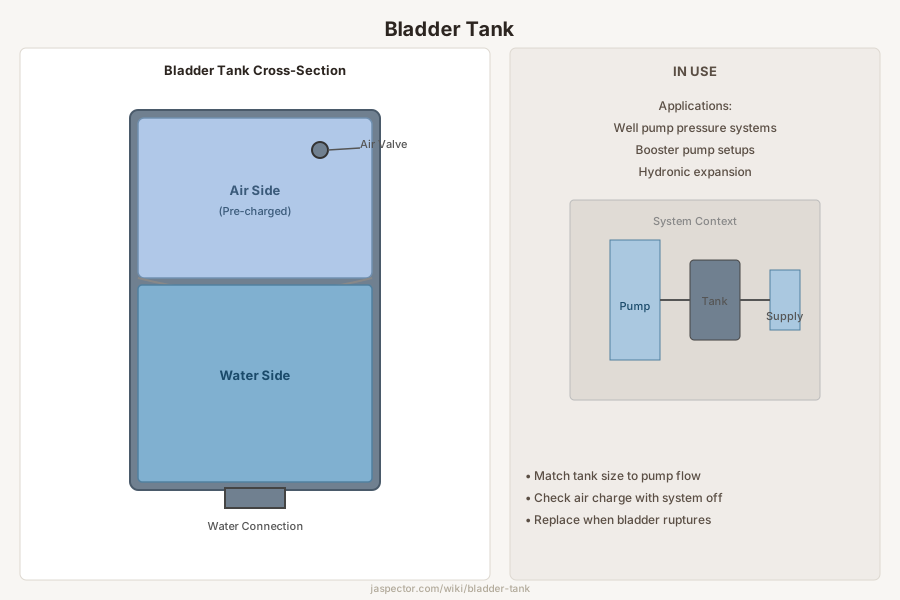
What It Is
A bladder tank stores water under pressure while keeping the air charge separated from the water by a flexible internal bladder. In a private well system, this reduces rapid pump cycling and provides more stable water pressure at fixtures. In some hydronic heating systems, a similar tank is used to manage pressure changes as water expands and contracts.
By separating air and water, a bladder tank avoids the waterlogging problems seen in older plain steel tanks. The air side is pre-charged to a specific pressure so the system can operate within the intended range.
Types
Well pressure bladder tanks are used with pumps and pressure switches to maintain domestic water pressure.
Diaphragm or expansion-style tanks are used in hydronic systems to absorb thermal expansion and stabilize pressure.
Vertical and horizontal tanks describe the tank orientation, which depends on the installation layout and support method.
Where It Is Used
Bladder tanks are commonly found in homes with private wells, booster pump systems, and hot-water hydronic heating equipment. They are typically installed near the pressure switch and well controls, or near the boiler and system piping in a mechanical room.
In multifamily or managed properties, they may also be used where pumps need to avoid short cycling and pressure fluctuations.
How to Identify One
Look for a metal tank connected to the water system with an air valve, similar to a tire valve, on the air side. Well-system tanks are often blue, gray, or tan and are installed near the pressure switch, gauge, and pump piping.
A bladder tank label may list total tank volume, pre-charge pressure, and maximum working pressure. If the tank feels completely full of water and sounds solid when tapped, it may be waterlogged or failed.
Replacement
Replacement is needed when the bladder ruptures, the tank loses air charge repeatedly, the shell corrodes, or the system begins short cycling. The new tank must be matched to the application, pressure settings, and drawdown requirements.
After replacement, the air pre-charge is adjusted with the system depressurized so it matches the control settings. Incorrect sizing or charge can lead to poor pressure control and premature pump wear.
Frequently Asked Questions
Bladder Tank — FAQ
- What does a bladder tank do on a well system?
- It stores water under pressure so the well pump does not need to start every time a faucet opens. That helps maintain steadier pressure and reduces wear from short cycling.
- How do I know if a bladder tank has failed?
- Common signs include rapid pump cycling, unstable water pressure, and a tank that seems completely full of water. A failed bladder can also cause the pressure switch to chatter or the relief valve to discharge in some systems.
- Can a bladder tank be repaired?
- In most residential systems, a failed internal bladder means the tank is replaced rather than repaired. Some pressure issues are caused by a low air charge, but a ruptured bladder is typically not a serviceable homeowner repair.
- Is a bladder tank the same as an expansion tank?
- They are similar in concept because both separate air and water with a flexible barrier. In practice, homeowners usually use "bladder tank" for well pressure storage and "expansion tank" for hydronic or water-heater thermal expansion applications.
Have a question about your project? Get personalized answers from our team — $9/mo.
MembershipAlso in Plumbing
- ADA Shower Seat Accessibility
- Fold-Down Seat Accessibility
- Backflow Preventer Backflow & Cross-Connection
- Pressure Vacuum Breaker Backflow Prevention
- Toilet Bath Fixtures
- Toilet Bowl Bath Fixtures
- Toilet Tank Bath Fixtures
- Toilet Tank Gasket Bath Fixtures