Batt Insulation Guide for Homes and Building Cavities
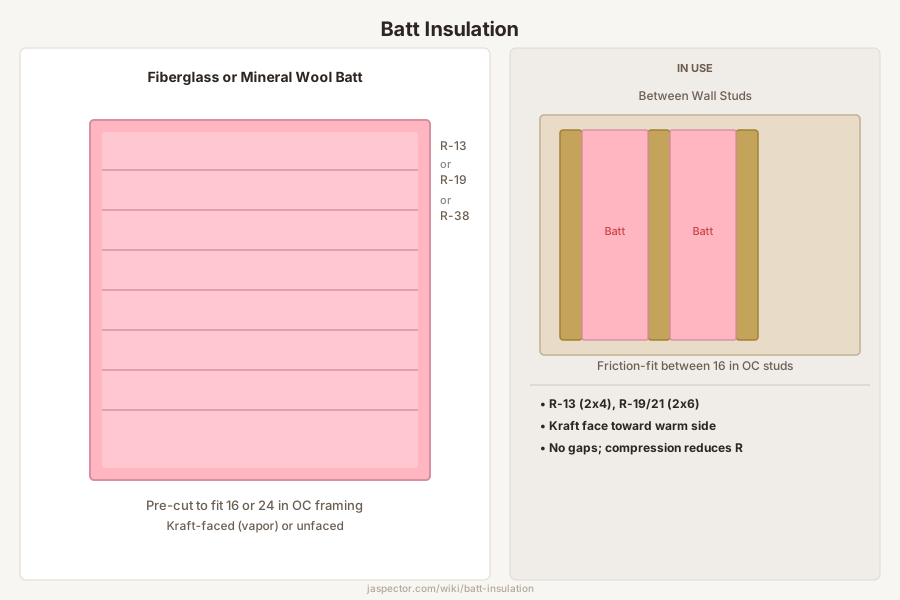
Batt insulation is a pre-cut insulation blanket designed to fit between framing members such as wall studs, floor joists, and ceiling rafters.
What It Is
Batt insulation comes in flexible rectangular pieces sized to match common framing spacing, usually 16 inches or 24 inches on center. It is most often made from fiberglass or mineral wool and is installed dry, without being blown or sprayed into place. In residential construction, it is used to slow heat transfer and can also reduce sound movement between rooms or floors.
Types
Fiberglass batt insulation is the most common type and is widely used in walls, floors, ceilings, and attics. It is lightweight, affordable, and available in many R-values.
Mineral wool batt insulation is denser and offers better sound control and higher fire resistance. It is often chosen where durability, acoustic performance, or moisture tolerance matters.
Faced batt insulation includes a kraft or foil facing that can serve as a vapor retarder in some assemblies. Unfaced batt insulation has no facing and is often used where a separate vapor control layer already exists.
Where It Is Used
Batt insulation is commonly installed in exterior walls, garage separation walls, basement rim joists, floor systems, crawlspaces, and sloped ceilings. It is also used in interior partitions when sound reduction is a priority. Inspectors and property managers often see it in unfinished basements, attics, utility rooms, and open wall cavities during renovation work.
How to Identify One
Batt insulation appears as a blanket-like panel fitted between framing members. Fiberglass batts are often pink, yellow, or white, while mineral wool batts are usually brown, gray, or dark green. Faced batts have a paper or foil surface stapled to the framing, while unfaced batts look like exposed fibrous pads.
Replacement
Batt insulation should be replaced when it is wet, moldy, fire-damaged, pest-contaminated, badly compressed, or falling out of the cavity. Replacement involves removing the damaged sections, correcting the moisture or air-leak source, and installing new insulation that matches the cavity depth and target R-value. For best performance, the new batt should fill the space evenly without gaps, voids, or excessive compression.
Frequently Asked Questions
Batt Insulation — FAQ
- How do I know if batt insulation is installed correctly?
- A proper batt should fill the cavity evenly from side to side and front to back without being stuffed in tightly. Gaps, slumping, compression, and voids around wires or pipes all reduce performance. If you can see open air spaces, the insulation is not doing its full job.
- Is batt insulation better than blown insulation?
- They serve different situations. Batt insulation works well in open framing cavities where standard sizes fit cleanly, while blown insulation is often better for irregular spaces or topping up an attic. The better option depends on access, air sealing, and how consistent the installation will be.
- Can wet batt insulation dry out and stay in place?
- Sometimes it dries, but that does not mean it should remain. Wet fiberglass or mineral wool can lose shape, trap contamination, and hide moisture problems in the assembly. If insulation has been soaked or exposed to a roof or plumbing leak, replacement is usually the safer approach.
- Does batt insulation help with soundproofing?
- Yes, especially in interior walls and floor cavities. Mineral wool batts generally perform better for sound control because they are denser than fiberglass. Insulation alone will not fully soundproof a room, but it can noticeably reduce noise transfer.
- Why is my batt insulation falling down?
- Falling insulation usually means it was cut poorly, installed without enough support, or damaged by moisture, pests, or later work in the cavity. Once it sags, it leaves uninsulated gaps behind it. The fix is to correct the cause and reinstall or replace the material properly.
Have a question about your project? Get personalized answers from our team — $9/mo.
MembershipAlso in Structural
- Access Panel Access & Openings
- Attic Hatch Access & Openings
- Construction Adhesive Adhesives & Sealants
- J-Bolt Anchorage
- Expansion Anchor Anchors & Fasteners
- Molly Bolt Anchors & Fasteners
- Baffle (Attic Rafter Vent) Attic & Roof
- Attic Hatch Cover Attic Access