Bath Fan - Bathroom Exhaust Fan Uses and Replacement
A bath fan is the exhaust fan in a bathroom that removes moisture, odors, and indoor air contaminants by venting air out of the room.
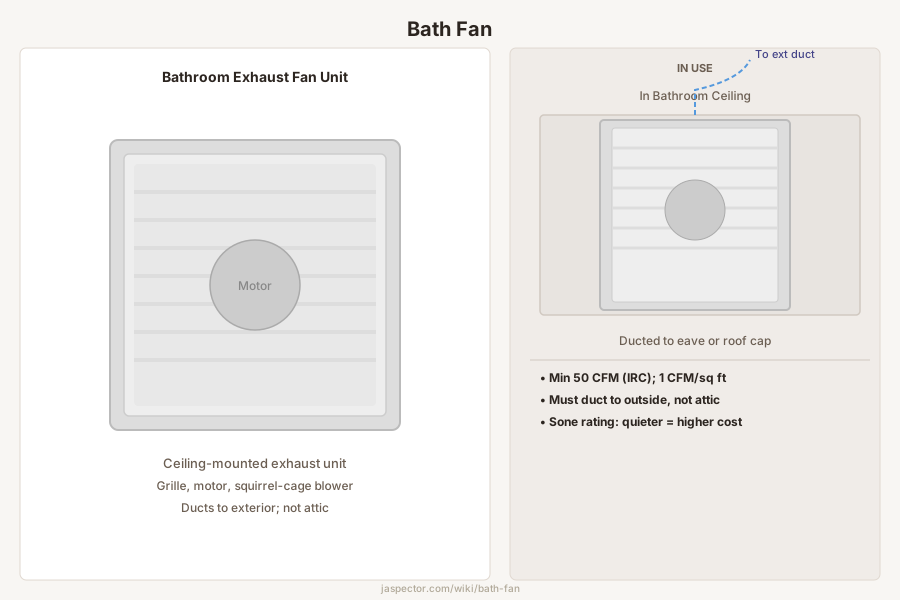
What It Is
A bath fan pulls humid air away from the shower or tub area and sends it through a duct to the outdoors. That moisture control matters because bathrooms create short bursts of heavy humidity that can lead to mold growth, peeling paint, and damage to drywall or trim if the air is left trapped indoors.
The fan assembly typically includes the housing, motor, blower wheel, grille, and sometimes a light, heater, or humidity sensor. A fan that is noisy or running weakly may still switch on normally while failing to move enough air to protect the room.
Types
Ceiling-mounted bath fans are the most common and exhaust through the attic or roof side of the house.
Wall-mounted bath fans vent directly through an exterior wall where ceiling ducting is impractical.
Combination bath fan units may include a light, heater, or humidity-sensing control in the same assembly.
Where It Is Used
Bath fans are used in bathrooms, powder rooms, laundry-adjacent bath spaces, and other small wet rooms where steam and odor removal are needed. Building codes commonly require either mechanical exhaust or a qualifying operable window, and many modern bathrooms have both.
How to Identify One
Look for a ceiling or wall grille in the bathroom that turns on with a switch, timer, or humidity sensor. Excess condensation on mirrors and walls, lingering odors, peeling paint, and a fan that sounds loud without moving much air are common clues the unit is underperforming.
Replacement
Replacement is needed when the motor fails, the housing rusts, the fan is too small for the room, or the existing unit vents poorly or not at all. Replacement often includes correcting the duct run and exterior termination because a new fan will still perform badly if the vent path is crushed, too long, or dumping into the attic.
Frequently Asked Questions
Bath Fan — FAQ
- What does a bath fan do?
- It removes humid air and odors from the bathroom so moisture does not linger on finishes and inside wall cavities. Proper bathroom exhaust helps reduce mold risk and surface damage.
- Why is my bathroom fan running but not clearing steam?
- The fan may be undersized, clogged with lint and dust, or connected to a poor duct run. A duct that is crushed, disconnected, or venting into the attic can make the fan seem to run while doing little useful exhaust work.
- Does a bath fan have to vent outside?
- Yes. Bathroom exhaust should terminate outdoors, not into the attic, soffit cavity, or crawlspace. Dumping moist air into concealed spaces creates a mold and condensation problem elsewhere in the house.
- How long should I run a bath fan after a shower?
- A common rule is about 20 minutes after showering, though the exact time depends on room size and fan capacity. Humidity-sensing controls can automate that run time.
- When should a bath fan be replaced instead of cleaned?
- Cleaning helps when the grille and blower are dusty, but replacement makes more sense when the motor is noisy, the fan is undersized, the housing is damaged, or the old unit cannot be ducted properly to the exterior.
Have a question about your project? Get personalized answers from our team — $9/mo.
MembershipAlso in HVAC
- Air Handler Air Distribution
- Register Air Distribution
- Return Air Grille Air Distribution
- HVAC Filter Air Filtration
- Heat Strip Air Handler Components
- Heating Coil Air Handler Components
- Furnace Blower Air Movement
- Air Filter (HVAC) Air Quality & Filtration