Basement Wall: Identification, Damage, Replacement
A basement wall is the below-grade concrete, masonry, or stone wall that forms the perimeter of a basement and resists surrounding soil and moisture loads.
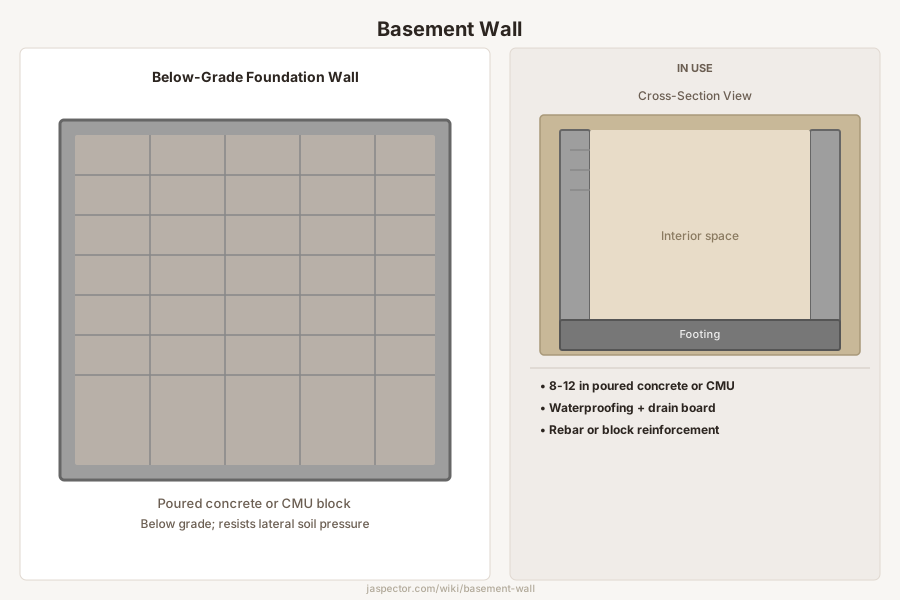
What It Is
A basement wall is part of the home's foundation system and encloses the basement below exterior grade. It supports the structure above while also resisting lateral soil pressure, water infiltration, freeze-thaw movement, and settlement-related stress.
Because it is in direct contact with surrounding soil, a basement wall is exposed to moisture and hydrostatic pressure in ways that above-grade walls are not. Performance depends on the wall material, drainage conditions, backfill, waterproofing, and the structural loads it carries.
Types
Common basement wall types include poured concrete walls, concrete masonry unit block walls, and older stone or brick foundation walls. Poured concrete walls are common in newer homes, while block and stone walls are more common in older construction.
Each type behaves differently under stress. Poured concrete often cracks in more continuous lines, block walls may bow or step-crack along mortar joints, and stone walls may show mortar loss, movement, or inward displacement over time.
Where It Is Used
Basement walls are used around the perimeter of full basements and some walkout basements. They extend from the footing below to the sill or framing above and may include window openings, beam pockets, utility penetrations, or ledges for framing support.
They are found in finished and unfinished basements and may also serve as retaining walls where grade is higher on one side. Their condition affects not only structure but also basement dryness, insulation performance, and indoor air quality.
How to Identify One
Look for the below-grade perimeter wall visible in the basement, usually made of concrete, concrete block, stone, or brick. Signs of concern include horizontal cracking, stair-step cracking, inward bowing, surface flaking, damp spots, efflorescence, seepage at cracks or joints, and areas that appear patched repeatedly.
Movement may also show up as misaligned framing above, sticking doors near the basement stair area, or floor sloping near exterior walls. Moisture staining or peeling finishes on an interior finished wall can indicate basement wall leakage behind the surface materials.
Replacement
Full basement wall replacement is a major structural project and is far less common than repair, stabilization, or waterproofing. Replacement may be considered when a wall has severe displacement, major structural failure, extensive material deterioration, or damage beyond the scope of practical reinforcement.
More often, solutions include crack repair, wall anchors, carbon fiber reinforcement, new drainage measures, waterproofing improvements, or partial rebuilds. Any decision about replacement should be based on structural evaluation, not appearance alone, because cosmetic patching can hide active movement.
Frequently Asked Questions
Basement Wall — FAQ
- What cracks in a basement wall are normal and what cracks are serious?
- Small shrinkage cracks in poured concrete can be common, especially if there is no movement or water entry. Horizontal cracks, widening cracks, stair-step cracking in block walls, or cracks paired with bowing are more serious and should be evaluated.
- Why is water coming through my basement wall?
- Water intrusion is often caused by poor exterior drainage, hydrostatic pressure, clogged footing drains, cracked walls, or failed waterproofing. The wall itself may not be the only problem, so grading and drainage outside the home matter as much as interior symptoms.
- Can a bowing basement wall be repaired, or does it need replacement?
- Many bowing walls can be stabilized with anchors, braces, or reinforcement if the movement is caught before failure. Replacement is usually reserved for severe cases where the wall has shifted too far, deteriorated badly, or lost structural integrity.
- Is efflorescence on a basement wall a structural problem?
- Efflorescence is a mineral deposit left behind when moisture moves through masonry or concrete. It is mainly a moisture indicator rather than a structural failure by itself, but it should prompt a closer look at drainage and water entry.
- Should I finish a basement if the wall already shows moisture staining?
- Not until the moisture source is understood and addressed. Covering a damp basement wall with framing and drywall can trap moisture, hide worsening damage, and lead to mold or finish failure.
Have a question about your project? Get personalized answers from our team — $9/mo.
MembershipAlso in Structural
- Access Panel Access & Openings
- Attic Hatch Access & Openings
- Construction Adhesive Adhesives & Sealants
- J-Bolt Anchorage
- Expansion Anchor Anchors & Fasteners
- Molly Bolt Anchors & Fasteners
- Baffle (Attic Rafter Vent) Attic & Roof
- Attic Hatch Cover Attic Access