Base Flashing - Lower Roof-to-Wall Leak Protection
Base flashing is the lower flashing layer at a roof-to-wall joint or penetration that turns up the vertical surface and sheds water back onto the roof.
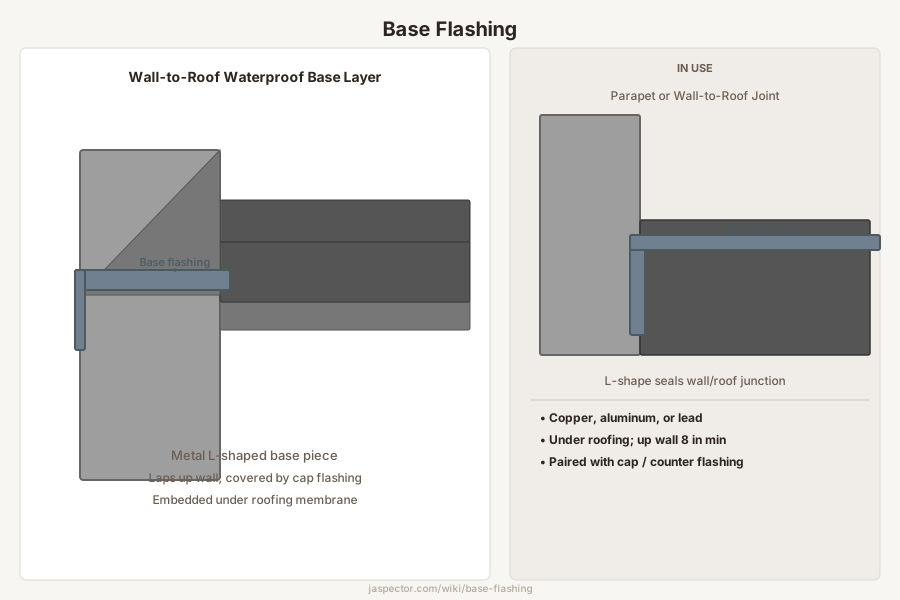
What It Is
Base flashing is the first water-shedding metal or membrane piece in a flashing assembly where the roof meets a wall, chimney, curb, or similar vertical surface. Its job is to catch water moving across the roof and redirect it outward before it can enter the building.
Because roofs and walls move differently, base flashing is usually paired with counter-flashing or another cover flashing above it. The lower piece handles the water path, while the overlapping upper piece protects the turned-up edge.
Types
Metal base flashing is common at chimneys, curbs, and some roof-to-wall details.
Membrane base flashing is widely used on low-slope roofs where flexible roofing membranes turn up vertical surfaces.
Step flashing functions as a form of base flashing on sloped sidewall details, with individual pieces woven into each course.
Where It Is Used
Base flashing is used at chimneys, parapet walls, roof curbs, skylights, dormers, roof-to-wall intersections, and low-slope roof penetrations. It appears in both steep-slope and flat-roof work, though the material details differ by roof type.
How to Identify One
You often see only the exposed lower edge because siding, stucco, brick, or counter-flashing covers the upper portion. At open areas, look for flashing that runs across the roof surface and then turns up a nearby wall or curb. Rust, splits, loose laps, or exposed fasteners in the water path are common failure clues.
Replacement
Replacement is needed when leaks develop at the joint, the flashing is rusted through, the membrane has pulled loose, or reroofing exposes an improperly built detail. Base flashing repairs usually need to be done as part of the full flashing system rather than as a bead-of-caulk patch.
Frequently Asked Questions
Base Flashing — FAQ
- What is the difference between base flashing and counter-flashing?
- Base flashing is the lower piece that catches water at the roof surface and turns up the wall or penetration. Counter-flashing is the overlapping cover piece that protects the top edge of the base flashing.
- Can failed base flashing cause roof leaks inside the wall?
- Yes. When base flashing fails, water can run behind the wall covering or under the roofing and show up indoors far from the visible joint. That is why flashing leaks are often harder to trace than simple shingle damage.
- Is step flashing the same thing as base flashing?
- Step flashing is a specific form of base flashing used where a sloped roof meets a wall. The concept is similar, but the pieces are installed in steps with each course of roofing instead of as one continuous section.
- Can base flashing be repaired with sealant only?
- Sealant can buy time on a small gap, but it does not replace proper overlap, turn-up height, or drainage geometry. Durable repairs usually mean rebuilding the flashing detail correctly.
- When is base flashing replaced?
- It is commonly replaced during reroofing, chimney rebuilding, curb replacement, or any repair where the existing flashing is rusted, split, or improperly integrated. Reusing bad base flashing under new roofing is a common source of repeat leaks.
Have a question about your project? Get personalized answers from our team — $9/mo.
MembershipAlso in Roofing
- Asphalt Shingle Types: 3-Tab vs. Architectural Asphalt Shingles
- How Long Asphalt Shingles Last Asphalt Shingles
- Asphalt Shingle Installation: What to Expect Asphalt Shingles
- Gable Vent Attic Ventilation
- Soffit Vent Attic Ventilation
- Turbine Vent Attic Ventilation
- Chase Cover Chimney System
- Chimney Cap Chimney System